

Julie Elie decodes zebra finch calls, wins $100,000 Coller-Dolittle prize
A University of California, Berkeley scientist cracked 11 core bird calls and steps toward real two-way animal communication.
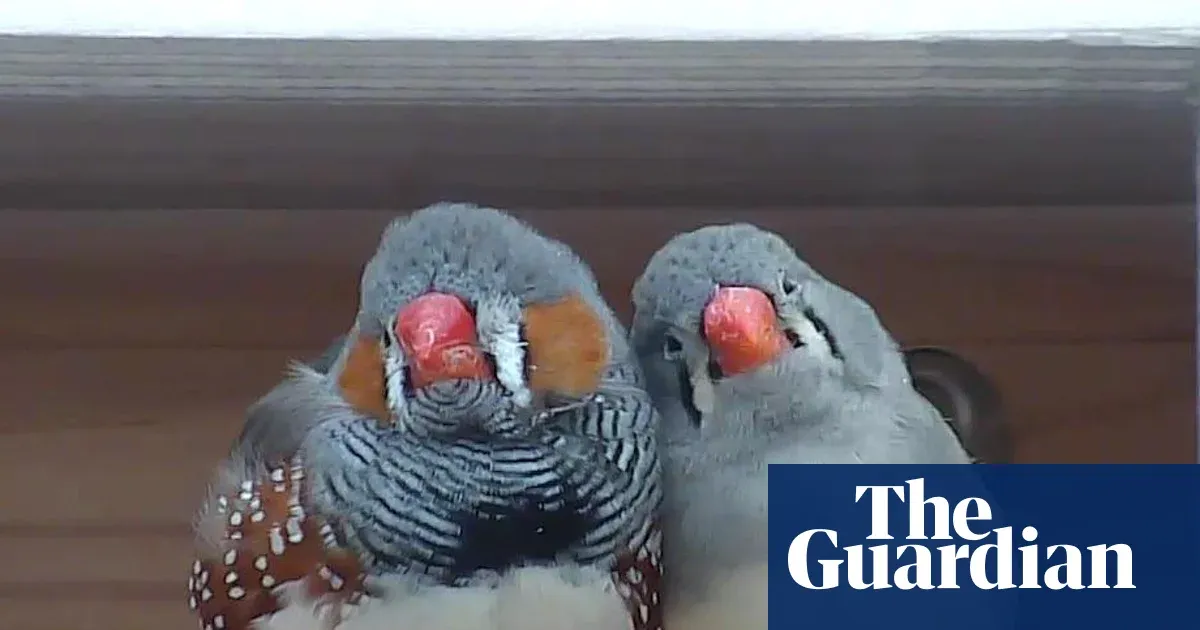
Dr Julie Elie at the University of California, Berkeley won the 2026 Coller-Dolittle prize after decoding vocalisations zebra finches use to communicate. The work identified 11 core calls and their meanings, pushing the field toward two-way interspecies communication rather than humans getting silence.
Dr Julie Elie of the University of California, Berkeley just won the 2026 Coller-Dolittle prize, taking home $100,000 for progress toward two-way interspecies communication. The prize went to work decoding how zebra finches communicate, and the key claim is specific: Elie worked out 11 core calls in the zebra finch vocal “vocabulary” and decoded what those calls mean.
If you have ever wondered what “blank response” from animals looks like, the goal here is exactly to prevent it. The breakthrough is framed as making it possible, in principle, for humans to “talk to the animals” without meeting only noise that cannot be interpreted. Instead of treating bird calls as an unreadable wall of sound, the research attempts to map distinct vocal signatures to content like identity and intent.
That sounds like a science story, but it is also an incentive story. Interpreting animal communication sits at the intersection of basic biology, computational signal work, and ethics. If humans can reliably recognize individual birds and understand what a call is signaling, you can move from observation to interaction. And once you move from observation to interaction, the stakes shift. Projects that start as lab research quickly bump into questions about welfare, consent in nonhuman contexts, and what “communication” should mean when the parties do not share a language.
Elie’s work focuses on the zebra finch, a species used frequently for studying vocal learning and communication because it has recognizable call types. The source says she worked out how zebra finches “announce who they are,” “what they are doing,” and “use individual signatures.” In other words, the calls are not only categories of behavior. They also carry information that can distinguish individuals, which matters because two-way communication depends on recognizing that the speaker is not just making random sounds, but is sending interpretable signals.
This is why the 11 core calls matter so much. In many animal communication studies, researchers can detect patterns, but mapping patterns to stable meanings is the hard part. The prize citation, as summarized in the source, is explicit: Elie’s decoding identified the core set and their meanings. That is the difference between collecting data and building a “vocabulary” that another system can use.
On the prize side, the Coller-Dolittle award functions like a spotlight with funding attached, signaling that the scientific community and its sponsors consider interspecies communication progress worthy of major support. For decision-makers in research and innovation, prize awards are more than optics. They can steer attention, attract collaborators, and help align budgets toward projects that have clearer pathways from discovery to real-world capability.
There is also a second-order implication for anyone tracking the frontier between AI, biology, and communication tech. Decoding animal vocalizations is a natural proving ground for models that learn from audio. But it also exposes a risk: if the mapping from call to meaning is shaky, the entire “two-way” concept collapses. Elie’s recognition is therefore relevant beyond birds. It suggests the field is moving from “we can analyze” toward “we can interpret in a structured way,” which is the prerequisite for any future system meant to generate responses that animals would actually recognize.
Then there is the governance layer. While the source does not mention regulators by name, any attempt at human-animal interaction at scale typically raises oversight questions, especially where animal welfare is concerned. If humans can communicate with animals in a meaningful way, the next challenge becomes how to ensure that interaction is beneficial and safe. That means ethical review, careful study design, and standards for what counts as understanding versus forcing an interpretation onto ambiguous behavior.
For executives, founders, and investors, the strategic stake is simple: communication technologies are sticky. Once you build credible “language bridges,” it becomes harder for competitors to catch up, because the advantage is not just models. It is datasets, validated mappings, experimental protocols, and trust in results. Elie’s $100,000 prize for decoding zebra finch calls is a reminder that the next wave of high-impact breakthroughs may not look like a product launch at all. It may look like 11 core calls, precisely mapped, that make the world suddenly less silent.
This story's Key Insights and Take-aways are locked.
Create a free account to unlock Executive Actions for one credit.
Register to UnlockAlways free for Executives Club members. Join the Club
More in Science
2026 Nikon Small World Winners Reveal the Hidden Machinery of Everyday Life
A mycologist's frozen Edinburgh garden became the backdrop for vivid views inside cells, a reminder of what advanced imaging now makes visible to researchers and the industries built on biology.

Study: 1 in 4 depression cases may be a body-clock problem, not a chemical one
A 10,000-person study finds standard antidepressants often fail these patients, but melatonin and morning sunlight may hit the real root cause.

Start-Up Says A.I. Designed a Virus to Attack One Patient's Superbug
If the claim holds up, personalized phage therapy could become a new frontline weapon against antibiotic resistance - but proof is far from final.