
Juliette Lewis says Crystal will haunt Max forever in Cape Fear finale
The actor breaks down the fiery “The Executioners” climax, why it calls back to 1991, and what stays with her.
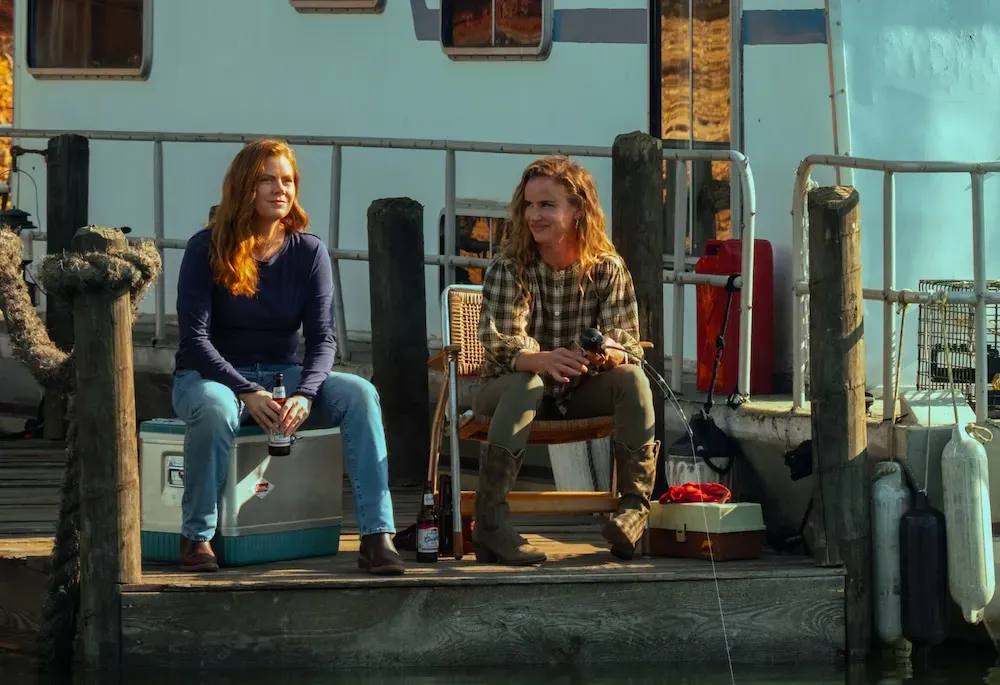
Juliette Lewis discusses the finale of Apple TV’s “Cape Fear,” titled “The Executioners,” and her reflections on Martin Scorsese’s 1991 film. She links the performance’s “nostalgic” nods to that era to why her character Crystal will “haunt” Max forever.
Spoiler alert is doing a lot of work here. In Apple TV’s “Cape Fear” finale, “The Executioners,” nothing good happens when the story goes to a houseboat. Juliette Lewis, who returns with a character that lands with real heat, frames the finale as the kind of “Cape Fear” escalation that always feels inevitable, even when you think you’ve seen the worst. That inevitability is part of what makes the episode hit. And it is exactly why the conversation matters beyond fandom.
Lewis ties her “nostalgic” nods to the 1991 Martin Scorsese film directly to the emotional memory the franchise is built on. In that original, Lewis was nominated for an Oscar at 18 years old, which means her relationship to this story is not casual. It is career defining, and it colors how she approaches what comes next on screen. When she says Crystal will “haunt” Max forever, she is describing more than a plot point. She is describing a character imprint, the kind that makes audiences feel like the story has a long tail, even after the credits.
From a decision-maker perspective, this is a useful reminder of what actually drives premium streaming narratives. The economics are obvious. The second and third order effects are the ones that get missed. A franchise like “Cape Fear” is not only selling an episode. It is selling continuity of tone and payoff. Lewis’ emphasis on the houseboat finale reinforces how this version is engineered for a specific viewing experience: pressure builds, tempers flare, and the setting locks characters into choices that tighten rather than loosen. That is audience design.
There is also a clear creative incentive to lean into the 1991 reference points. “Nostalgic” nods do not just reward existing fans. They also give new viewers a psychological shortcut. When a modern adaptation signals the lineage, it tells the audience what emotional language to expect. In practice, that reduces cognitive load, because viewers are not guessing which parts are meant to be haunted, which parts are meant to be brutal, and which parts are meant to feel like echoes. It can be the difference between “interesting” and “unforgettable,” especially for thrillers where pacing is the product.
Lewis’ own background is the other lever here. She is recalling a moment when the 1991 film hit at full cultural velocity, when she was nominated for an Oscar at 18. That detail matters because it anchors the performance, not just the plot. If you are an executive, producer, or platform operator, you know why: talent credibility is not only about casting. It is about trust. When an actor with that kind of history speaks about the story’s emotional afterlife, the audience senses authenticity. They do not just feel guided. They feel protected by expertise.
And then there is the line about Crystal “haunt[ing] Max forever.” Even without turning that into a marketing slogan, it is the kind of statement that reveals how characters can be positioned as enduring assets. For boards and leadership teams, this is the strategic question behind adaptations: does the work create reusable intellectual property energy, or does it burn out at the finale? Lewis is implying that Crystal is built to persist in viewers’ minds. That persistence is the closest thing to a durable asset in entertainment, because it drives watch behavior, word of mouth, and repeat engagement.
Finally, the episode’s title, “The Executioners,” signals a thematic severity that pairs with the spoiler-heavy setup. “Cape Fear” is not a franchise that plays politely with moral discomfort. It is one of those stories where the environment does not merely host the drama, it amplifies it. Lewis’ quip about nothing good happening on a houseboat is funny in the way the genre always is, but it is also a reminder that the tension is structural. The setting forces the characters into a pressure cooker, and that pressure becomes the engine for the finale.
For peers in the streaming era, the takeaway is not “copy the tone.” It is the underlying mechanics. Nostalgia works when it is tethered to genuine continuity, not decorative references. Performance credibility works when it is grounded in real career history, not just star power. And character hauntability works when the finale is designed to land an emotional imprint that lasts longer than a single viewing. Lewis’ framing suggests “Cape Fear” is aiming for exactly that kind of afterlife, with Crystal poised to follow Max beyond the last scene.
This story's Key Insights and Take-aways are locked.
Create a free account to unlock Executive Actions for one credit.
Register to UnlockAlways free for Executives Club members. Join the Club
More in Entertainment

Ali G's 'stooge' says he was in on joke, outplayed Sacha Baron Cohen
A 54-year-old aspiring actor says he recognized Sacha Baron Cohen mid-shoot, kept his MAGA act up, and let the film-makers think they had fooled him.

Entertainer Russell Brand denies 7 sex charges amid accuser's 'couldn't breathe' claim
The alleged victim's account sharpens the reputational and legal stakes for Brand, his platforms, and any business tied to a public figure under criminal scrutiny.

Russell Brand's accuser 'bewildered and confused' as he denies 7 sex charges
The criminal case against the comedian is a live test of how media companies manage talent risk when serious allegations go public.