
June Germany flipped: EVs beat petrol and diesel with 84,057 registrations
Germany’s Federal Motor Transport Authority shows battery-electric vehicles hit 28.4% share, forcing a new fuel reality.
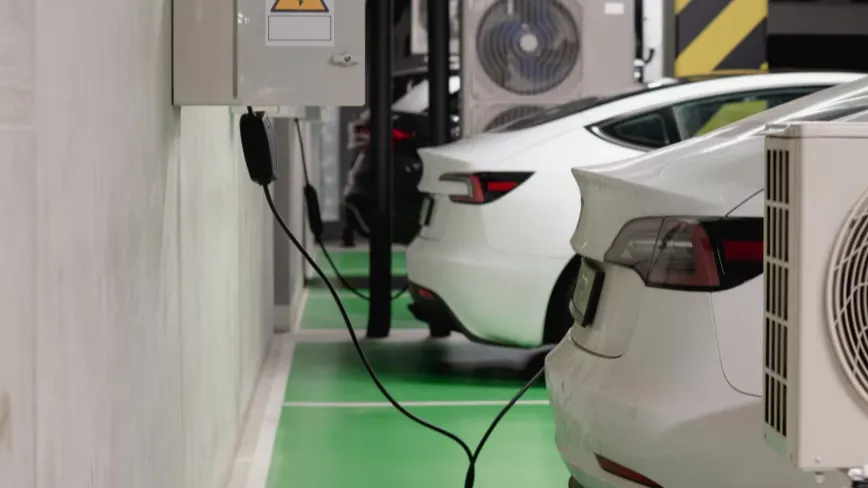
In June, Germany’s Federal Motor Transport Authority recorded 84,057 new EV registrations, a 78.2% year-on-year jump, giving battery-electric vehicles a 28.4% market share. The consequence for decision-makers: the country that standardized the modern car is proving EV demand is not a niche anymore.
Germany just posted a number that matters because it is Germany doing it. In June, battery-electric vehicles registered 84,057 new registrations, according to the country’s Federal Motor Transport Authority, the KBA. That figure is not only bigger than last year, it is bigger enough to put EVs ahead of every other fuel type for the first time. The KBA also measured EV growth at 78.2% year-on-year, and battery-electric vehicles reached 28.4% market share.
That “first time” is the whole point of the story. Germany, often described as the birthplace of the car, is showing that customer behavior is moving from experiments to outcomes. And the margin is real: traditional hybrids came second with 83,315 registrations (28.1%), followed by petrol at 60,796 (20.5%) and diesel at 33,862 (11.4%). In other words, even the runners-up were close, but EVs still crossed the line.
To executives, these rankings are more than trivia. They are a signal about demand strength and product-market fit, and demand is the input most companies can not easily fake or delay. When battery-electric takes the top spot in a large, auto-saturated market, it changes how much capacity is worth building and where the next wave of spend should go. It also changes the debate inside boardrooms about timelines, because a market share reading is more stable than a one-off headline.
There is also a momentum effect hidden inside the year-on-year growth rate. The KBA data says EV registrations rose 78.2% year-on-year, while the new registration totals for the other categories lag behind the EV surge. That kind of growth rate tends to attract ecosystem investments: charging rollouts, dealer training, fleet deals, and supplier planning. It is not automatic, but it is common. When the curve turns, infrastructure and supply chains tend to follow, and when those follow, the curve can keep turning.
Regulators and policymakers matter here too, but the source is specific about what was measured, not why. The KBA captured registrations by fuel type, and those registrations became a kind of scorecard for the market. For decision-makers, this matters because future rules, incentives, and enforcement often respond to observed adoption, not aspirations. Once EVs lead on registrations, it becomes harder for stakeholders to argue that EVs are “early days” only. Even if policy debates continue, the data raises the floor for what is politically and commercially credible.
It also reframes competition within “electrification” strategies. Traditional hybrids are still neck-and-neck with EVs in this June snapshot, with 83,315 registrations (28.1%). That is an important reminder for executives who treat EV adoption as an either/or story. The market is currently splitting preference between battery-electric and traditional hybrids, and both are ahead of petrol and diesel. If you are an OEM, a supplier, or a charging operator, the board question stops being “will electrification happen?” and becomes “how fast does it migrate from hybrids to full EVs, and what do we prioritize during the overlap?”
For investors and operators, the bigger second-order implication is resource allocation. Plants take time. Tooling takes time. Training takes time. If a market like Germany starts placing battery-electric at the top based on KBA-recorded registrations, it affects capital planning cycles, procurement decisions, and go-to-market budgets. It also affects how you benchmark performance against peers. In a country where petrol and diesel historically had deep roots, leading share is not the same as leading share in a smaller market. It is a tougher test, and it increases the odds that competitors will recalibrate their own assumptions.
Finally, there is cultural gravity to this moment. Germany being the “birthplace of the car” is not just a nice line. It is shorthand for an industry that helped build the status quo. When the market flips in such a place, the industry has to treat EV adoption as a baseline expectation, not a side quest. The strategic stake for boards across the auto and mobility ecosystem is simple: if June data from the KBA says battery-electric can win registrations at 28.4% market share, then planning around slow adoption looks riskier. The question is no longer whether EV demand is real. It is whether your company is positioned for the next phase of the same reality.
This story's Key Insights and Take-aways are locked.
Create a free account to unlock Executive Actions for one credit.
Register to UnlockAlways free for Executives Club members. Join the Club
More in Technology

Google quietly links your phone number to every Android account on your SIM
Adding a SIM now ties your phone number to all Google accounts - and future accounts inherit it. Here's the security and privacy stakes.

Hijacker AI 'Skynet mode' runs 100,000 attack steps against exposed models
Symantec caught a criminal AI agent that borrows other models, steals data, and mines crypto; the only relief is no confirmed victims yet.

Nvidia's AI-financier shift faces its first big test as neoclouds stumble
A rout in neocloud stocks is forcing investors to weigh Nvidia's hidden exposure as both supplier and lender to the AI buildout.