
Jurassic warming 183 million years ago: eroding organic carbon supercharged climate
A Nature Communications study reopens the rock-weathering carbon debate, showing when erosion can amplify warming instead of cooling.
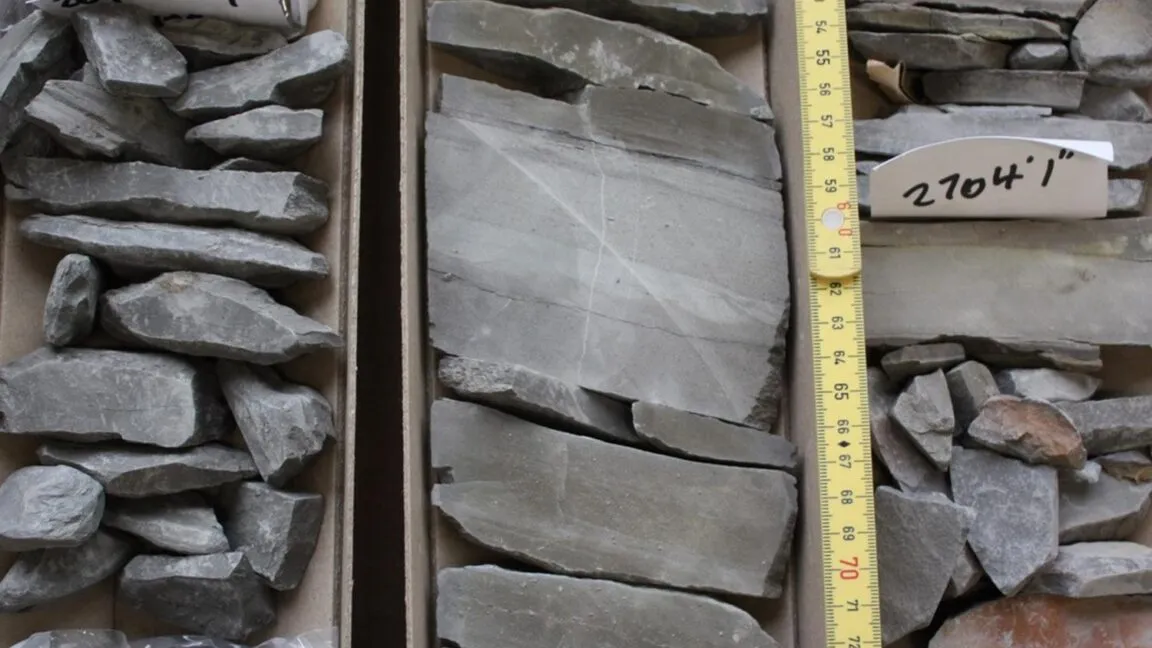
Doctor Madeleine Stow of the University of Oxford and collaborators used the 183 million-years-ago Toarcian Ocean Anoxic Event to test rock and sediment weathering’s net climate effect. They found that eroding organic carbon amplified climate warming during the event, complicating how to project today’s climate trajectory.
For decades, Earth scientists have taught a clean story: as rocks weather and erode, they remove carbon dioxide from the atmosphere. That CO2 drawdown is one of the reasons climate can stabilize over geological timescales. But a Nature Communications study now injects a messier truth into the model: erosion can also emit CO2, by oxidizing organic carbon locked inside eroding sediments.
Here is the part that matters for decision-makers staring at risk models and long time horizons. In a volcanically triggered global warming episode early in the Jurassic period, 183 million years ago, the “competition” between CO2 removal by rock weathering and CO2 emission by organic carbon weathering did not balance out neatly. Doctor Madeleine Stow of the University of Oxford and colleagues examined the Toarcian Ocean Anoxic Event, and they found that eroding organic carbon amplified climate warming at the time.
Why does this sound like a footnote, and why is it actually a big deal? Because modern climate policy, corporate emissions strategies, and investment planning all lean on how carbon moves through the Earth system. Even though we are not running 183-million-year experiments, the underlying chemistry still shapes how we think about natural carbon sinks and sources. The study highlights that “rock weathering” is not one behavior. It is a two-sided switch. In some settings, weathering removes CO2. In others, erosion oxidizes organic carbon in sediments and releases CO2. The question is not whether both happen. The question is which one wins, and when.
The paper’s approach uses the geological past as a stress test. Stow and colleagues did not treat the Toarcian Ocean Anoxic Event as an academic curiosity. They used it as a natural experiment tied to volcanic forcing. The event is “known as the Toarcian Ocean Anoxic Event,” and it occurred in the early part of the Jurassic period, 183 million years ago. By examining what happened during that episode, the authors could test how competing processes added up under real Earth-system conditions, rather than guessing from theory alone.
In the original framing, recent studies had shown that erosion can emit CO2, but it was not clear how the competition ends up affecting climate. This new work is trying to answer that missing link. The authors’ finding, as described in the report, is that eroding organic carbon amplified climate warming during the Toarcian event. That suggests a mechanism that could plausibly matter today as well, where erosion, sediment transport, and organic carbon availability vary with land use, rainfall intensity, and ecosystem disturbance.
Now zoom out to the boardroom layer. When risk teams evaluate climate, they often separate policy risk from physical risk, and physical risk from system feedbacks. Feedbacks are where models get slippery, because outcomes depend on multiple interacting processes. The study is, in effect, a reminder that feedbacks upon feedbacks exist in the carbon cycle itself. If erosion in certain contexts drives CO2 release, then any planning that assumes weathering is automatically cooling could understate warming pressure. Conversely, if weathering dominates, then mitigation efforts could interact with natural drawdown differently than expected.
There is also a governance angle. Regulatory frameworks increasingly demand credible accounting for emissions and, in some cases, for natural carbon removals. Even when the frameworks are not directly modeling Jurassic chemistry, they still depend on the basic principle that some processes remove CO2 while others emit it. A more granular understanding of when erosion moves carbon one way or the other can affect how stakeholders interpret credits, offsets, and claims about “nature-based solutions.” The source is careful on this point: the “extent to which the past is prologue is uncertain.” That uncertainty is not a throwaway line. It is the boundary condition executives should respect, especially when turning science into commitments.
So what should executives take from this? First, carbon-cycle inputs are conditional. Weathering and erosion do not have a single sign. Second, the winning process can depend on what is available in the system, like organic carbon contained in eroding sediments. Third, geological episodes like the Toarcian Ocean Anoxic Event give evidence that amplification is possible under volcanic forcing, even if translating it to modern times remains uncertain. In practice, that means climate risk teams should treat natural feedbacks as scenario variables, not background constants.
And yes, the headline stakes are unusual: we are talking about 183 million years ago. But the investment stakes are current. If erosion can amplify warming in certain conditions, then a world that is already pushing land systems, water cycles, and sediment dynamics toward extremes may be more prone to carbon-cycle surprises than a simplistic “weathering removes CO2” narrative implies. That is exactly the kind of “known-unknown” that can move strategy when the downside is not only hotter temperatures, but also less predictable carbon feedbacks.
This story's Key Insights and Take-aways are locked.
Create a free account to unlock Executive Actions for one credit.
Register to UnlockAlways free for Executives Club members. Join the Club
More in Science

2026 Nikon Small World Winners Reveal the Hidden Machinery of Everyday Life
A mycologist's frozen Edinburgh garden became the backdrop for vivid views inside cells, a reminder of what advanced imaging now makes visible to researchers and the industries built on biology.

Study: 1 in 4 depression cases may be a body-clock problem, not a chemical one
A 10,000-person study finds standard antidepressants often fail these patients, but melatonin and morning sunlight may hit the real root cause.

Start-Up Says A.I. Designed a Virus to Attack One Patient's Superbug
If the claim holds up, personalized phage therapy could become a new frontline weapon against antibiotic resistance - but proof is far from final.