

JWST spots the same Pluto-Titan infrared mystery feature, but scientists still cannot identify it
A signal at an identical wavelength shows up on both worlds, forcing researchers to narrow down prebiotic chemistry candidates.
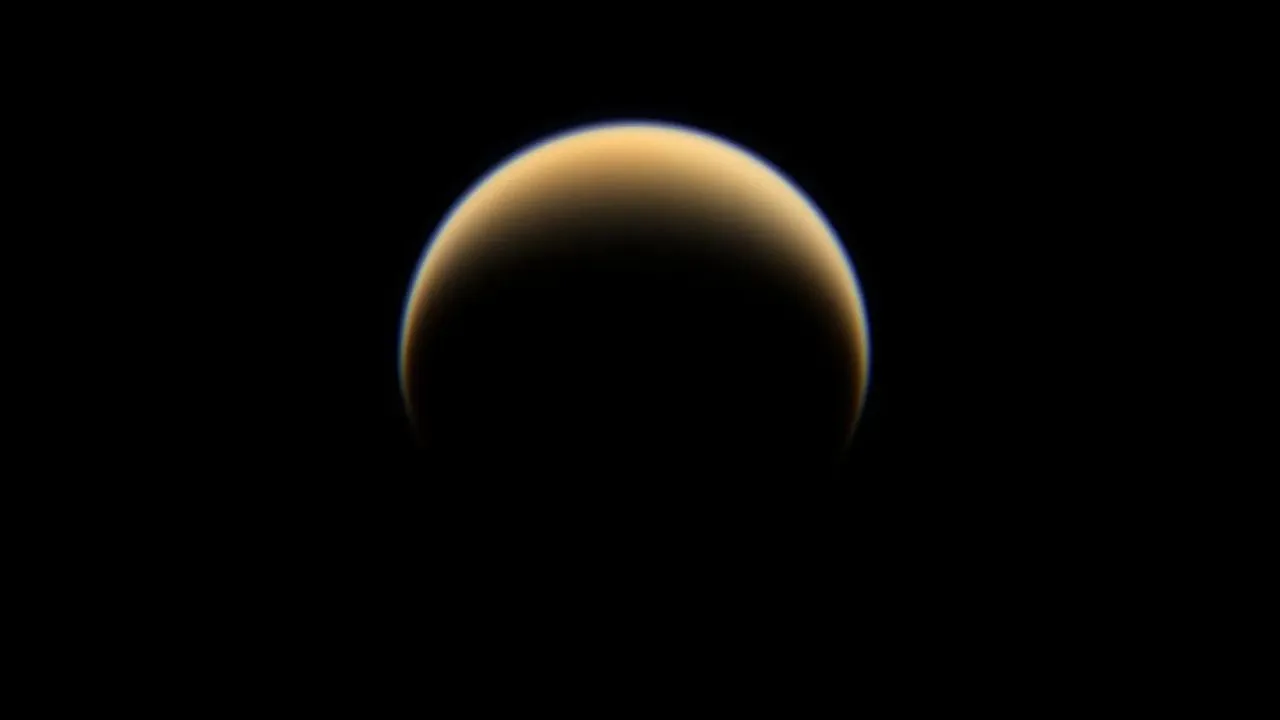
Scientists using the James Webb Space Telescope (JWST) found an identical, unexplained infrared absorption feature on Saturn's moon Titan and dwarf planet Pluto. For decision-makers tracking mission ROI, science credibility, and tech readiness, it means JWST is delivering repeatable leads, not one-off noise.
The James Webb Space Telescope (JWST) has uncovered an infrared feature on both Saturn's moon Titan and dwarf planet Pluto that appears at precisely the same wavelength, and yet scientists still cannot say what it is. The discovery, led by Bruno Bézard of the Paris Observatory, shows the signal absorbing light identically on both worlds, even though Titan and Pluto have wildly different environments.
Bézard, a planetary scientist at the Paris Observatory who led the discovery, told Space.com: "It's rather mysterious." He added, "We cannot say what it is." The fact that two far-apart worlds share the same signature is the core puzzle, and it matters because it turns a tricky observational anomaly into a trackable chemical lead that future instruments can test. The new study, accepted for publication in Astronomy & Astrophysics, reports that the feature neither matches any standard cataloged spectra so far nor looks like a hardware fluke, because the same absorption feature was detected by two different JWST instruments: the Near-Infrared Spectrograph (NIRSpec) and the Mid-Infrared Instrument (MIRI).
So what exactly did JWST see? While analyzing Titan observations from November 2022, researchers used narrow wavelength bands to peer through Titan’s otherwise opaque haze. They then relied on spectroscopy, a method that identifies compounds by the specific wavelengths of light they absorb. In planetary science, this works because molecules tend to leave unique spectral fingerprints. Here, though, the mystery fingerprint does not match the standard library spectra cataloged so far. That is the first constraint, and the second is that the feature’s exact match across worlds and across instruments is what keeps it from being dismissed as random noise or a measurement artifact.
The team also did something that often separates real science from wishful thinking: they hunted for the feature on another world with a strong reason to be relevant. Bézard first spotted it in Titan data, then asked Emmanuel Lellouch, also at the Paris Observatory, who had led a JWST program observing Pluto in May 2023. In Bézard’s account to Space.com, he asked if Pluto had a signature at this exact wavelength. The answer was yes. The exact same absorption feature appears on Pluto, reinforcing that the wavelength match is not a one-world coincidence.
From there, the study moves from “we see a signal” to “where does it come from?” Because Titan has a dense atmosphere and Pluto has a tenuous, near-vacuum atmosphere, scientists can use the physics of observing spheres and atmospheres to infer the likely location of the carrier molecule. On Titan, the mysterious signal steadily weakened as JWST scanned from the center of Titan’s circular face to its limb (edge). This center-to-limb dimming pattern is what you would expect if the signal originates at the surface, because a surface feature appears strongest when the line of sight is most direct and becomes more obscured with longer path lengths through the atmosphere toward the limb. The team also checked atmospheric carbon monoxide, which remained essentially unchanged from center to limb. That differential behavior supports the conclusion that the mystery compound likely sits on the ground rather than being produced or distributed in the atmosphere alone.
Pluto then offered an independent reality check. Bézard said Pluto’s near-vacuum atmosphere is physically too thin and sparse to generate an absorption feature of the observed depth, leaving the solid surface as the only plausible source for the deep signature. The logic is simple but powerful: if the atmosphere cannot produce it on Pluto, the signal is likely coming from solid material that both worlds have in common through their respective chemistry. To pressure-test that atmosphere-to-surface hypothesis further, the researchers examined JWST observations of Jupiter’s moon Ganymede. Because Ganymede lacks a nitrogen-methane atmosphere, it cannot run the same photochemical engine as Titan and Pluto. Sure enough, they found no trace of the mysterious feature, suggesting the signature is uniquely tied to nitrogen-methane chemistry.
Now comes the “what is it” part that Bézard and the team cannot close yet. The study says there is no evidence the mystery molecule is a biosignature. Instead, it likely reflects prebiotic chemistry that has been operating in Titan's oxygen-free environment for more than 4 billion years. One compelling possibility is that it belongs to a family of hydrocarbons known as allenes. The study notes allenes are essentially the only organic compounds known to exhibit strong absorption bands within the same 5-micron infrared range as the mystery signal. But the allene family contains many complex variations for which complete spectra do not yet exist, and Bézard said that incomplete spectral coverage limits how confidently scientists can pin the signal to a specific member.
There is also another path to the same destination: the absorption could belong to a known molecule whose spectral fingerprint has shifted, potentially because it is mixed with other planetary ices that have not yet been fully cataloged. As Bézard put it, “We only have spectra for the simplest of them.” It is possible, he said, to find one or several compounds present together that create the observed absorption feature. In other words, the signal may be less like a single “name tag” molecule and more like a combination that only looks simple because our spectral libraries are still catching up.
Looking ahead, the study points to near-term and long-term ways to narrow the shortlist. In the coming months, researchers are analyzing newer JWST observations that provide a more complete view of Titan as it rotates. That will allow them to map the mysterious infrared signature across Titan’s surface and test whether it correlates with specific geologic features, such as Titan’s vast organic-rich dune fields. Those dunes are continually replenished by a slow drizzle of complex particles produced in Titan’s atmosphere, so a spatial association would directly connect chemistry to terrain.
For companies and boards watching space science, this is a reminder of how credibility compounds. JWST is not just collecting pretty images; it is generating repeatable, instrument-confirmed spectral leads that missions can build on. And for Titan specifically, the next step is NASA’s Dragonfly mission, expected to launch in 2028 and arrive at Titan in the mid-2030s. Dragonfly does not carry an infrared spectrometer to replicate JWST’s light measurements. But its onboard mass spectrometer can “taste” organic molecules across the areas it visits. By revealing which compounds are actually present on Titan’s surface, Dragonfly could produce a shortlist of candidates that scientists can replicate in Earth laboratories to see if they match the mystery signature’s traits.
In the meantime, the strategic stakes are unusually clear. Titan and Pluto are both governed by nitrogen and methane in their atmospheres, and spacecraft observations plus lab simulations suggest ultraviolet sunlight breaks those molecules apart in the upper atmosphere. The reactive fragments then reassemble into complex organics, some of which condense and “snow” down to the surface where JWST detects them. If researchers can identify the carrier molecule, it would tighten the chain from atmospheric photochemistry to surface deposition across two very different worlds. If they cannot, the best outcome is still progress: narrowing the unknown to specific chemical families and combinations, so the next missions, spectra libraries, and lab experiments converge faster.
This story's Key Insights and Take-aways are locked.
Create a free account to unlock Executive Actions for one credit.
Register to UnlockAlways free for Executives Club members. Join the Club
More in Science
2026 Nikon Small World Winners Reveal the Hidden Machinery of Everyday Life
A mycologist's frozen Edinburgh garden became the backdrop for vivid views inside cells, a reminder of what advanced imaging now makes visible to researchers and the industries built on biology.

Study: 1 in 4 depression cases may be a body-clock problem, not a chemical one
A 10,000-person study finds standard antidepressants often fail these patients, but melatonin and morning sunlight may hit the real root cause.

Start-Up Says A.I. Designed a Virus to Attack One Patient's Superbug
If the claim holds up, personalized phage therapy could become a new frontline weapon against antibiotic resistance - but proof is far from final.