

Kaleidescape Strato E makes streaming look dated, and a $3,000 wallet reality
A small 4K disc player argues that “convenience” cost you picture quality for 15 years.
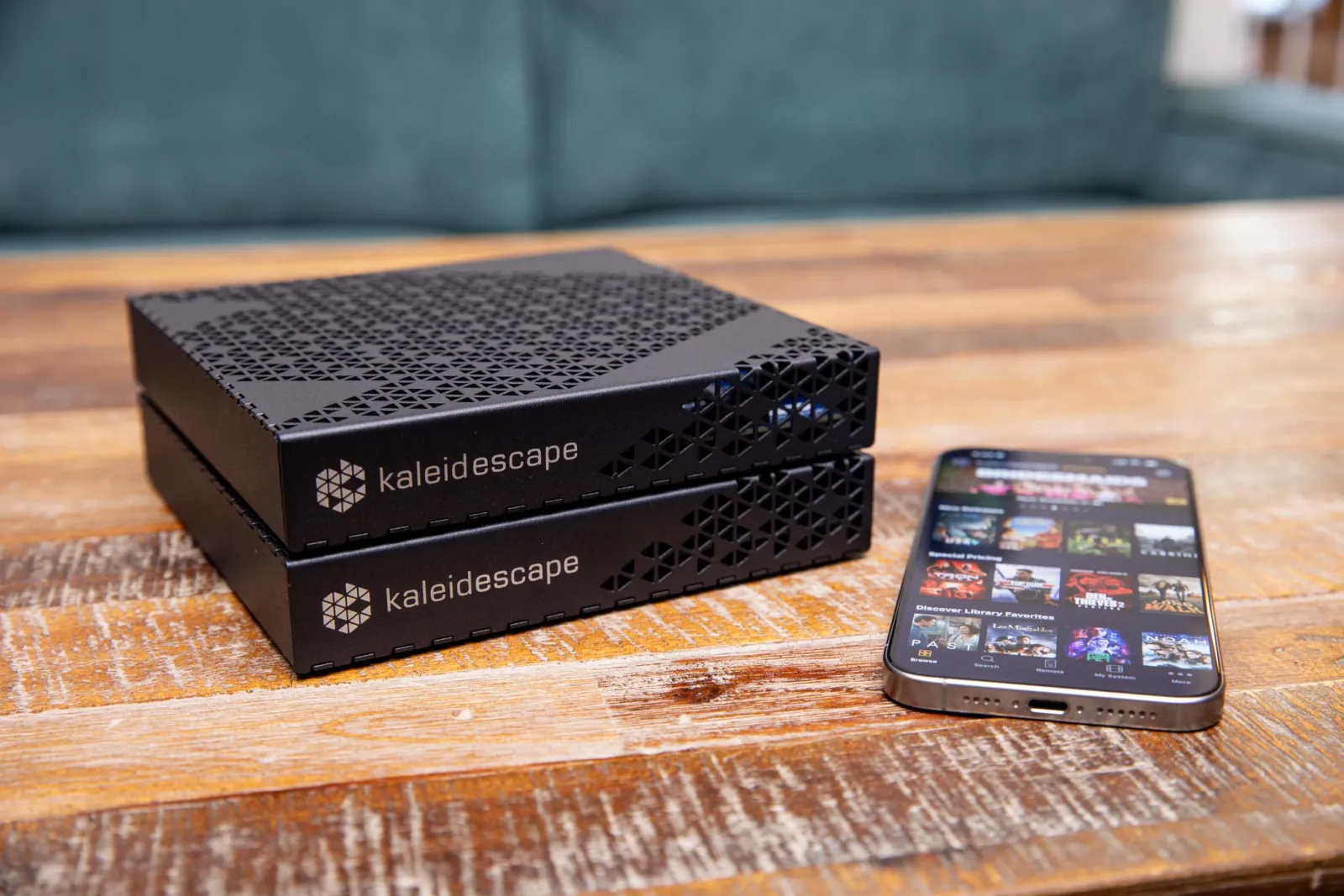
Kaleidescape’s Strato E player is a compact 4K movie system built around physical discs, and it directly calls out the quality tradeoffs of streaming. For decision-makers, it signals a wedge: premium home entertainment can shift from “best-in-class streaming” to “best-in-class delivery.”
Kaleidescape’s Strato E is smaller than a Blu-ray disc collection, yet you can load it with a lot of 4K discs for about $3,000. That price point is the quiet punchline: the modern default, streaming, is supposed to make movie nights effortless. But the Verge frames a harsher tradeoff, one most people never fully see on paper. Over the past 15 years, consumers traded quality for convenience, feeding increasingly capable TVs with streams that are bitrate-starved and internet-throttled.
The Strato E, paired with a Mini Terra Prime server, is positioned as the alternative to that long slide. The Verge’s core claim is blunt: streaming services, even from Netflix, Amazon, Disney, and Apple, have convinced people that “at-home” watching is best handled by the internet. Kaleidescape’s bet is that the experience should start with the source, not the network. Your fancy screen cannot show its full potential if what arrives is compressed, squeezed, and sometimes delayed by the realities of bandwidth.
To understand why executives should care, zoom out to how home media got redefined. Streaming removed several traditional frictions: no running to Blockbuster for a weekend rental, no waiting for a DVD to arrive in the mail, and no paying theater pricing just to watch something big. Those convenience wins are real. The problem, according to The Verge, is that they came bundled with a quality penalty that people stopped measuring the way they used to. Once “everything is at our fingertips” became the promise, the industry moved fast enough that quality differences became easier to overlook.
But that doesn’t mean the underlying constraints disappeared. Even though TVs have improved drastically, the Verge argues that the content pipeline has not kept pace in a way that guarantees maximum fidelity. Streaming requires compression, and it competes with your household’s network conditions. The result is inadequate, bitrate-starved streams that do not let today’s displays shine. In other words, the TV upgrade created a new mismatch: more capable hardware on one end, and a delivery system that often cannot feed it what it can actually handle.
This is where the Kaleidescape pitch becomes strategically interesting. A system that is “smaller than a Blu-ray disc collection” changes the economics and the psychology of physical media. You still deal with discs, but the storage and setup footprint is framed as manageable, not burdensome. And that $3,000 reference point matters because it sets a tangible ceiling against “ongoing” streaming assumptions. Executives and board members in consumer tech know this pattern: when a product can turn a fuzzy category (streaming convenience) into a measurable alternative (disc-based 4K for a defined outlay), buying decisions get easier, not harder.
There is also a market signaling effect worth calling out. Netflix, Amazon, Disney, and Apple have all invested heavily in streaming ecosystems, and streaming has trained audiences to expect a certain kind of access. If premium segments start asking whether convenience is masking quality loss, the pressure shifts upstream. Platforms do not just compete on catalog and user interface. They compete on delivery reliability, compression strategies, and the consistency of playback quality across real-world networks.
Second-order implications land hardest in the boardroom. When a compact, premium hardware player positions physical 4K discs as the path to unlocking a better viewing experience, it reframes value creation. The “killer app” is no longer just content. It becomes the end-to-end chain: source quality, distribution, and how well the system respects the capabilities of modern TVs. That can influence partnership strategies, product roadmaps, and how leadership evaluates whether to double down on streaming-first architectures or to build around alternatives that guarantee performance.
For peers watching consumer media, the strategic stakes are straightforward. Streaming may still win on frictionless access, but the Verge’s storyline suggests there is a persistent, underserved segment willing to trade some convenience for fidelity. If that segment grows, it will not be because mainstream streaming collapses overnight. It will be because enough customers begin to notice the gap between what their TVs can do and what streaming sends, and then they start looking for systems that close it. Kaleidescape’s Strato E is presented as one such system, and the $3,000 anchor gives the argument a budget-friendly shape.
This story's Key Insights and Take-aways are locked.
Create a free account to unlock Executive Actions for one credit.
Register to UnlockAlways free for Executives Club members. Join the Club
More in Technology

Nvidia's $89B data center quarter: the 9 companies cashing in
The AI buildout is minting fortunes beyond GPUs, and memory, cloud, and cooling suppliers are riding the same wave.

Google quietly links your phone number to every Android account on your SIM
Adding a SIM now ties your phone number to all Google accounts - and future accounts inherit it. Here's the security and privacy stakes.

Hijacker AI 'Skynet mode' runs 100,000 attack steps against exposed models
Symantec caught a criminal AI agent that borrows other models, steals data, and mines crypto; the only relief is no confirmed victims yet.