
Keir Starmer hints at resignation honours for his successor, despite earlier pledges
Starmer twice declined to rule it out before leaving No 10 in just over 10 days, handovers to Andy Burnham loom.
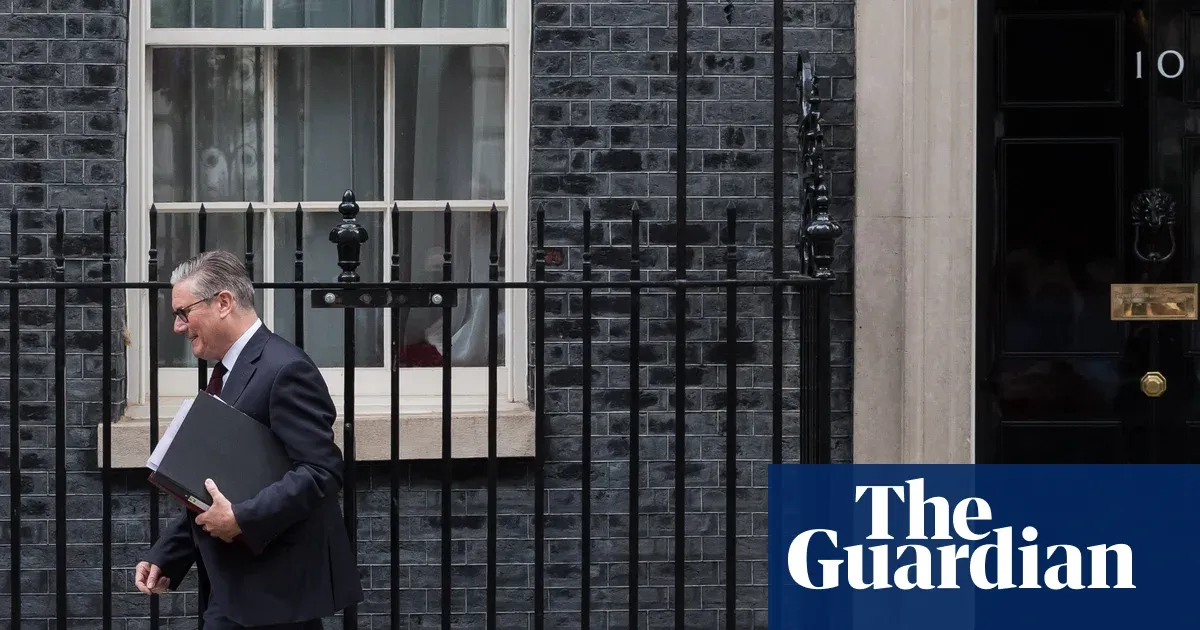
Keir Starmer, the outgoing prime minister, has signalled he could hand out resignation honours when he leaves Downing Street. That decision could reshape the political incentives facing the incoming administration led by Andy Burnham.
Keir Starmer, the outgoing prime minister, has signalled he could hand out resignation honours when he leaves Downing Street, even though he previously pledged three years ago that he would not do so when he eventually stood down. In the same stretch of reporting, the prime minister twice declined to rule out drawing up a list of honours when he stands down in just over 10 days’ time, with Andy Burnham set to succeed him.
That is the core tension: honours as a finish-line gesture, versus honours as a potential influence tool. Starmer’s earlier stance matters because it set an expectation that his time in office would avoid certain traditions at the end of the mandate. Now he is holding the door open, which means the clock is ticking for the incoming leadership transition, and it creates a real question for everyone watching how power gets wrapped up when a prime minister changes.
Why should decision-makers care, beyond the political theater? Because the honours system is not just ceremonial. It is a formal mechanism that can signal who is rewarded, who is elevated, and which relationships are validated. Even if honours are governed by public rules, the underlying incentives are human and intensely second-order. When an outgoing leader appears willing to revisit a previously stated position, it can change how people in the orbit of government think about timing, signaling, and whether to lobby before the final days rather than after the transition.
In this case, Starmer’s statements are also about credibility and constraint. Pledging not to award resignation honours three years ago implies a commitment to a certain standard for how the office behaves at exit. When a leader later declines to rule out the very thing they said they would not do, it shifts the bargaining environment. The incoming administration led by Andy Burnham will inherit not only policy challenges but also the reputational residue of whatever list might be drafted in the final days. Even if the honours do not change law, they can shape the social map of influence, particularly in politics where networks, committees, and informal relationships matter.
For context, resignation honours are typically discussed as a final opportunity to recognise public service. But the important executive-style lens is process risk. The closer the decision is to departure, the more pressure there is on coordination, review, and political optics. The story notes that Starmer twice declined to rule out drawing up a list of honours. That is not a promise. It is an uncertainty. Uncertainty is powerful because it keeps stakeholders uncertain for longer, and that can lead them to hedge their strategies and communications during the transition window.
The transition itself is unusually tight in the source, with Starmer standing down in just over 10 days’ time. That timeframe compresses everything: administrative handover, message discipline, and stakeholder management. If rumours or signals about resignation honours move fast, so do reactions from people who might expect recognition, or from those worried they will miss it. That can produce a last-minute scramble around access, paperwork, and lobbying. In corporate terms, this is like a CEO nearing exit and deciding whether to finalize a controversial discretionary bonus program. Even if the program is “allowed,” the optics and timing can set internal culture for the next CEO.
There is another layer: Starmer’s own credibility with the public and the institutional system. The story is explicit that he pledged three years ago not to award resignation honours when he eventually stood down, then has now signaled he could. That mismatch is the kind of detail that can become a reference point for critics and supporters alike. For peers and political operators, the strategic takeaway is that pledges are not just promises, they are constraints. Once a leader softens a pledge without fully committing to an action, everyone recalibrates what is possible, including future successors who may also face the same exit incentives.
Finally, the stakes for decision-makers and boards, even in a political setting, are about precedent. If resignation honours are permitted or deployed as a late-stage tool, outgoing leaders may be more willing to treat “exit choices” as leverage, while incoming leaders must decide whether to tolerate it, reinterpret it, or distance themselves. Starmer is leaving with Andy Burnham taking over, but the honours question could follow Burnham into the early period of governing, affecting stakeholder trust and how quickly the new administration can set its own tone.
In a world where transitions define careers, that is the real value of watching this now. Starmer’s refusal to rule it out, in just over 10 days’ time, signals that the outgoing hand may still be able to reach into the incoming era. For anyone running institutions, that is a reminder that the end of the term is never purely ceremonial.
This story's Key Insights and Take-aways are locked.
Create a free account to unlock Executive Actions for one credit.
Register to UnlockAlways free for Executives Club members. Join the Club
More in Politics

Glacial collapse, not rain, killed 180 in Nepal's Himalayan flood
The Himalaya's extreme geography hid the true cause of Nepal's catastrophic flood, a glacial collapse that turned a geological battleground into a mass-casualty zone.

Iran’s Esmail Baghaei says Oman talks start shipping via Hormuz, not US talks yet
Temporary route plans with Oman aim to restart commerce while Tehran says Washington dialogue is not on the table.

Standards watchdog opens probe into Reform UK deputy leader Richard Tice over interests
The parliamentary standards commissioner says it began an investigation on 28 July into a possible undeclared interest.