

Ken Burns blasts America 250: “Washington needed no monuments” hits political memory hard
The filmmaker’s warning about Trump-era celebrations turns a national anniversary into a governance question for elites.

Ken Burns, the filmmaker behind the America 250 documentary, says “Washington needed no monuments.” The comment matters because how leaders shape public memory affects legitimacy, coalition-building, and policy momentum.
Ken Burns is not letting “America 250” become just another feel-good anniversary montage.
In an interview about the event, the filmmaker behind the America 250 project argues that Washington did not need monuments. Burns’s line, “Washington needed no monuments,” is aimed at the way the Trump era has framed the upcoming 250th anniversary, including the politics of what gets built, celebrated, and remembered. The immediate stake is simple and very executive in nature: public memory is not neutral. It becomes a tool that leaders use to signal values, consolidate support, and draw boundaries around who belongs.
That may sound like culture, not strategy. But for decision-makers, it is strategy. When a major government-linked celebration emphasizes monuments, ceremonies, and symbol-first messaging, it is often doing two things at once. First, it tries to compress a complex national story into something legible and repeatable. Second, it steers attention away from less cinematic questions like governance capacity, institutional trust, and whether policy outcomes match the narrative. In other words, the monument is never just the monument.
Burns’s critique lands especially hard in an environment where political legitimacy is treated as a scarce resource. The more a leadership team leans on symbolic megaphones, the more it raises the bar for tangible follow-through. If the symbolic push outruns measurable progress, it can flip from mobilizing to polarizing. And because America 250 is meant to be a national event, it drags corporate sponsors, media companies, museums, and civic partners into the optics. That expands the risk surface from “public sentiment” to brand associations and reputational exposure.
There is also a governance angle that boards and regulators would recognize even if they do not call it that. Large public anniversary programs typically require coordination across public agencies and private stakeholders. Even when the work is cultural, the project management resembles infrastructure: budgeting, approvals, contracting, procurement, and compliance. When leadership frames the program through a high-emotion lens, it can change how stakeholders interpret deadlines and decisions. It can also influence who gets inside the tent. And when inclusion is contested, executives pay the price later in delayed partnerships, tougher stakeholder negotiations, and more intense scrutiny from lawmakers or oversight bodies.
For media leaders and entertainment-adjacent operators, Burns’s comment also points to a deeper incentive mismatch. Content makers want audience connection. Political institutions want alignment. When those forces collide, the result is often a debate about authenticity. Is the story educational, unifying, and historically grounded? Or is it a curated narrative designed to reinforce a current political identity? Burns is essentially arguing for a less symbol-dependent approach to nationhood, which implies that history should not be smuggled into politics via monuments alone.
The second-order effect for companies is not just reputational. It is operational. During major national moments, sponsors and partners commonly have to decide what their role is and how they are positioned. Are they neutral supporters, or active endorsers of a certain political tone? Those choices can affect future regulatory and procurement conversations. They can also affect talent attraction and internal culture, because employees are not blind to why a company is suddenly showing up in a civic spectacle.
Burns’s phrase, “Washington needed no monuments,” is short, but it opens a bigger question: what does leadership actually build when it builds a narrative? In a high-stakes political climate, public memory is governance. The executives who understand that can navigate partnerships better, communicate with clearer intent, and reduce the risk of being pulled into symbolism-heavy controversies.
If you are a CEO, CFO, board member, or investor, the strategic takeaway is not that monuments are good or bad. It is that the America 250 storyline is a real-time test of how leaders manufacture legitimacy. The teams that get it right treat celebration as a complement to outcomes, not a substitute. The teams that get it wrong will find that the crowd remembers the signals, too.
This story's Key Insights and Take-aways are locked.
Create a free account to unlock Executive Actions for one credit.
Register to UnlockAlways free for Executives Club members. Join the Club
More in Politics

Glacial collapse, not rain, killed 180 in Nepal's Himalayan flood
The Himalaya's extreme geography hid the true cause of Nepal's catastrophic flood, a glacial collapse that turned a geological battleground into a mass-casualty zone.

Iran’s Esmail Baghaei says Oman talks start shipping via Hormuz, not US talks yet
Temporary route plans with Oman aim to restart commerce while Tehran says Washington dialogue is not on the table.
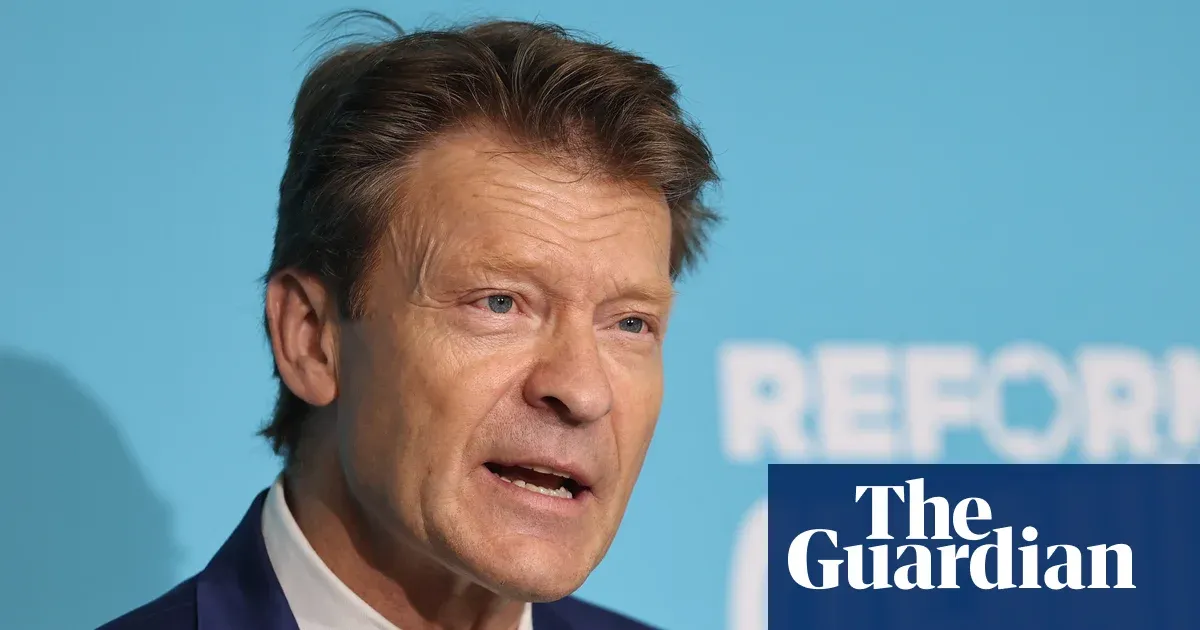
Standards watchdog opens probe into Reform UK deputy leader Richard Tice over interests
The parliamentary standards commissioner says it began an investigation on 28 July into a possible undeclared interest.