
Kevin Cate’s “Open Door” gets six-figure development deal for feature film
A viral sci-fi short with nearly 15 million views is getting a feature upgrade, signaling more creator-to-studio funding.
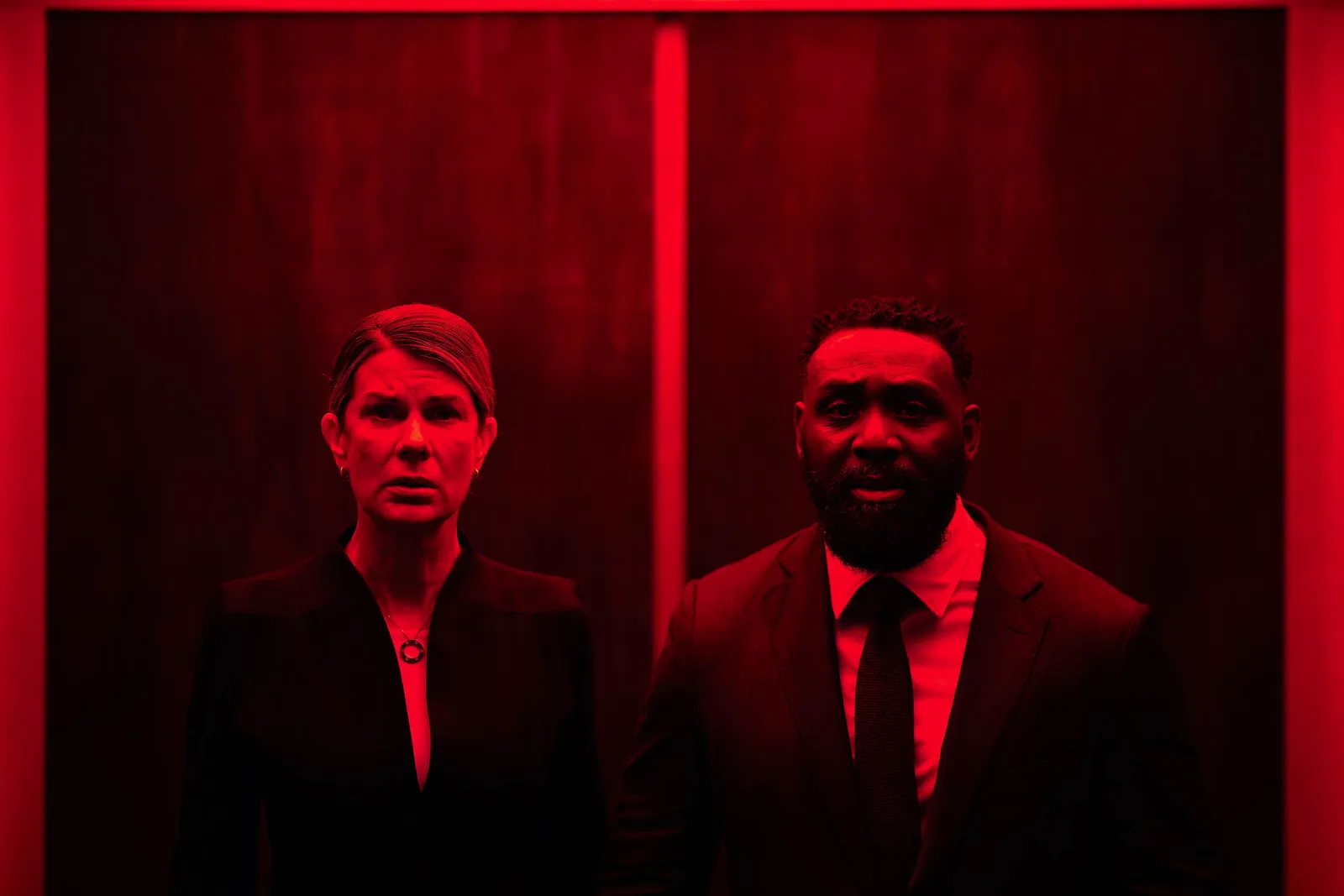
Kevin Cate’s viral sci-fi YouTube short “Open Door,” which has nearly 15 million views across YouTube Shorts, TikTok, and Instagram, is being adapted into a feature-length film via a six-figure development deal. For decision-makers, the deal reinforces how studios and financiers are systematically chasing younger, audience-backed creator IP for lower-risk bets.
“Open Door,” Kevin Cate’s viral sci-fi short, is making the leap from social feeds to feature film. Variety reports that the project is being adapted into a feature-length film through a six-figure development deal, after earning nearly 15 million views across YouTube Shorts, TikTok, and Instagram.
The immediate takeaway for executives is simple: this is not “viral, maybe later.” It is quantified audience traction (nearly 15 million views) paired with a real development commitment (a six-figure deal). And because it is crossing from short-form platforms into a feature-sized production, it effectively turns platform-native metrics into a studio-grade pipeline input.
Variety also frames the moment in the context of what has been working for horror and adjacent suspense IP. The announcement follows breakout horror films “Obsession” and “Backrooms,” both of which, per the coverage, helped set the stage for studios and investors to look more seriously at creators and younger filmmakers who already have established audiences. In other words, the industry is not just buying scripts. It is increasingly buying proofs of concept, where the proof is a repeatable reach pattern across multiple short-form channels.
Why that matters is economics and decision speed. Traditional development can be slow and expensive: you develop, you test, you package, you sell, you hope. Social-native hits compress parts of that loop because they come with immediate, public distribution and audience feedback. A viral short provides a built-in testing ground for tone, characters, and premise clarity. It also creates an argument for marketing efficiency, since there is already a known audience segment that has demonstrated willingness to watch.
This shift has second-order implications for boards and leadership teams. When development dollars flow toward creators with established followings, the boardroom conversation tends to change from “Is the concept good?” to “How transferable is the concept?” For a feature adaptation, the exec question becomes: will the short’s core hook scale into a longer narrative without losing the thing that made it spread in the first place. That is a creative risk, yes, but it is also a governance risk, since performance expectations can form quickly when a project comes with a visible view-count headline.
There is also an incentives layer. Studios and financiers want to reduce uncertainty, and a six-figure development deal is a measured commitment that lets them learn faster than a full-scale production. It is development-stage money, but it signals that gatekeepers are willing to underwrite creator-led IP when there is already demonstrated demand. That is especially relevant in a horror-adjacent space where audiences respond to specific vibe signals. Short-form platforms can act like an always-on radar for those signals.
Finally, there is a strategic competitive angle for peers in the creator economy. If “Open Door” is getting the feature treatment after nearly 15 million views, then the market is telling other creators, producers, and rights holders what gets funded. The industry playbook is evolving toward a two-step funnel: (1) prove resonance on YouTube Shorts, TikTok, and Instagram, then (2) convert that resonance into development deals that can graduate to theatrical or streaming feature formats. For executives, that means the sourcing and scouting function is no longer limited to film festivals or agent networks. It increasingly includes platform performance.
For leadership teams trying to balance creativity with capital discipline, this is the signal to watch: when viral short-form sci-fi or horror earns a development deal of six figures, it suggests studios are treating audience traction as an asset class input. If you are a studio exec, producer, or investor evaluating similar projects, the stakes are whether you can translate short-form audience signals into long-form profitability while protecting creative integrity and production viability. In the current environment, “nearly 15 million views” is not just trivia. It is becoming a credible component in the pitch deck.
This story's Key Insights and Take-aways are locked.
Create a free account to unlock Executive Actions for one credit.
Register to UnlockAlways free for Executives Club members. Join the Club
More in Business

SpaceX debuts Friday on Nasdaq at $135, surges to $160.95, valued near $1.8T
A Nasdaq opening pop turns SpaceX into a public company overnight, forcing new money questions fast.
Elon Musk became the world’s first trillionaire after SpaceX IPO lifted him past $1T
SpaceX shares jumped, and Musk’s $800B pre-IPO value crossed a trillion, reshaping how investors price “moonshots.”

SpaceX stock closes at $161.11 after $2.1T debut valuation shatters expectations
The IPO priced at $135, surged on Nasdaq and Texas, and immediately rewired how executives think about mega-debuts.