

Kevin Feige wants Adam Driver for Marvel, and X-Men reboot talk won’t stop
The Marvel boss says he keeps trying to get Adam Driver into the MCU, including through Zoom-style catchups.
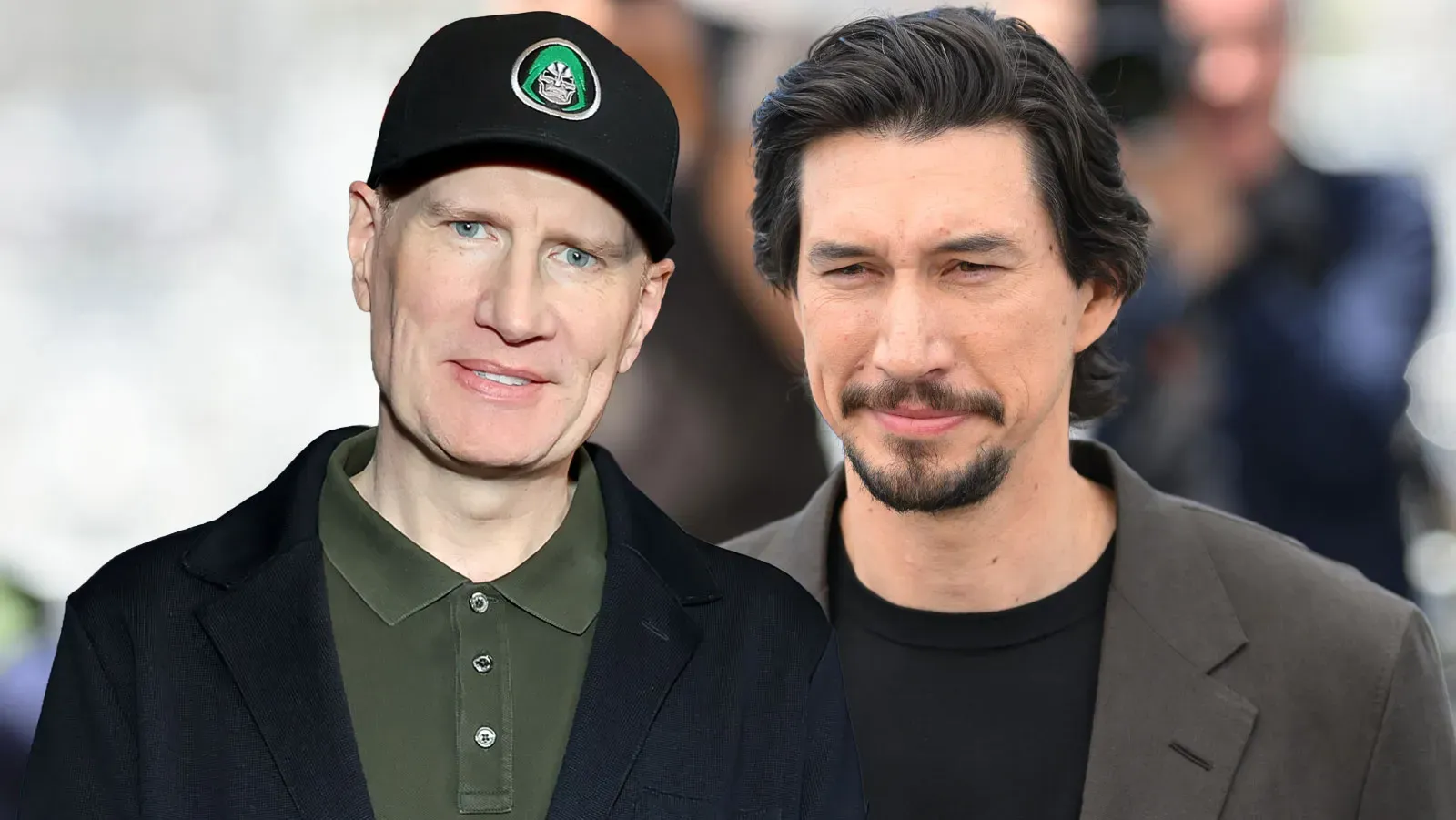
Kevin Feige, Marvel Studios' head, discussed his ongoing efforts to cast Adam Driver in a Marvel film role. The update matters for executives watching how IP tentpoles get talent, especially as X-Men reboot rumors swirl.
Kevin Feige says it is still not official: he has been trying to work with Adam Driver and cast him in a Marvel film role, even as X-Men reboot rumors continue to circulate. In other words, the Marvel machine has a very specific “could be him” name stuck in the gears, and the studio head is acknowledging the attempt without pretending it is a done deal.
And the way Feige described it is telling. He said it is a tradition to zoom with Adam Driver and then “he passes.” The phrasing is casual, but the meaning is sharp: Feige is not just vaguely interested. He has been reaching out, trying to align scheduling and roles, and it has not converted into a signed, announced casting. That matters because in a business like superhero franchises, talent attachment is not a footnote. It is a signal to investors, partners, and the creative pipeline, shaping what becomes plausible long before any release dates are locked.
This is also happening in a moment when Marvel and Fox’s legacy properties are in a constant state of rumor gravity. The X-Men are one of the biggest “how do you restart this without breaking it” story engines in entertainment. When rumors suggest a reboot could be real, everyone instantly starts mapping the likely casting ladder: recognizable faces, prestige credibility, box office bankability, and the kind of screen presence that can carry a franchise. Talent conversations at this stage are essentially a competitive sport. Even when nothing is confirmed, the search itself sets creative direction.
Feige’s comments land in that exact space between confirmation and speculation. He is not announcing a new role for Driver. He is also not denying that Driver has been a target. Instead, he is giving a behind-the-scenes glimpse into the process of courting one of today’s most in-demand actors. The “it’s a tradition to zoom with him” line suggests repeated outreach. That is consistent with how Hollywood typically works for top-tier talent: availability is the limiting factor, not interest. A major franchise role can be a career-defining pivot, but it also competes with existing schedules, development pipelines, and the timing of which projects actually become greenlit.
Why does this matter to decision-makers beyond movie fans? Because the MCU is not just a collection of films, it is an interconnected planning system. Casting is one of the earliest hard commitments that affects downstream work: script rewrites, character arcs, marketing narratives, and sometimes even how the studio structures release windows to match audience expectations. If Feige has been trying to cast Driver and cannot finalize it, that can ripple into who else gets pulled into contention, how quickly casting can lock, and how much flexibility a production team has to adapt to changing timelines.
There is also a boardroom angle. Executives often treat franchise risk as a portfolio problem: if one film underperforms, the overall ecosystem can still carry the brand. But talent and IP decisions are not just creative. They can influence financing and partnership terms. Studios and distributors take comfort when recognizable, high-status talent is attached. That is why “not official yet” information still signals something: the studios are actively pursuing a premium casting outcome, but the final piece is not in place.
Zooming with Driver and then having him “pass” is an update that reads like a behind-the-scenes joke, yet it also highlights a recurring reality of marquee casting. The biggest names do not always say yes, even when the project is a legendary franchise. They may be selective about the role, the timing, or the creative fit. For the industry, that creates a constant churn of what-ifs. For Marvel, it means the studio has to keep planning without being able to rely on any single talent outcome.
Second-order implications for executives are immediate. If talent of Driver’s tier is not landing when expected, studios may need to adjust their approach to avoid bottlenecks close to production start. It can also affect how aggressively they pursue alternate high-profile candidates. In practical terms, it can push more decisions into the realm of “creative contingency planning,” where leadership prepares multiple casting routes while scripts and schedules evolve.
So the stake is not just whether Adam Driver ends up in the MCU. The stake is how Marvel and other IP-heavy studios manage the talent pipeline when even the dream casting is uncertain. Feige is effectively telling you that the effort is real, the conversations are ongoing, and X-Men reboot chatter has not changed the fact that a deal has not happened. That is the kind of signal executives watch: the difference between rumor as noise and rumor as a window into how the franchise is actually being built behind closed doors.
This story's Key Insights and Take-aways are locked.
Create a free account to unlock Executive Actions for one credit.
Register to UnlockAlways free for Executives Club members. Join the Club
More in Entertainment

12TB Steam 'teraleak' goes beyond Valve: GTA 3, Mafia 2 prototypes exposed
A 12-terabyte dump of Steam data reveals prototypes and builds of third-party classics like GTA 3 and Mafia 2, plus unreleased Valve content, rewriting game history.

LinkedIn's romance problem: 1 in 4 workers say dating on it is fair game
A new survey shows a quarter of U.S. employees treat the professional network as fair game for romance, even as LinkedIn bans it and removes hundreds of thousands of offending posts.

Enhypen's first No. 1 album breaks K-pop's Billboard 200 streak
The K-pop group's 98,000-unit debut tops the chart while Dolly Parton's catalog reentry shows how death reshapes streaming.