
Kimi K2.7-Code claims 30% fewer thinking tokens, but independent checks raise doubts
Moonshot says overthinking is down 30%, yet practitioners question whether its benchmark gains translate outside its suite.

Moonshot AI released Kimi K2.7-Code, an open-source update to its K2 coding model family built on the same trillion-parameter mixture-of-experts architecture as K2.6. Decision-makers can swap it in via an OpenAI-compatible API for lower inference costs, but independent benchmark skeptics are pressuring the company on whether the efficiency and capability gains hold up.
Moonshot AI says its new open-source model, Kimi K2.7-Code, cuts “thinking tokens” by 30% versus its prior K2.6 coding model. That is a big deal because thinking tokens are directly tied to the amount of computation an agent burns while working through multi-step code tasks, especially in agentic workflows where a model can loop through reasoning and tool-use. For teams already running K2.6 through production “gateway” routing, the pitch is even sharper: K2.7-Code drops in via an OpenAI-compatible API, so you can test the efficiency claim without changing your system architecture.
Here is the wrinkle practitioners are already poking at: while K2.7-Code’s own benchmarks show double-digit performance gains, some independent testing suggests the improvement might be more complicated than Moonshot’s numbers imply. Researcher Elliot Arledge ran K2.7-Code against K2.6 and Claude Fable 5 on KernelBench-Hard, a public benchmark focused on GPU kernel optimization, and posted full run logs. His headline takeaway was blunt: “K2.7 is more honest but not more capable.” Translation: the model may report or execute things more straightforwardly, but that does not automatically mean it is better at the hardest jobs.
Let’s ground the release in the specifics Moonshot actually provided. K2.7-Code is part of Kimi K2’s coding model family and keeps the same core design as K2.6: a trillion-parameter mixture-of-experts (MoE) architecture. The model is released under a Modified MIT license, with weights available on HuggingFace. Deployability is practical, too. The source says the model can run via vLLM or SGLang.
Moonshot also describes some behavioral constraints that matter for production owners. K2.7-Code runs exclusively in “thinking mode” and does not support temperature adjustment. Moonshot fixes temperature at 1.0, meaning teams cannot tune output determinism the way they might with models that expose temperature controls. That matters operationally because “agent reliability” is often a function of generation variance. If your system relied on temperature to manage that variance, you will want to validate before swapping.
Where Moonshot says the core upgrade lives is in how the model generates low-level code. Compared with K2.6, which it describes as producing implementations by wrapping existing libraries and routing through established frameworks, K2.7-Code authors implementations directly. Moonshot argues this leads to more reliable generalization across Rust, Go, and Python, and across task types including frontend development, DevOps, and performance optimization.
Moonshot’s benchmark claims, however, are also where the trust gap is forming. On proprietary benchmarks run by Moonshot AI, it reports gains of 21.8% on Kimi Code Bench v2, 11% on Program Bench, and 31.5% on MLS Bench Lite. It also did not submit K2.7-Code to DeepSWE, an independent coding benchmark that produces a 70-point spread across models, described in the article as more discriminating than SWE-Bench Pro’s 30-point spread. For enterprise teams building model routing systems, the benchmark ecosystem is not academic. Toolchains and routers tend to tune themselves around whichever numbers look consistent and hard to game.
And the independent pushback is already specific. Arledge’s KernelBench-Hard results say that on five of six problems, K2.7-Code produced real authored Triton kernels where K2.6 used library wrappers. But two of those kernels failed on the model’s own bugs. The MoE kernel result regressed from K2.6’s score of 0.222 to 0.157. Arledge also wrote on X that “Fable, for reference, tops every cell it doesn't honestly fail.” That is the kind of phrasing practitioners seize on, because it reframes the conversation from “is the benchmark higher?” to “is the benchmark revealing the same failure modes?”
A second developer, Sugumaran Balasubramaniyan, weighed in from the perspective of a system builder. He said he built a model-task-router for the Hermes Agent platform, using DeepSWE as a reference signal, and challenged Moonshot AI on benchmark choices. He noted that K2.6 scored 24% on DeepSWE, tied with GPT-5.4-mini, and asked whether Moonshot would submit K2.7-Code to the same benchmark. He also claimed it took 13 review rounds to get the benchmark data right for his router, and said he would route coding tasks to K2.7-Code if independent numbers hold up.
Why should enterprises care right now? Because token efficiency is immediately actionable, but capability confidence is what decides whether you scale the swap across production. Moonshot’s “30% thinking-token reduction” is its own number, yet the integration path is intentionally low-risk: K2.7-Code uses an OpenAI-compatible API and shares the general deployment story teams already use for K2.6. The practical next step is not a debate in Twitter replies. It is controlled evaluation. Run K2.7-Code against your own workloads before adjusting gateway weights, then decide whether the measured efficiency translates into better throughput, lower cost per successful task, and fewer failures in your specific mix of Rust, Go, Python, frontend, DevOps, and performance optimization.
If you are a routing owner or an agent platform operator, the second-order stakes are simple: if your internal success metrics diverge from Moonshot’s suite and from independent benchmarks like DeepSWE or KernelBench-Hard, you risk optimizing toward the wrong objective. That is how good models become expensive routers. The 30% claim may be real, but this moment is a reminder that efficiency without validated capability can still turn into bill shock.
This story's Key Insights and Take-aways are locked.
Create a free account to unlock Executive Actions for one credit.
Register to UnlockAlways free for Executives Club members. Join the Club
More in Technology

Anthropic will disable Fable 5 and Mythos 5 for everyone after export-control letter
A US order bars foreign users, and Anthropic says it will comply by turning off its latest frontier models globally.
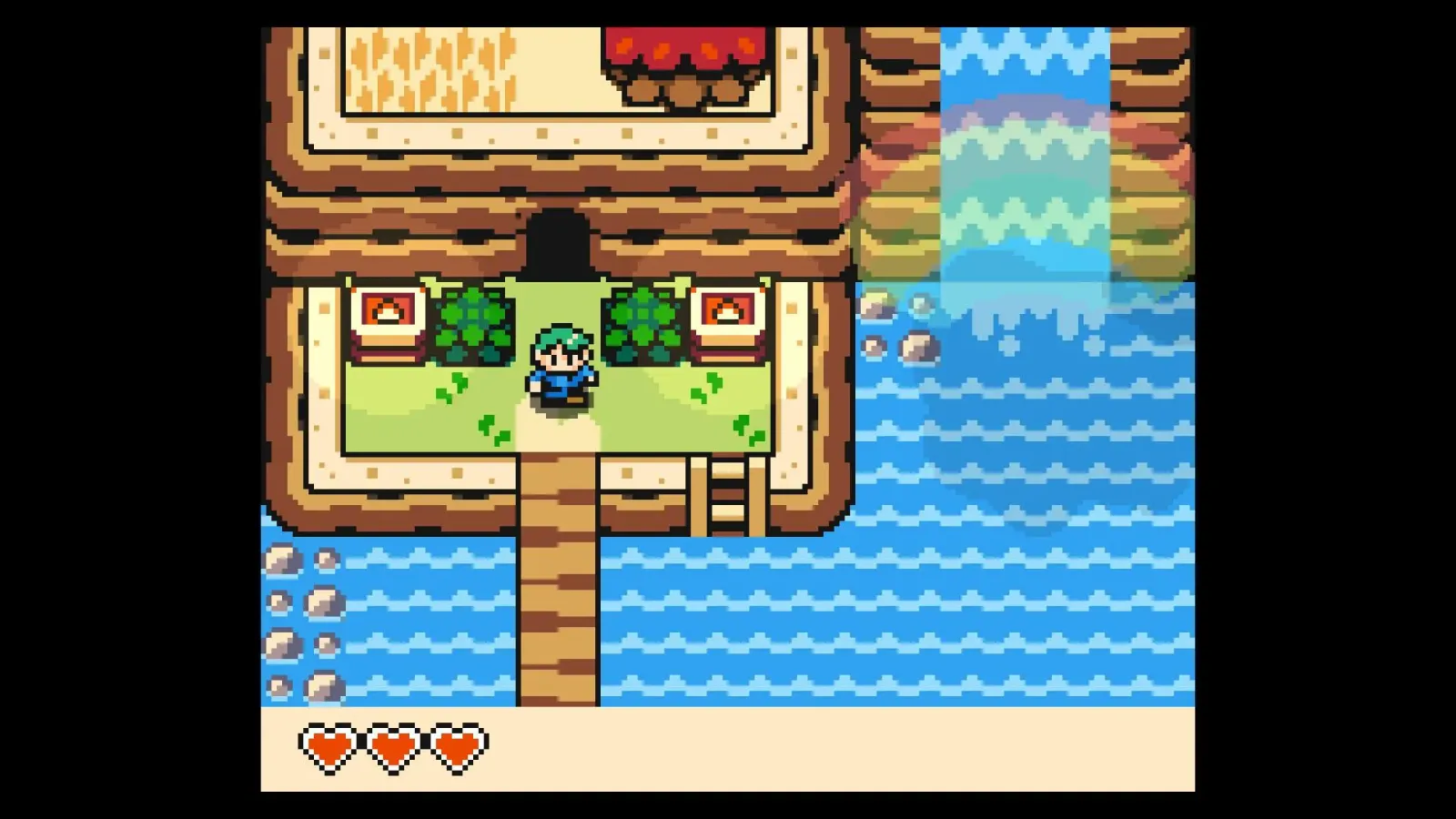
Echo Isle turns classic Zelda tropes into a 70-minute dungeon crawl
A pint-sized adventure that rips the best parts of Zelda, then squeezes them into an hour-plus run.

Dyson’s 2026 lineup expands: V16 Piston Animal lands, V10 Konical and V8 Cyclone update
Dyson fills out its 2026 promised vacuum roster with three new models and two key design directions for shoppers and channel partners.