

Kratsios announces $5B for AI Genesis Mission, picking 278 projects from 5,000+
The White House-backed, Energy Department-led AI research push is the biggest federal science overhaul in 80 years.

White House science adviser Michael Kratsios announced that federal agencies committed more than $5 billion to the Energy Department-led Genesis Mission. The initiative selected 278 projects from more than 5,000 applications, signaling a major shift in how US research is accelerated with AI.
Federal agencies have committed more than $5 billion to the Genesis Mission, an Energy Department-led effort to use artificial intelligence to accelerate scientific research, White House science adviser Michael Kratsios announced on Wednesday. This is being framed as the biggest federal science overhaul in 80 years, and it is not a small pilot. It is a full-on money-and-momentum move aimed at changing the speed and scale at which labs can find answers.
The initiative is already in motion. Energy Secretary Chris Wright said at a summit in Washington that Genesis selected 278 projects from more than 5,000 applications. In other words, this is a high-volume funding competition, not a boutique experiment where only a few teams get a chance to prove themselves. The selection math alone tells you the US government believes there are enough capable teams and plausible scientific targets to justify serious resources.
To understand why this matters beyond Washington headlines, you have to know how federal research funding usually works. Governments do not just hand out money. They funnel it through agencies and programs that set expectations for what “counts” as progress. When the White House and the Department of Energy coordinate around AI as the acceleration mechanism, it changes the incentives for universities, national labs, contractors, and startups that serve them. Suddenly, proposals are not only competing on scientific question quality. They are also competing on how effectively AI can compress timelines, improve throughput, and turn messy data into usable experiments.
The Genesis framing also matters for the broader AI market, because federal demand is often the missing piece between early breakthroughs and real operational deployments. Private AI spending can be volatile, influenced by budgets, go-to-market risk, and shifting priorities. Federal programs, especially large-scale ones like this, can create steadier reference points. Even if the underlying projects are scientific and not product-driven, they can shape what models, tools, and infrastructure vendors get pulled into ecosystems. Think of it less as a single procurement and more as a signal that AI is now a government-grade instrument, not just a lab curiosity.
There is also a governance and accountability angle that operators and board members should care about. A science overhaul described as the biggest in 80 years implies changes in coordination across federal agencies, not just funding levels. That can affect procurement timelines, compliance expectations, reporting cadence, and how results are evaluated. When 278 projects are funded out of 5,000-plus applications, you can expect an emphasis on selection criteria and measurable progress, because the administrative burden of managing that portfolio is significant. The practical implication is that teams will be pressured to operationalize AI quickly, with enough documentation to satisfy federal oversight.
For executives in adjacent sectors, the second-order impact is the credibility upgrade. When White House science adviser Michael Kratsios announces the commitment, and when Energy Secretary Chris Wright describes the selection outcomes at a summit in Washington, the initiative becomes a reference point for partnerships. Universities and national labs can point to Genesis as justification for adopting specific workflows. Contractors can use it to justify resourcing. Startups can use it to sharpen their positioning around deployment-ready AI for research settings.
And for the companies that sell “enablement” layers, the opportunity is not only in direct funding. It is in becoming part of the stack that makes those 278 projects work in practice, whether that means computation, data management, workflow tooling, or integration into scientific pipelines. The government will likely care about reliability, traceability, and repeatability because those are the traits that turn AI assistance into scientific throughput.
Strategically, Genesis puts a stake in the ground for everyone building AI in science and engineering: AI is being treated as a national capability multiplier. If federal agencies are willing to commit more than $5 billion and fund 278 projects out of more than 5,000, peers in the public and private space should assume the standard of adoption will rise. For decision-makers, the question is not whether AI will influence research. It is how quickly you can align your organization to compete in a world where AI-accelerated science is now backed by real federal dollars and real institutional momentum.
This story's Key Insights and Take-aways are locked.
Create a free account to unlock Executive Actions for one credit.
Register to UnlockAlways free for Executives Club members. Join the Club
More in Science
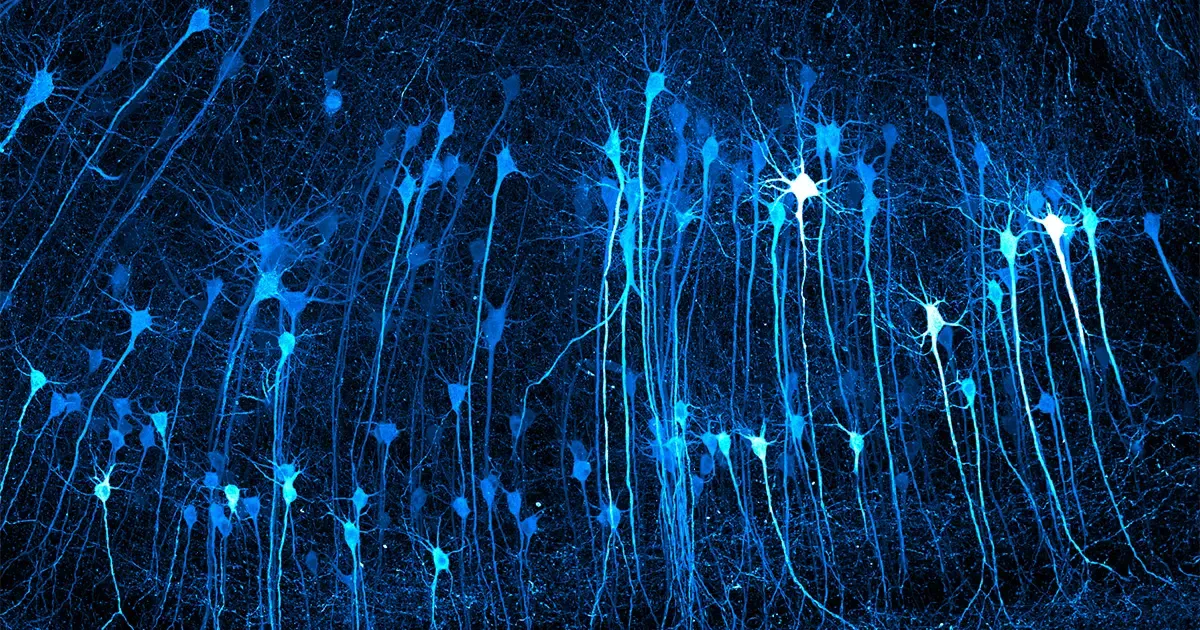
2026 Nikon Small World Winners Reveal the Hidden Machinery of Everyday Life
A mycologist's frozen Edinburgh garden became the backdrop for vivid views inside cells, a reminder of what advanced imaging now makes visible to researchers and the industries built on biology.

Study: 1 in 4 depression cases may be a body-clock problem, not a chemical one
A 10,000-person study finds standard antidepressants often fail these patients, but melatonin and morning sunlight may hit the real root cause.

Start-Up Says A.I. Designed a Virus to Attack One Patient's Superbug
If the claim holds up, personalized phage therapy could become a new frontline weapon against antibiotic resistance - but proof is far from final.