
Leica's U.S. chief bets F1 fans will pay $9,950 for a carbon-fiber camera
The German camera maker's first official F1 tie-up brings a limited-edition Q3 43 built with racing materials and a pitch aimed straight at car-and-camera collectors.
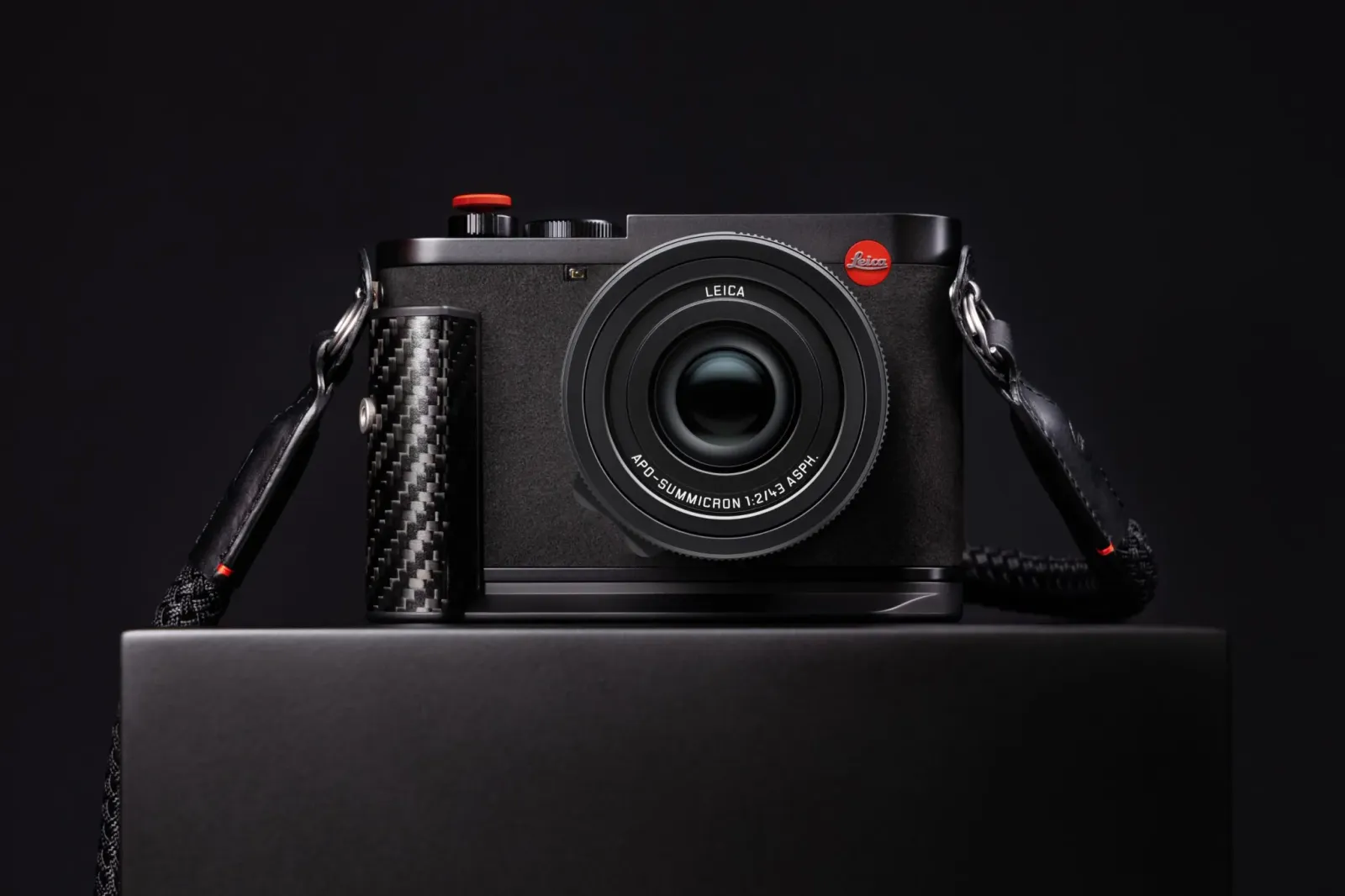
Mike Giannattasio, president of Leica Camera North America, unveiled a global Formula 1 licensing deal alongside the $9,950 Q3 43 Formula 1 Edition, Leica's first carbon-fiber camera. The move shows how premium brands pair heritage engineering with sport properties to reach overlapping high-end collectors.
Leica has put a $9,950 price tag on its first official tie-up with Formula 1, and the camera in question is a carbon-fiber first for the German maker. Mike Giannattasio, president of Leica Camera North America, told Fortune that the global licensing deal announced Tuesday covers F1 as a whole, not a single team, and includes a special-edition Q3 43 Formula 1 Edition camera, a gallery show in Los Angeles, and events at this weekend's United States Grand Prix in Austin.
"There is such synergy between people who collect cameras and people who collect cars," Giannattasio said. He pointed to Lewis Hamilton and Lando Norris, both seen with Leica cameras, with Norris running a separate Instagram account for his photos. When he described the deal to one contact, the reply was blunt: "Mike: F1 and Leica? That's a stretch." His counterargument rests on how both products are made: a Leica M-system rangefinder contains more than 150 pieces, while an F1 team spends months engineering and testing for a race that can be decided within a fraction of a second.
Giannattasio compared that shared preparation to photographer Henri Cartier-Bresson's idea of "the decisive moment," when a photographer must be ready in an instant. "Both photography and racing depend so much on preparation," he said. "While Formula 1 goes at incredible speed, and it may be really hard to stop the moment, photography helps someone who loves that craftsmanship and excellence stop the moment, so that it can be examined, remembered, celebrated."
The partnership also leans heavily on heritage. F1 has raced since 1950, and Leica still makes film cameras, including the MP and M-A, which have no digital parts. "You can bring an MP or an M-A into the most extreme weathers in the Antarctic, and because there's nothing digital, the camera will work," Giannattasio said. "It won't freeze. It won't break." But he stressed that history only counts if it pushes the product forward: "It's heritage, but it's not heritage for heritage's sake. It's heritage for innovation's sake."
That innovation is visible in the Q3 43 Formula 1 Edition, the first Leica to use carbon fiber, the light and rigid material that defines modern race cars. The carbon covers the grip, thumb rest, and soft-release button, the points a photographer touches most. The body is wrapped in a black covering modeled on a racing steering wheel, and the red accents on its buttons come from F1 steering wheels, which color-code controls so drivers can find them quickly. "We had to make a product that was quintessentially iconic, immediately recognizable as a Leica camera," Giannattasio said, "but yet we had to take the design cues and materials that are big in the world of F1."
Giannattasio brings an unusual lens to the role. Raised in Astoria, Queens, he spent more than a decade at Montblanc, rising to president and CEO of Montblanc North America, and earlier worked on Christian Dior watches at LVMH. When he interviewed to run Leica's North American business in 2020, he was likely the only candidate from luxury goods. "My counterparts were from the electronics or from the camera business," he said. Despite the résumé, he insists Leica is not a luxury brand: "We are a premium brand, meaning we make the best optical equipment in the world." The difference, he argues, is that most luxury brands require only money, while a Leica also demands time and intellect to develop a relationship with the camera.
That idea of slowing down ties directly to today's tech environment. "In a world that continues to advance with artificial intelligence, I think [there is a] need to slow down to celebrate and be in the moment," Giannattasio said. He sees a broader resurgence in analog products, from film cameras to books to writing instruments: "Whether it's film, whether it's books, whether it's a writing instrument, there's a real resurgence for things that are real and deliberate." For executives, the Leica-F1 partnership is a case study in combining speed and stillness: F1 supplies the velocity and global stage, while Leica supplies the craft and precision, all wrapped around a $9,950 collectors' item that gives buyers a piece of both worlds.
This story's Key Insights and Take-aways are locked.
Create a free account to unlock Executive Actions for one credit.
Register to UnlockAlways free for Executives Club members. Join the Club
More in Business

A flaw in PHP just forced governments to pull their own sites offline
European agencies from Belgium to Germany took websites dark to patch a critical weakness in the language behind almost 70% of the web, and the blast radius extends far beyond government portals.

BioWare shuts down, Mass Effect 5 dead after $55B EA buyout
The legendary RPG studio's closure lands months after a $55 billion investment group buyout of EA, raising tough questions for gaming's biggest acquirers.
Musk barred from the room as Tesla, SpaceX boards weigh $3.5 trillion merger
The CEO of both companies is a 'conflicted party' watching independent directors negotiate a tie-up that would create a $3.5 trillion giant he would own about a third of.