
Lewis Capaldi and RAYE book Australia’s Spilt Milk 2026 dates and prices
The 2026 Spilt Milk goes multi-city this December with Capaldi and RAYE, plus A$244.95 tickets via Moshtix.
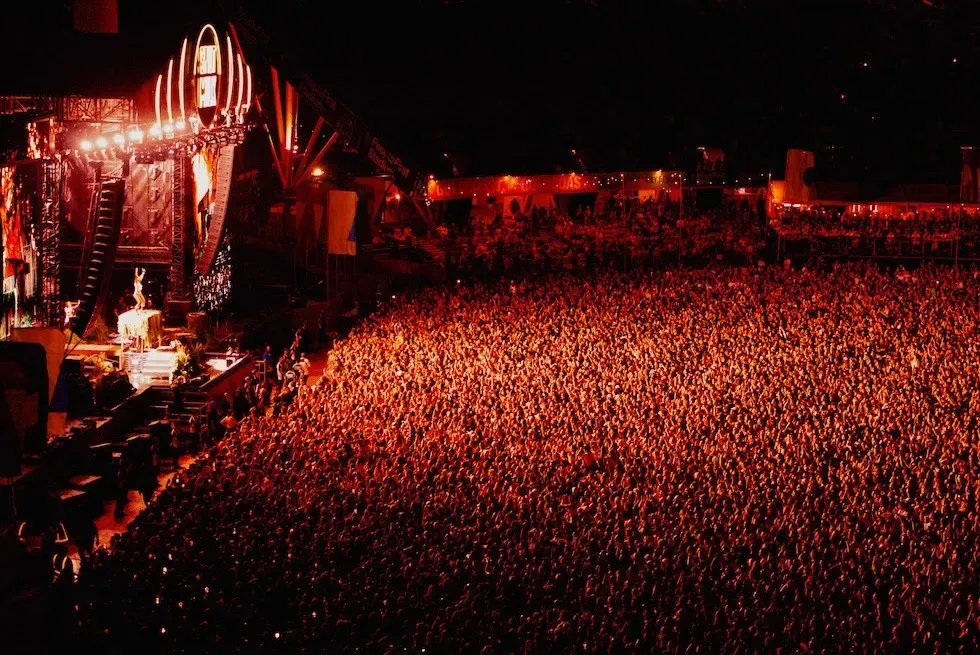
Lewis Capaldi and RAYE are confirmed as headliners for Spilt Milk’s 2026 run, visiting Canberra, Gold Coast, Geelong, and Perth in December. For decision-makers, it signals how major-ticket Australian festivals are re-stacking risk, pricing, and distribution in a post-pandemic market.
Spilt Milk is back with a lineup loud enough to cut through the festival fatigue. For 2026, Lewis Capaldi and RAYE are booked as headliners as the event spans four Australian cities this December, kicking off at the start of the southern summer: Saturday, Dec. 12 in Canberra, Sunday, Dec. 13 in Gold Coast, Saturday, Dec. 19 in Geelong, and Sunday, Dec. 20 in Perth. Tickets for general admission are priced at A$244.95 (about $171) including fees, sold through Moshtix, with presale signups opening July 30 at spilt-milk.com.au.
If you manage anything that depends on attendance, conversion, and timing, this matters more than it looks on a poster. The organizers previously said they would return in 2026 as of a week before the Friday, July 24 announcement, but kept dates, locations, and lineup “under lock and key.” That is a classic move in ticketing economics: tighten the funnel until you have enough certainty that customers can justify a purchase, especially after the industry learned the hard way that expectations do not survive cost shocks and shifting consumer behavior.
Presented and curated by Kicks Entertainment, Spilt Milk is positioned by organizers as Australia’s biggest single-day music festival. That framing is not trivia. Scale affects everything from staffing and security planning to vendor contracts and the way ticketing partners structure fees, capacity, and inventory timing. And it is not operating in a vacuum. The pandemic wiped out the 2020 and 2021 editions. Then promoters canceled the multi-city show in 2024, joining “a slew of festival cancelations” as rising costs and changing ticket buying behavior spooked the industry. In other words, the default mode in the last few years has been volatility. The 2026 announcement is a statement of return, not a casual reboot.
The headline pair is only part of the strategy. The British superstars lead a lineup that includes KETTAMA, Baby Keem, Maisie Peters, DMA’S, and more. Last year’s run was headlined by Kendrick Lamar and featured Doechii, Dominic Fike, Sara Landry, ScHoolboy Q, sombr, Nessa Barrett, Don West and more. Organizers later expanded the bill with Genesis Owusu, Larissa Lambert and Lotte Gallagher ahead of showtime, and tickets sold out. That sequence, from an initial bill to later expansion, suggests a willingness to use lineup depth as a conversion lever. It also hints at operational confidence: you expand because you believe the logistics and supplier chain will hold.
The geographical footprint is another operational tell. Beginning life in Canberra in 2016, Spilt Milk expanded in 2019 to the Gold Coast and Ballarat, with the Ballarat venue marking Juice WRLD’s final live performance. The pandemic disruption followed, and 2024 brought another cancellation. For 2026, it is Geelong that anchors the Victorian leg. Geelong, described as a satellite city of Melbourne and also the festival’s new Victorian home for at least five years, will host through support from Visit Victoria and City of Greater Geelong. Organizers say this ensures the brand will stay in the region until 2030. For festival operators, partners like tourism bodies and local councils can reduce demand and cost risk, especially when the main financial fragility tends to come from non-ticket variables like permits, site build, and crowd management.
One more detail executives should notice is what sits behind “distribution.” General admission is A$244.95 including fees through Moshtix, and presale signups for early access to tickets open July 30 at spilt-milk.com.au. That is not just a consumer convenience. Ticketing partners can influence conversion rates, fraud controls, and the speed at which demand clears. In a market where last-minute changes and cancellations have made buyers more cautious, the path from announcement to purchase has to feel both secure and transparent, or else sales velocity slows and planning margins shrink.
Even the city-by-city schedule reads like an attempt to stabilize demand across different local calendars. Canberra and Gold Coast land on consecutive days in early December, then the Geelong and Perth dates land later that month. Spreading stops across multiple markets can help mitigate underperformance in any single location, but it also increases coordination complexity and cost exposure. The payoff is reach. And when a festival markets itself as a “biggest single-day” event, reach is the whole game.
From a governance and strategy perspective, the underlying question is simple: can the festival ecosystem reliably price risk and deliver on scale again? The 2026 Spilt Milk lineup, ticketing plan, and multi-city commitments suggest organizers believe the answer is yes. For executives and board members watching culture, live events, and consumer spend, the strategic stake is whether this is a one-off “return” or the start of a steadier baseline. With a lineup anchored by Lewis Capaldi and RAYE, ticket sales through Moshtix, presale access starting July 30, and long-term support in Geelong extending until 2030, Spilt Milk is positioning itself to be the event the industry is forced to measure itself against.
This story's Key Insights and Take-aways are locked.
Create a free account to unlock Executive Actions for one credit.
Register to UnlockAlways free for Executives Club members. Join the Club
More in Science

2026 Nikon Small World Winners Reveal the Hidden Machinery of Everyday Life
A mycologist's frozen Edinburgh garden became the backdrop for vivid views inside cells, a reminder of what advanced imaging now makes visible to researchers and the industries built on biology.

Study: 1 in 4 depression cases may be a body-clock problem, not a chemical one
A 10,000-person study finds standard antidepressants often fail these patients, but melatonin and morning sunlight may hit the real root cause.

Start-Up Says A.I. Designed a Virus to Attack One Patient's Superbug
If the claim holds up, personalized phage therapy could become a new frontline weapon against antibiotic resistance - but proof is far from final.