
LHC powers down for 4 years so HiLumi LHC can deliver 10x collisions by 2030
CERN’s Long Shutdown 3 is a phased handoff, not a replacement, turning ATLAS and CMS into new detectors.
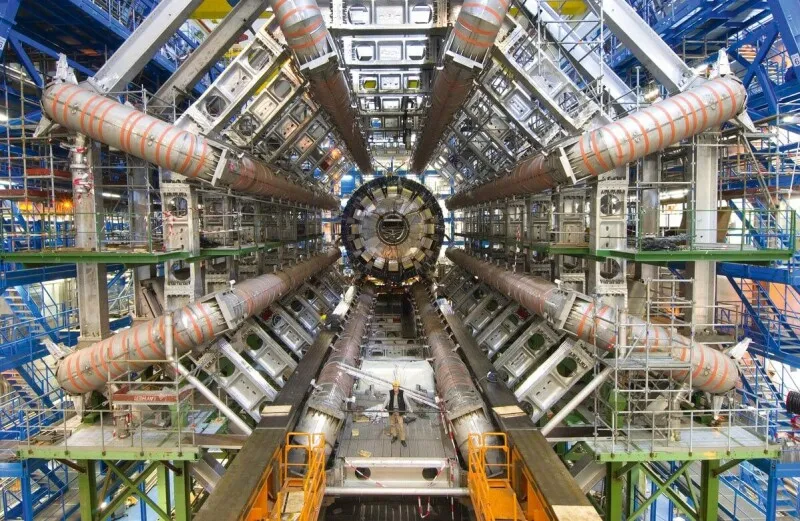
CERN is shutting down its Large Hadron Collider (LHC) for four years under Long Shutdown 3 to complete the High-Luminosity LHC (HiLumi LHC), slated to come online in 2030. For decision-makers, it means a major, time-bound reinvestment in world-leading science infrastructure that is designed to multiply Higgs discovery capacity and tighten safety assurances.
CERN’s Large Hadron Collider is going offline for four years, but it is not the end of the story. It’s a “the king is dead, long live the king” moment, with the High-Luminosity LHC (HiLumi LHC) as the new throne. The lab says the shutdown will complete HiLumi LHC, not replace the machine outright, with HiLumi LHC expected to come online in 2030 after what CERN calls Long Shutdown 3.
And the headline stake is specific: the upgrade targets a factor of 10 increase in luminosity, by enabling ATLAS and CMS to detect far more proton-proton collisions per bunch crossing. Today, ATLAS and CMS can detect somewhere in the neighborhood of 60 proton-proton collisions per firing cycle. After the upgrade, CERN’s plan is to detect between 140 and 200 collisions per cycle, which it describes as a luminosity increase of a factor of 10.
If you are wondering why anyone should care about “collisions per cycle,” here is the plain-English version. Luminosity is proportional to the number of collisions produced in a given time. More collisions means more potential events to study. Those events are then filtered from a data firehose, where CERN notes there are more than five billion interactions per second. In other words, HiLumi LHC is about turning an existing accelerator into a higher-throughput discovery engine, so experiments can spot something interesting more often.
The practical upgrade work is not just a power adjustment or software tweak. To turn the LHC into the HiLumi LHC configuration, ATLAS and CMS will have their trigger systems completely replaced. Their detector technology will be installed anew, and timing detectors able to measure things at “a few tens of picoseconds” resolution will be installed. CERN is also framing the end result as a capability shift that effectively makes ATLAS and CMS into entirely new detectors, which matters because the detectors and selection systems are the bottleneck between “collisions happen” and “science can be extracted.”
CERN is tying this to specific scientific outcomes from the first era of the LHC. The lab spokesperson told The Register that HiLumi LHC could produce about 380 million Higgs bosons over its lifetime, compared with roughly 55 million Higgs bosons produced since the start of the LHC. The number is not just impressive. It’s designed to push the experiments from early identification toward rarer Higgs physics goals, including eventually seeing two Higgs bosons produced together and interacting with each other. CERN calls that process extraordinarily rare and frames it as one of the flagship goals of the HL-LHC. Measuring the Higgs self-interaction, CERN says, will teach about the Higgs field itself and may provide clues about how the Universe evolved shortly after the Big Bang.
There is also a lot of non-Higgs engineering happening in the same window. Over the next four years, CERN says it will conduct a set of renovations alongside the luminosity upgrades. The Super Proton Synchrotron (SPS), a 7 kilometer circumference ring that accelerates particles and beams them into the LHC, will be consolidated. The CERN Neutrinos to Gran Sasso (CNGS) target area, which previously shot a beam out of the SPS through the Earth’s surface toward a laboratory in Italy 732 km away, will be dismantled. New target facilities will be established in Experimental Cavern North 3, along with other safety, electrical, and technical upgrades.
If you think this is just construction theater, CERN says the scope inside the LHC itself is concrete: in the LHC alone, 1.2 km of magnets and components will be removed and replaced with new equipment. Translation: this is a real asset refresh, not a cosmetic refurbishment, and it is happening on a schedule. The four-year shutdown is the price of being able to run the “enhanced successor” in 2030 with the increased collision yield the program is counting on.
Finally, CERN is addressing the thing that always follows the world’s biggest machines: safety and conspiracy chatter. CERN told The Register that the refurbished LHC will be just as safe as the old 27-kilometer machine that has stirred controversy and conspiracy theories over the past couple of decades. The lab spokesperson’s argument is anchored in observed astrophysics: the Universe as a whole produces more than 10 million million LHC-like experiments per second. If such phenomena were dangerous or destructive, the spokesperson said, it would contradict what we see: stars, galaxies and the Earth still exist.
For executives and board members who fund and govern complex, high-scrutiny programs, HiLumi LHC is a case study in managing long-duration capex with public accountability. It shows how to align engineering downtime with a staged upgrade strategy, how to build a credible safety narrative for skeptics, and how to define success in measurable output, from detector throughput to expected Higgs yields. The lesson is not “physics is exciting.” It’s that even the most ambitious scientific bets require ruthless scheduling, measurable performance targets, and communication that can survive both regulators and internet rumor.
This story's Key Insights and Take-aways are locked.
Create a free account to unlock Executive Actions for one credit.
Register to UnlockAlways free for Executives Club members. Join the Club
More in Science
2026 Nikon Small World Winners Reveal the Hidden Machinery of Everyday Life
A mycologist's frozen Edinburgh garden became the backdrop for vivid views inside cells, a reminder of what advanced imaging now makes visible to researchers and the industries built on biology.

Study: 1 in 4 depression cases may be a body-clock problem, not a chemical one
A 10,000-person study finds standard antidepressants often fail these patients, but melatonin and morning sunlight may hit the real root cause.

Start-Up Says A.I. Designed a Virus to Attack One Patient's Superbug
If the claim holds up, personalized phage therapy could become a new frontline weapon against antibiotic resistance - but proof is far from final.