
Lindsey Graham died hours before Meet the Press, and Trump moved first
Graham built relevance through Sunday shows. His death triggered a media and political handoff right on schedule.

Senator Lindsey Graham, a relentless presence on Meet the Press, died unexpectedly on a Sunday morning, mere hours before his scheduled appearance. Trump was among the first to announce his passing, turning a personal moment into an immediate broadcast and political signal.
Senator Lindsey Graham died unexpectedly last night, and the timing could not have been more on-brand for how he lived in public: he was set to appear on Meet the Press that Sunday morning, and his death made him the main topic instead. Graham was scheduled for what would have been his 64th appearance on America’s longest-running public-affairs program, a number that matters because it captures how completely he used the Sunday format as a stage.
Even more telling: Trump announced Graham’s passing first. Graham was “one of the greatest people and Senators I have ever known,” Trump wrote on Truth Social at 3:21 a.m., and later in the morning Trump called Graham “a great politician, actually.” In a way, Meet the Press did not just lose a guest. It lost a central mechanic of the Washington conversation.
To understand why that matters, you have to understand what Graham wanted, and how he pursued it. The source frames Graham as someone who “always sought relevance,” not as a vague personality trait but as an operational mission. He loved the mixture of off-camera backslaps and on-camera punchlines, then the steady act of weighing in when the lights came on. In the greenroom, there used to be a prominent photo of Graham yapping alongside his Senate sidekick, John McCain. That detail is not nostalgia bait. It is a reminder that Graham’s brand of relevance was tied to durable power, and power in Washington often comes pre-packaged with access.
McCain appeared 73 times on Meet the Press, more than any other guest in history, a record McCain was proud of. In early 2019, after McCain died, Graham joked to the author that his main goal in his remaining time was to beat McCain’s record. He never will. For an operator like Graham, the chase itself was part of the point. It also shows how much the Sunday shows were not just media appearances, but part of the political scoreboard.
The source also gives a direct explanation of Graham’s strategy. Graham told the author in a 2019 conversation that his overriding mission in the United States Senate was to “Try to be relevant.” In Graham’s worldview, “legacy media” remained extremely relevant, and that conviction served him well because Trump, described here as his lodestar, was portrayed as an ultimate consumer of the shows, as Graham called them. The Sunday interview format is usually treated as commentary. Graham treated it as infrastructure.
That infrastructure had a function: “manage the relationship” with the White House. The source includes an account from “one senior White House official” during Trump’s first term saying, “Lindsey was really good at this game.” When Graham discussed his keys to manipulating Trump, the source reports he was “remarkably transparent.” The formula was blunt. Graham said if he flattered Trump all the time, Trump would lose respect for him. And if Graham wanted Trump to do something, especially in foreign affairs, Graham would tell Trump that Obama would do the opposite. Graham said this approach “can be very effective,” and added that “Obama drives him nuts.”
For decision-makers in politics-adjacent businesses, media, and policy, that matters because it reveals how influence travels through incentives rather than slogans. If a leader believes Sunday television can be “a fruitful place” to manage the relationship, then the timing of appearances becomes leverage. Graham’s own shape-shifting also shows why. He was described as darting between “smarty-pants of Official Washington” and the “bare-knuckled MAGA populists of South Carolina,” and that dynamic extended on and off camera: he could chum it up with a Democratic colleague before a “hit,” then shift to partisan fire after the lights came on. That is not merely style. It is audience engineering, built to keep multiple doors open.
The personal origin story reinforces the same theme. Graham grew up in Central, South Carolina, where his parents ran a divey saloon called the Sanitary Café. The source says the place was frequented by small-town eccentrics and “good old boys,” and that Graham, nicknamed “Stinkball” around the bar, was the kid-mascot type tagging along with his father. Graham’s lifelong pattern, according to the source, became seeking “alpha dogs” as protectors and tickets to relevance, including his father, McCain, and in his last public chapter, Donald Trump. That is why Trump announcing Graham’s passing so quickly is more than a condolence note. It is consistent with the same system of relationships that Graham had spent decades navigating.
So what happens next, and why should peers care? The source closes with a specific punchline: even better than what Trump wrote was where Trump said it, in effect, because “Meet the Press” is the setting. When a central operator in a media-driven political ecosystem dies just before his scheduled appearance, the balance of access and narrative moves fast. For other senators, regulators, and policy-adjacent executives, the second-order lesson is simple: in a world where “legacy media” is still treated as relevant, timing, placement, and relationship management do not pause for tragedy. They reorganize immediately.
This story's Key Insights and Take-aways are locked.
Create a free account to unlock Executive Actions for one credit.
Register to UnlockAlways free for Executives Club members. Join the Club
More in Politics

Glacial collapse, not rain, killed 180 in Nepal's Himalayan flood
The Himalaya's extreme geography hid the true cause of Nepal's catastrophic flood, a glacial collapse that turned a geological battleground into a mass-casualty zone.

Iran’s Esmail Baghaei says Oman talks start shipping via Hormuz, not US talks yet
Temporary route plans with Oman aim to restart commerce while Tehran says Washington dialogue is not on the table.
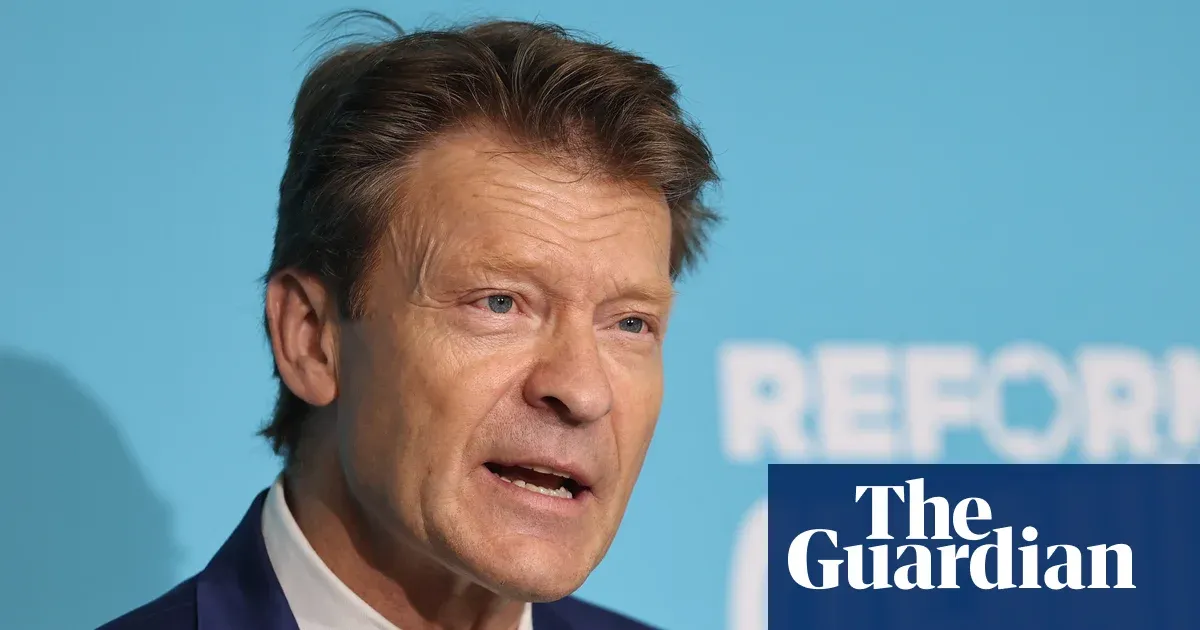
Standards watchdog opens probe into Reform UK deputy leader Richard Tice over interests
The parliamentary standards commissioner says it began an investigation on 28 July into a possible undeclared interest.