

Living plastic self-destructs in 6 days, breaking down without microplastics
A new engineered-bacteria material could change the economics and regulation of single-use plastic waste within days.
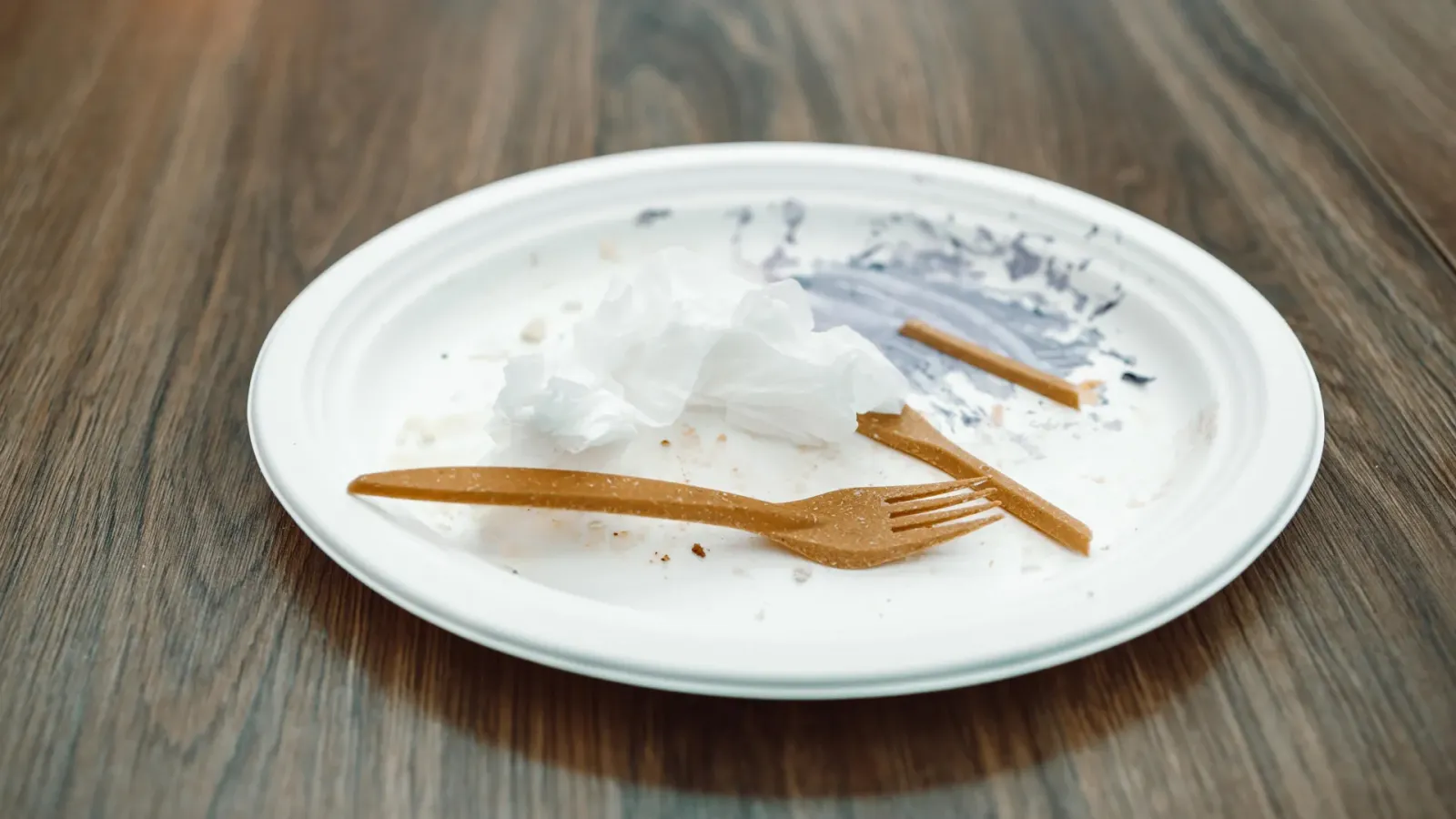
Researchers created a self-destructing “living plastic” that uses engineered bacteria to break itself down when activated. The material degrades in just six days without creating microplastics, pointing to a potential new path for single-use plastic waste.
Single-use plastic has a brutal superpower: it can last far longer than anyone planned, then keep breaking into smaller and smaller pieces. The catch has always been the “cleanup math.” Even when plastic waste is collected, it often ends up fragmenting into microplastics that are hard to remove and easier to spread than to contain.
Now, researchers report a different approach: a self-destructing “living plastic” that uses engineered bacteria to completely break itself down when activated. The key headline number is six days. That means the material degrades on a timescale closer to how long products are used, not the decades (or longer) that most conventional plastics linger. Just as important, the researchers say it does so without creating microplastics.
So what is this, in plain terms? It is not plastic that “recycles” after the fact. It is a material designed to fail on purpose, once triggered, by relying on engineered bacteria to do the breakdown work. Think of it as shifting the lifecycle question from “How do we keep plastic out of the environment?” to “How do we ensure it stops being plastic quickly and cleanly after use?” The phrase “living plastic” is doing real work here: the material is engineered around biology, not just chemicals. Activation is the control point, the moment when the breakdown process starts. In most plastic-waste scenarios, the hard part is that you do not get a reliable activation event that reliably happens at scale.
From a decision-maker perspective, the six-day claim is meaningful because timelines drive operations. Waste management systems and compliance regimes are often built around collection, transport, sorting, and disposal, and those processes typically assume long-lived materials. If a plastic product could be designed to degrade after activation, then companies could potentially rethink how they structure product formats, packaging lifecycles, and end-of-life handling. That does not remove the need for logistics overnight. But it changes the “expected value” of waste. If the material truly breaks down without generating microplastics, it may reduce one of the worst second-order risks: environmental fragmentation.
Regulators have been moving toward rules that treat microplastics as a major threat because their small size makes them persistent and widely distributed. That trend raises the stakes for any technology that can plausibly prevent fragmentation at the source. A material that self-destructs in six days, rather than slowly weathering into ever smaller pieces, would speak directly to the microplastics problem regulators are increasingly focused on. The source highlights that the degradation occurs “without creating microplastics,” which is exactly the kind of detail that matters in policy and compliance conversations.
There is also a market incentive angle. Single-use plastic waste is a recurring cost center for municipalities, a compliance burden for manufacturers and brands, and a public-pressure magnet for leadership teams. Companies face pressure to demonstrate progress, but progress is hard when the baseline is that many plastics are chemically and physically persistent. This kind of engineered, self-destructing material suggests a route to measurable outcomes: if the material reliably breaks down when activated and avoids microplastics, brands and product teams could align sustainability claims with a clearer mechanism.
Of course, executives should interpret early research carefully. The source provides a specific outcome, six days and no microplastics, but it does not spell out the broader performance envelope, such as how activation is triggered in real-world conditions, how consistent breakdown is across environments, or how robust the material is during use. Those are the practical questions that determine whether this becomes an industry shift or stays a lab proof. Still, the direction is compelling because it attacks the core failure mode of conventional plastics: longevity plus fragmentation.
For boards and investors, the strategic implication is simple. The “plastic problem” is no longer only a recycling story. It is increasingly an end-of-life design story, where companies compete on how materials behave after use. If this living plastic platform holds up beyond the lab, it could force a re-evaluation of product packaging roadmaps, waste-handling partnerships, and the risk models that treat plastic persistence as an unavoidable externality. In an era where microplastics are moving from concern to compliance, a six-day self-destruction mechanism could become the kind of differentiator that changes who wins and who scrambles.
This story's Key Insights and Take-aways are locked.
Create a free account to unlock Executive Actions for one credit.
Register to UnlockAlways free for Executives Club members. Join the Club
More in Science

2026 Nikon Small World Winners Reveal the Hidden Machinery of Everyday Life
A mycologist's frozen Edinburgh garden became the backdrop for vivid views inside cells, a reminder of what advanced imaging now makes visible to researchers and the industries built on biology.

Study: 1 in 4 depression cases may be a body-clock problem, not a chemical one
A 10,000-person study finds standard antidepressants often fail these patients, but melatonin and morning sunlight may hit the real root cause.

Start-Up Says A.I. Designed a Virus to Attack One Patient's Superbug
If the claim holds up, personalized phage therapy could become a new frontline weapon against antibiotic resistance - but proof is far from final.