
Lonnie Bunch III fires back at White House report on American History museum
The Smithsonian’s leader says the negative White House characterization misses the museum’s full work, and raises governance questions.
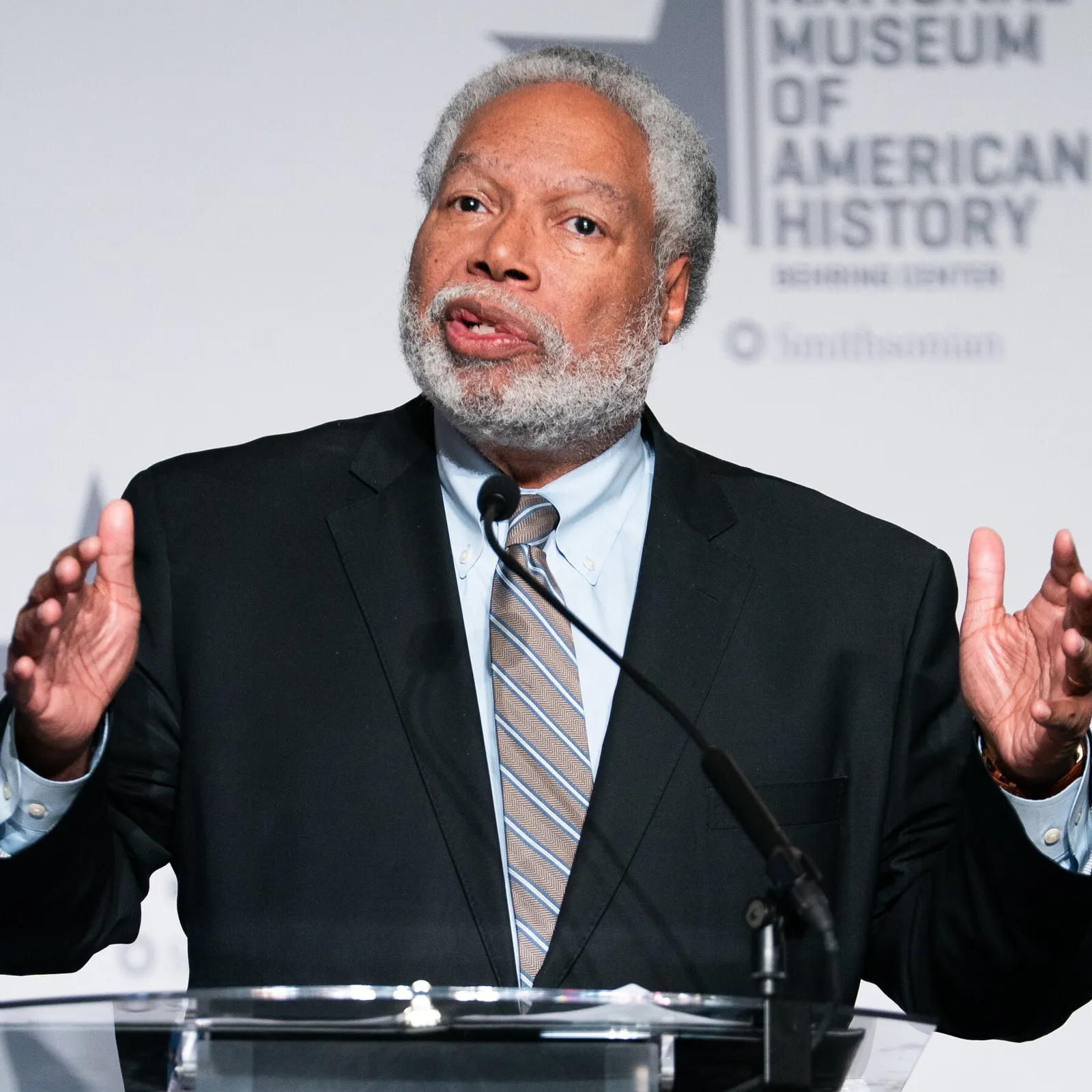
Lonnie G. Bunch III, in a letter to Smithsonian staff, defended the National Museum of American History after a negative White House report. For decision-makers, the dispute highlights how political reviews can ripple into oversight, reputation risk, and operational scrutiny for public institutions.
Lonnie G. Bunch III, the leader of the Smithsonian, responded in a staff letter that a negative White House report was “not a fair characterization of the work and totality of the National Museum of American History.” That sentence is doing a lot of work. It is a direct pushback at an external authority that has the ability to shape narratives and, in turn, influence how other stakeholders evaluate the museum.
For executives and board members, the key issue is not simply whether someone liked the report. It is the governance reality behind it. When a public institution is evaluated through a political lens, the institution must manage two audiences at once: the people inside the organization who need operational clarity and the broader public and oversight ecosystem that can decide, quietly or loudly, how much legitimacy, trust, or attention the institution receives.
The Smithsonian is not a typical business with a single bottom line. It is a public-facing cultural institution with a mission that depends on credibility, collections stewardship, and public programming. That mission is inherently broad. So when an external review concludes negatively, leaders often face the same hard question: does the institution have a defensible narrative backed by documented work, or will the headline version of events stick?
Bunch’s choice to communicate directly to staff signals how he is trying to prevent reputational drift. A letter to internal stakeholders is a classic leadership move in moments like this because it anchors the team to a specific factual and moral claim: the report, in his view, does not fairly reflect the museum’s work and the museum’s full scope. In practical terms, this also helps stop rumor from becoming the unofficial operating plan. When leadership frames the dispute early, employees are more likely to align on how to explain the institution’s work, how to interpret the scrutiny, and how to keep the day-to-day mission moving.
The White House report framing matters because it is not just commentary. Government reviews can become the starting point for follow-on action, even when the initial document is not a formal regulation. In the same way that a regulator’s assessment can force companies to revisit compliance posture, political reporting can create pressure for documentation, responses, and adjustments. For a museum, that could mean additional attention on exhibits, educational programming, archival interpretation, procurement choices, or how the institution communicates its curatorial decisions.
Second-order implications show up in board dynamics and risk management. Boards overseeing public institutions typically sit at the intersection of mission performance and political risk. The dispute Bunch references puts the Smithsonian in a familiar executive stress position: balancing program integrity with the need to respond to critiques in a way that does not distort the institution’s core work. If the museum responds too defensively, it can validate the negative narrative. If it responds too softly, it can look like it is conceding the central claim. Bunch’s direct wording, “not a fair characterization,” is an attempt to thread the needle: firm, specific in tone, and grounded in the museum’s total body of work.
There is also an organizational incentive to treat reputational disputes like operational ones. Even when the underlying question is qualitative, the output of a negative report can lead to measurable changes. Stakeholders may request more information. Partners may reconsider timing. Donors may recalibrate. Oversight bodies may ask for documentation. Public institutions have to demonstrate not only results, but also process: how decisions are made, how materials are curated, and how the institution protects standards over time.
Strategically, this is where peers should pay attention. Executives at museums, universities, nonprofits, and other public-facing organizations do not operate in a vacuum. When political narratives target mission-driven entities, leadership teams must be ready to translate the dispute into internal alignment and external clarity. Bunch’s staff letter is a signal that he is preparing the Smithsonian to withstand that kind of scrutiny without losing focus. The message to decision-makers elsewhere is straightforward: oversight and reputation risk can surface from unexpected directions, and the response has to be both credible and fast, with language that holds up under public, political, and administrative review.
This story's Key Insights and Take-aways are locked.
Create a free account to unlock Executive Actions for one credit.
Register to UnlockAlways free for Executives Club members. Join the Club
More in Politics

Glacial collapse, not rain, killed 180 in Nepal's Himalayan flood
The Himalaya's extreme geography hid the true cause of Nepal's catastrophic flood, a glacial collapse that turned a geological battleground into a mass-casualty zone.

Iran’s Esmail Baghaei says Oman talks start shipping via Hormuz, not US talks yet
Temporary route plans with Oman aim to restart commerce while Tehran says Washington dialogue is not on the table.

Standards watchdog opens probe into Reform UK deputy leader Richard Tice over interests
The parliamentary standards commissioner says it began an investigation on 28 July into a possible undeclared interest.