
Loop’s monitor hides a full graphics card inside the back panel
A 32-inch all-in-one from Loop blurs the line between monitor and tower, and that changes what upgradeable desktop hardware can look like.
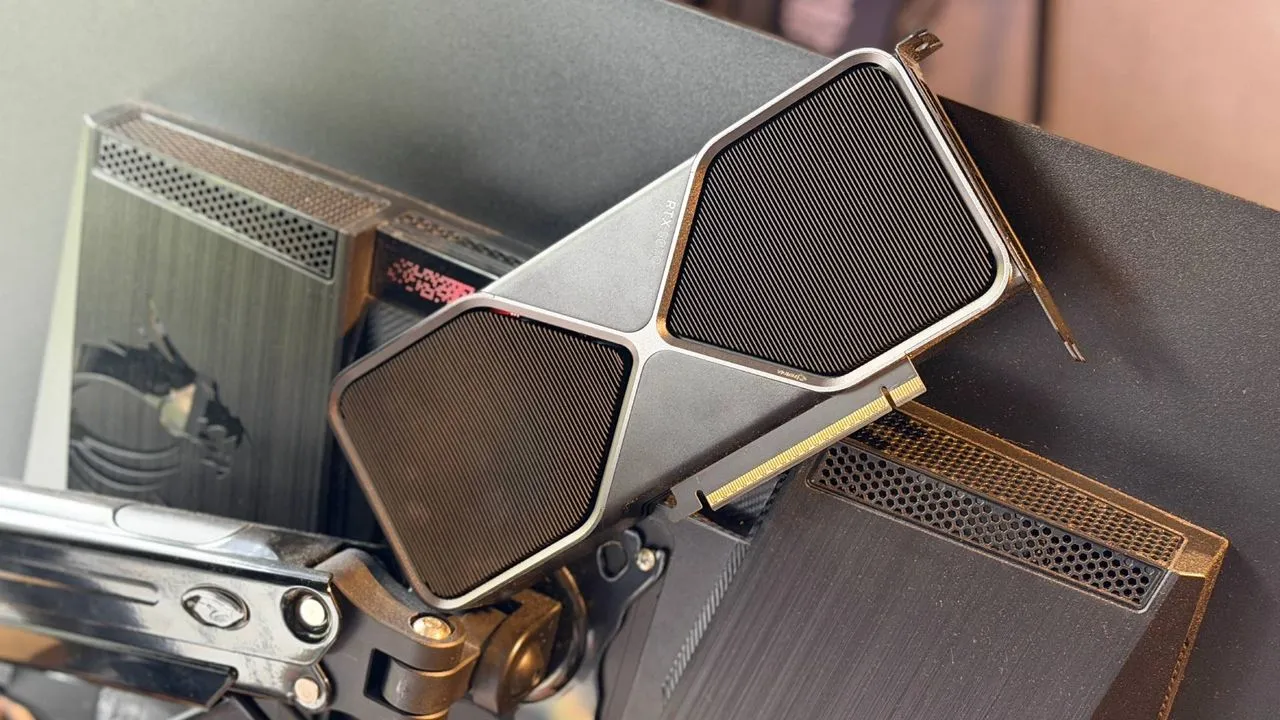
Loop showed the LP-3201 at Computex, a 32-inch WQHD all-in-one monitor with space for a full graphics card, plus standard PC parts inside. For buyers and competitors, it signals a more upgrade-friendly all-in-one category that could appeal to users who want desktop power without a separate tower.
The weird part is real: Loop’s LP-3201 all-in-one has a slot in the back that can take a graphics card up to 330mm long. That means this 32-inch WQHD display is not just a monitor pretending to be a PC, but a genuine all-in-one that can hide a full GPU inside the chassis. At Computex, that was enough to make it one of the show floor’s most eyebrow-raising machines, because most all-in-ones are built around laptop-style parts and a very limited upgrade path. This one is different. It is closer to a full desktop system that happened to get stuffed behind a screen, which is exactly why it stands out.
Loop’s sales representative told Hermitage Akihabara that the slot is best suited to Nvidia’s SFF standard for small form factor PCs. That matters because it gives the LP-3201 a clearer lane for compatibility, even if it is still not a normal monitor by any stretch. On the show floor, Loop displayed the machine with what appeared to be an Asus Prime GeForce RTX 5070 OC Edition inside. In plain English: this thing is designed to swallow a serious gaming card, not just some token integrated graphics setup. The larger Asus ROG Astral 50-series cards are too long to fit, and the even bigger ROG Astral GeForce RTX 5090 Edition 20 announced at Computex would definitely not fit either. So no, this is not limitless. But compared with the average all-in-one, it is wildly more ambitious.
That ambition is the point. Typical all-in-one PCs use laptop components because the whole system has to live in the back of a monitor and stay cool without much room to breathe. That usually means the user can upgrade only a couple of pieces, if anything, such as DRAM or an SSD. Loop’s approach is much more like a regular tower PC in a monitor-shaped shell. The LP-3201 includes a Micro ATX motherboard, an Intel Core Ultra 7 265K CPU, liquid cooling, and an 800W PSU. In other words, it does not just imitate a desktop. It brings desktop expectations with it. For buyers who want a cleaner setup, or for businesses and creators trying to save space without sacrificing upgradeability, that is a meaningful shift.
The monitor specs are not an afterthought either. The LP-3201 offers a 32-inch panel with a resolution of 2,560 x 1,440 and a 180Hz refresh rate. That makes it solidly game-friendly on paper, especially if paired with the kind of GPU Loop is clearly expecting users to install. It also comes in what the original piece aptly calls a gamer goo shade of bright green, with wooden panelling available across the rear vents if you want to class it up a bit. A black version is available too, which is probably the safer choice for anyone who wants the machine to blend in rather than announce itself like a neon warning label. The back side of the monitor has sizable air vents to help keep everything cool, which is not a small detail when you are packing a CPU, GPU, liquid cooling system, and power supply into the same housing.
There is also a product strategy story here. Loop is currently selling the LP-3201 as a bare-bones product for the Chinese market, which means buyers bring their own 330mm GPU, SSD, operating system, and anything else needed to make it work. That model matters because it lowers the barrier to shipping the hardware while leaving a lot of the final configuration to the customer. In PC land, that can be a strength. It gives enthusiasts room to choose their own parts, and it lets the manufacturer stay focused on the enclosure and system design. It also suggests Loop is not trying to compete head-on with the easiest mass-market all-in-one setups. It is aiming at buyers who know what they are doing and want something more modular than the average AIO.
Loop is not starting from zero, either. The company already offers a curved monitor with a similar all-in-one system called the LP 3200 AIO. The LP-3201 looks like the next step in that idea, with the same general concept but a clearer emphasis on putting real desktop parts behind the display. Loop is also apparently interested in expanding into the Japanese market, so this is not just a one-country curiosity if that plan goes anywhere. The open question is whether it will travel farther than that. The source does not confirm US availability, and it is also unclear whether the LP-3201, or its predecessor, will ever come Stateside. Still, the larger implication is obvious: if more manufacturers follow this path, the line between all-in-one convenience and desktop upgradeability gets much blurrier. For executives in hardware, retail, and gaming-adjacent businesses, that is worth watching. Products that collapse two categories into one often do not stay niche forever if they solve a real pain point, and for a lot of people, the pain point here is simple: they want a tidy desk without giving up the right to swap the guts later.
This story's Key Insights and Take-aways are locked.
Create a free account to unlock Executive Actions for one credit.
Register to UnlockAlways free for Executives Club members. Join the Club
More in Technology

OpenAI says 10,000 agents cracked a 90-year math problem in 88 hours
The company's claim is audacious, but one mathematician is pushing back. Here's what it means for AI-driven discovery.

Meta still serves child sexual abuse ads on Instagram in India - BBC report
A new report following the BBC Eye investigation says the ads are still there - what it signals for every platform with a self-serve ad engine.

White House yanks 'Build the Wall' game after Tetris Company copyright warning
The administration's arcade game vanished in hours - and the takedown playbook every brand can learn from.