

Luke The Maker’s “Gundle” pistol-shaped e-reader case looks real, but can’t fire
A Louisville creator modeled an Xteink X4 case after a real gun, raising safety and regulatory eyebrows.
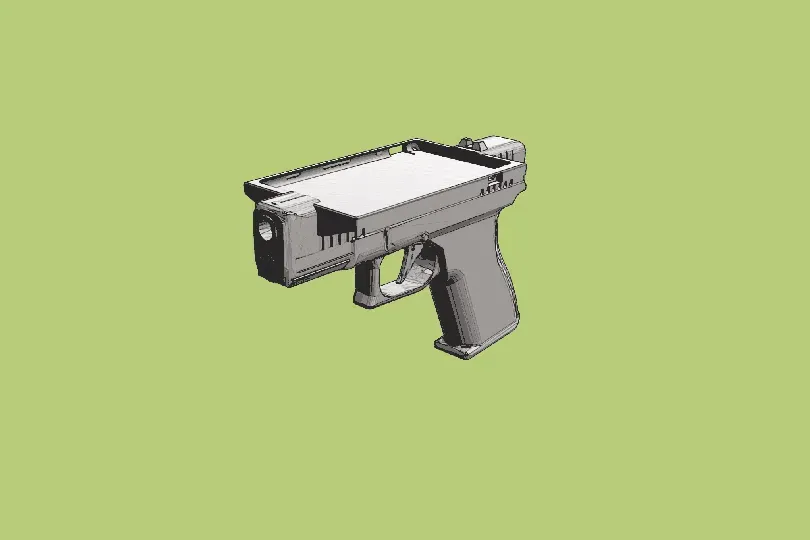
Luke The Maker, a Louisville, Kentucky-based creator, showed off a 3D-printed, pistol-shaped case design for the minimalist Xteink X4 e-reader. The design is digitally modeled after a real gun, but it cannot shoot bullets.
A Louisville, Kentucky creator just made an e-reader case that looks like a gun, then called it a “Gundle.” Luke The Maker (whose last name is Blackford) showed off a 3D-printed, pistol-shaped design for the minimalist Xteink X4 e-reader, with the X4 positioned vertically on top of the plastic gun’s slide.
In other words, the object is shaped like a Glock-style sidearm, but it is not a weapon. The post includes a side cutout to access the X4’s buttons, and the “trigger” mechanism goes nowhere. Squeezing the trigger does nothing at all because the case cannot shoot bullets, despite the frame being digitally modeled after a real gun.
That mix of “feels real” and “doesn’t function” is exactly why this story matters beyond the novelty factor. For executives in consumer hardware, product design, and marketplaces, the question is not just whether something works. It is whether the design language crosses into a category that triggers stricter scrutiny, brand risk, or even platform and retailer action. The second-order risk is that regulators, insurers, and partners do not grade on your intent. They grade on appearance, user expectations, and how easily a product could be misunderstood in public.
The Xteink X4 itself is described as a “popular minimalist” e-reader, and Luke’s build takes that everyday device and docks it onto a gun-shaped plastic shell. The visual effect is the point. The X4 lies vertically atop the “slide,” and the case uses a cutout so the buttons are accessible without removing the reader. So this is not a dead prop with no interaction. It is an accessory that supports regular e-reader use, while borrowing the recognizable silhouette of a firearm.
Luke’s choice to digitally model the frame after a real gun also adds a layer that boards and legal teams tend to care about: whether the design is a close replica or a generic reference. The source does not claim the model is an exact replica, but it is clear that it is based on a real firearm frame. That difference can matter in different legal frameworks, including how authorities interpret imitation, concealment concerns, or “replica” definitions depending on jurisdiction. Even if a device cannot fire bullets, the “replica-shaped object” angle can still create trouble if it is sold, distributed, or displayed in ways that encourage misunderstanding.
There is also the cultural layer. The post, as described, shows Luke flipping through Cormac McCarthy’s Blood Meridian and J.D. Salinger... (the source is truncated, but it’s clear that the accessory is being presented in a lifestyle context). Pairing a gun-shaped case with a serious reading vibe turns the product into a joke, a flex, and possibly a provocation. That kind of presentation can be fine in a creator space. But once something like this reaches broader distribution, the same “it’s art” framing can collide with safety norms and public perception. In a world of heightened attention to weapons, designs that resemble firearms can become lightning rods fast, even when they are functionally harmless.
For decision-makers, the strategic stakes are straightforward: your product may be safe by function, but it may still be risky by association. The “Gundle” concept shows how quickly a mainstream consumer item can be re-skinned into something that triggers the weapons conversation. That matters for any executive managing design review, compliance, go-to-market strategy, or platform policies. A board does not need the object to be able to shoot bullets to ask hard questions about liability, optics, and distribution safeguards.
And if you are an operator building physical accessories, the broader implication is about incentives. Creators often chase virality through recognizable forms. Retailers and platforms often chase risk minimization. Regulators often chase public safety and clarity. This “pistol-shaped e-reader case that can’t fire bullets” sits at the intersection of all three. It may stay a quirky one-off, but it is also a live demonstration of how quickly product form factor can pull a company into compliance conversations you did not anticipate.
This story's Key Insights and Take-aways are locked.
Create a free account to unlock Executive Actions for one credit.
Register to UnlockAlways free for Executives Club members. Join the Club
More in Technology

Google quietly links your phone number to every Android account on your SIM
Adding a SIM now ties your phone number to all Google accounts - and future accounts inherit it. Here's the security and privacy stakes.

Hijacker AI 'Skynet mode' runs 100,000 attack steps against exposed models
Symantec caught a criminal AI agent that borrows other models, steals data, and mines crypto; the only relief is no confirmed victims yet.

Nvidia's AI-financier shift faces its first big test as neoclouds stumble
A rout in neocloud stocks is forcing investors to weigh Nvidia's hidden exposure as both supplier and lender to the AI buildout.