

Macron’s Bastille Day flex masks Europe’s Iran limits, still tied to Washington’s foreign policy
France staged European unity in Paris, but the bloc cannot fully act in Iran without America in the driver’s seat.
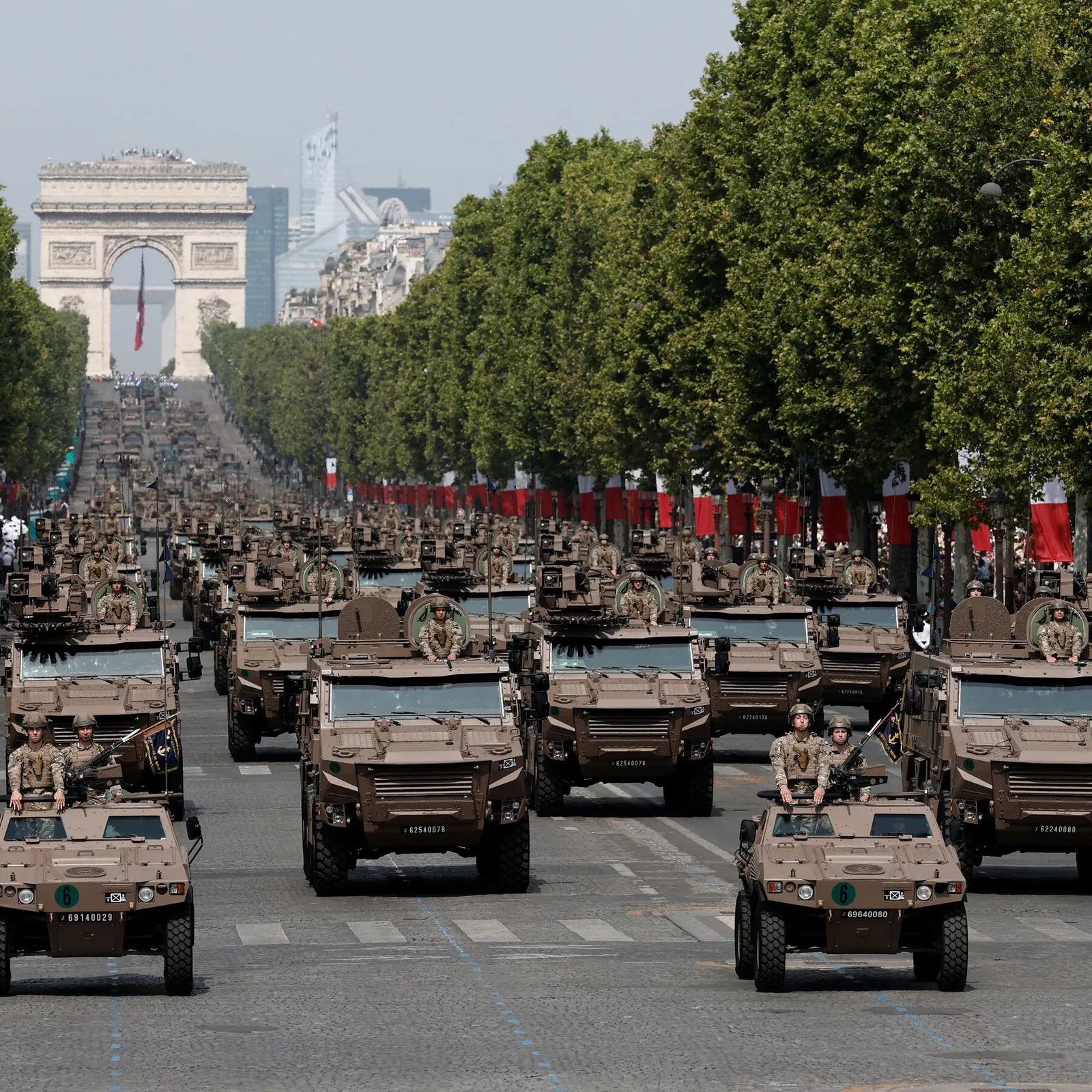
President Emmanuel Macron of France hosted European allies at the annual Bastille Day parade in Paris. The gesture underscores a harder reality for decision-makers: Europe remains constrained by America’s foreign policy choices, especially around Iran.
President Emmanuel Macron of France hosted European allies at the annual Bastille Day parade in Paris in a show of collective strength. The optics were loud and on-brand: unity on a symbolic date, in a symbolic capital, with the kind of staging that says Europe can coordinate when it wants to.
But the real story is the part the parade cannot hide. The source frames Europe as “still a hostage to America’s foreign policy” when it comes to Iran. That matters because Iran is not just a foreign policy headline. It is a pressure point that can ripple through energy markets, security planning, trade flows, and compliance burdens across Europe and beyond.
To understand why this is more than political theater, zoom out to how Europe actually moves. In many high-stakes areas, Europe tries to operate through collective bargaining, shared diplomatic strategy, and institutional weight. Yet the source’s core point is that when it comes to Iran, Europe’s room to maneuver is limited by the United States. In practice, that often means Europe can have a consensus on paper and still end up constrained by what Washington is willing to tolerate, reward, or penalize.
This is where second-order implications show up for executives. Even without inventing new facts, the pattern is familiar: when U.S. policy drives the main risk pricing, European companies and financial institutions adjust behavior to manage exposure. If Washington’s stance tightens, compliance teams do not simply “monitor” the situation. They build new guardrails, reroute counterparties, and pressure internal stakeholders for documentation that matches the reality of enforcement, not just the law on the books.
There is also a capital-and-liquidity angle. Markets tend to treat foreign policy risk like a discount rate shock. If investors believe Europe cannot independently steer outcomes in Iran, then sanctions risk, shipping and insurance uncertainty, and counterparty concerns can reprice quickly. Boards and risk committees, therefore, have to treat geopolitical dependency as an operational variable, not an abstract risk category.
For governance teams, the source points to a structural challenge: collective strength inside Europe does not automatically translate into independent leverage externally. Macron’s parade hosts are a reminder that European capitals can coordinate in moments of visibility. But “hostage” is a brutal word choice. It implies that even coordinated European action can be overridden or narrowed by American decisions, whether those decisions are about diplomatic posture, enforcement intensity, or broader regional priorities.
The second-order effect for strategy is that European firms may optimize for resilience rather than expansion in Iran-linked corridors. That does not just affect the obvious sectors like defense or energy. It can also shape payment rails, procurement choices, and even technology partnerships, because compliance requirements can follow the money faster than the business can adapt. When external dependency is persistent, the rational approach for boards is to plan for volatility, scenario-test for regulatory shifts, and ensure that risk appetite is compatible with the reality of U.S. foreign policy gravity.
Finally, consider the broader competitive and diplomatic stakes for leaders watching this story. Europe’s visible unity at Bastille Day contrasts with a hidden constraint in Iran. For executives elsewhere, the lesson is clear: symbolism is not strategy. If you operate in regions where U.S. policy is the ultimate switch, your decision-making cadence has to assume that switch will move, and it may move faster than multilateral consensus can form.
In other words, the parade is the headline. The underlying constraint is the burden. When Europe is “still a hostage to America’s foreign policy” around Iran, everyone from risk officers to CFOs to board chairs has to treat geopolitical alignment as a dependency they manage, not a variable they hope will resolve itself.
This story's Key Insights and Take-aways are locked.
Create a free account to unlock Executive Actions for one credit.
Register to UnlockAlways free for Executives Club members. Join the Club
More in Politics

LA County: DOJ's 20,000 'noncitizen' voter list is 'unreliable,' includes U.S.-born
Preliminary review by Los Angeles County election officials finds errors in the federal list, raising the stakes for voter roll integrity ahead of November.

Trump's $1.5B Pentagon chip investment lands in North Carolina
A $1.5 billion defense infusion for North Carolina chipmaking signals a new era of Pentagon-backed reshoring - here's what it means for the industry.

Nigeria confirms first Ebola case in Abuja, a woman just off a Uganda flight
Health Minister Muhammad Ali Pate says the patient flew in from Uganda, putting Africa's latest outbreak on Nigeria's doorstep.