

Macy’s Murali Murugan says “AI-first” means redesigning decisions, not adding features
The retailer is embedding AI into personalization, search, planning, and software delivery to shrink the signal-to-action gap.
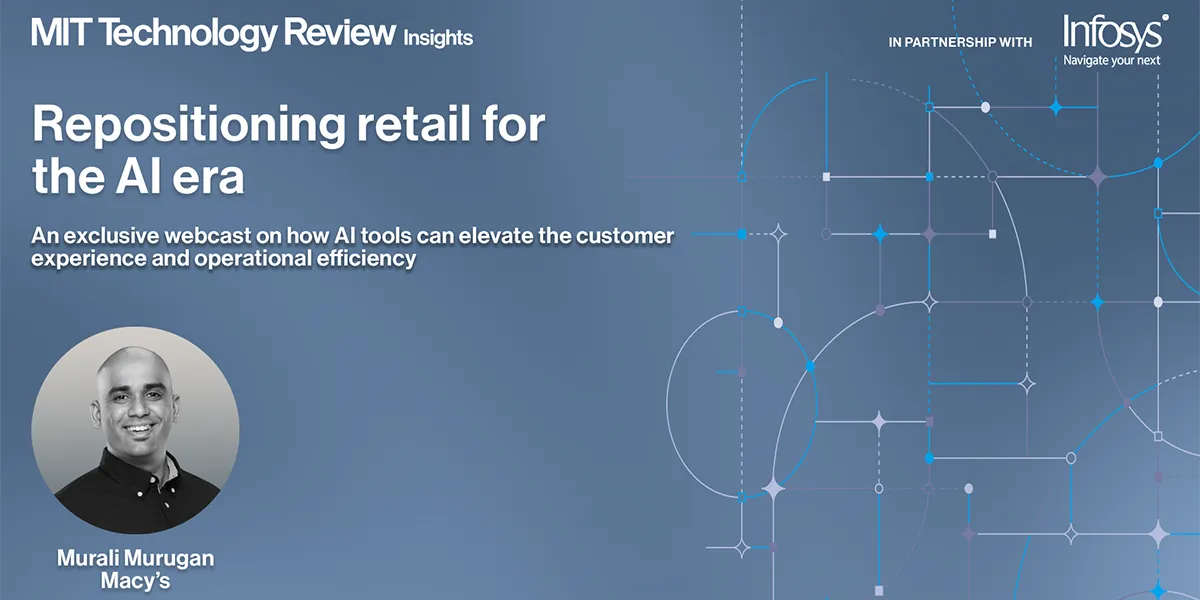
Murali Murugan, senior director of engineering at Macy’s, explains an “AI-first” approach that redesigns decision systems rather than layering intelligence on top. For executives, the consequence is clear: AI becomes an operating philosophy that links faster engineering and operations to more relevant customer experiences.
Artificial intelligence is reshaping retail, but not primarily through the flashy stuff shoppers post about. At Macy’s, the most consequential change is internal: how decisions get made, at speed, across search, inventory, personalization, and even software development. That is the “AI-first” idea senior director of engineering Murali Murugan describes, and it reframes AI from a set of tools into a redesign of how the business moves.
Murugan’s core claim is blunt. “AI first isn’t about adding intelligence on top.” Instead, it is “about redesigning how decisions happen so the business moves faster and every experience feels more relevant by default.” The point is not to sprinkle AI onto existing workflows. It is to embed intelligence directly into the systems that already drive customer experience and internal execution, including personalization, search, operational planning, and software development itself.
This approach matters because the retail environment is both fragmented and hyper-competitive, where small lags in decision-making can turn into visible customer friction and lost conversion. In that world, the biggest operational advantage often looks boring: faster decisions, more accurate recommendations, fewer supply-chain mishaps, and tighter loops between what customers do and what the company does next. The MIT Technology Review piece argues the industry shift is moving away from isolated AI pilots toward integrated systems that compress what Murugan calls “the gap between the signal and the action.” In plain English: the faster a retailer can turn customer and operational data into real changes, the more likely it can keep experiences relevant as behavior changes.
That is why early efforts tended to focus on narrow, high-impact use cases rather than broad, experimental bets. The source points to search recommendations and customer engagement as examples of areas where measurable gains can build internal momentum. When the improvements show up in conversion rates or reduced friction, scaling stops being a technology debate. Murugan frames it as a business decision: once “quick wins” are established, the organization can justify expanding the approach instead of re-litigating whether AI is worth it.
And that momentum is now extending outward into conversational commerce, where the interface becomes a style of interaction, not just a feature. Macy’s tool “Ask Macy’s” is described as an AI-powered shopping assistant meant to behave more like a personal stylist than a traditional search bar. Customers can describe needs conversationally for occasions like “a prom, a vacation, or a last-minute event.” The recommendations are curated and informed by past purchases, preferences, and context, aiming to make shopping feel less like searching through inventory and more like getting guidance that fits the moment.
Still, the strategy is not framed as AI replacing humans. The longer-term vision is retail that feels seamless, adaptive, and personalized, powered by systems customers may never directly notice. In this framing, AI is an invisible layer that augments human judgment, not a replacement for it. Murugan also emphasizes that continuous improvement is the mechanism behind the transformation: “It’s about learning from the mistakes, quickly adapting to the newer technology standards that are coming into play, timing, and execution which compound into a meaningfully better customer experience.” For executives, this reads like a governance problem as much as an engineering one. The organization has to be ready to learn, update standards, and execute reliably, not just launch models.
There is also a practical second-order implication for how teams and boards should think about AI investments. When intelligence is embedded across personalization, search, planning, and software development, AI performance becomes coupled to operational discipline and delivery speed. Engineers shipping code faster is not a side effect; it is part of the same pipeline that makes it easier to iterate on customer-facing decisions. That can shift where accountability sits internally. Instead of treating AI projects like separate experiments, leaders must manage them like core product and operations capabilities with ongoing iteration loops.
Finally, it is worth noting the content context. The webcast described in the source is produced in partnership with Infosys, and the MIT Technology Review content is produced by Insights, a custom content arm, not the newspaper editorial staff. The piece also states that AI tools used were limited to secondary production processes that passed thorough human review. For decision-makers, that transparency is relevant because AI programs in retail do not exist in a vacuum. They need credible data handling, human oversight, and execution that withstands scrutiny, especially as customers, internal stakeholders, and regulators increasingly expect accountability around how automated decisions shape outcomes.
The stakes for retail peers and other executives are straightforward. In a world where AI can either remain a patchwork of pilots or become the machinery of daily decisions, the winners are likely to be the organizations that can compress signal-to-action, scale from quick wins to integrated systems, and keep customer experiences improving as technology standards evolve.
This story's Key Insights and Take-aways are locked.
Create a free account to unlock Executive Actions for one credit.
Register to UnlockAlways free for Executives Club members. Join the Club
More in Technology

Nvidia's $89B data center quarter: the 9 companies cashing in
The AI buildout is minting fortunes beyond GPUs, and memory, cloud, and cooling suppliers are riding the same wave.

Google quietly links your phone number to every Android account on your SIM
Adding a SIM now ties your phone number to all Google accounts - and future accounts inherit it. Here's the security and privacy stakes.

Hijacker AI 'Skynet mode' runs 100,000 attack steps against exposed models
Symantec caught a criminal AI agent that borrows other models, steals data, and mines crypto; the only relief is no confirmed victims yet.