
Madison Square Garden shut off surveillance for Taylor Swift’s wedding after a privacy request
A Wired report says the venue complied with a client privacy request, a move described as unprecedented.
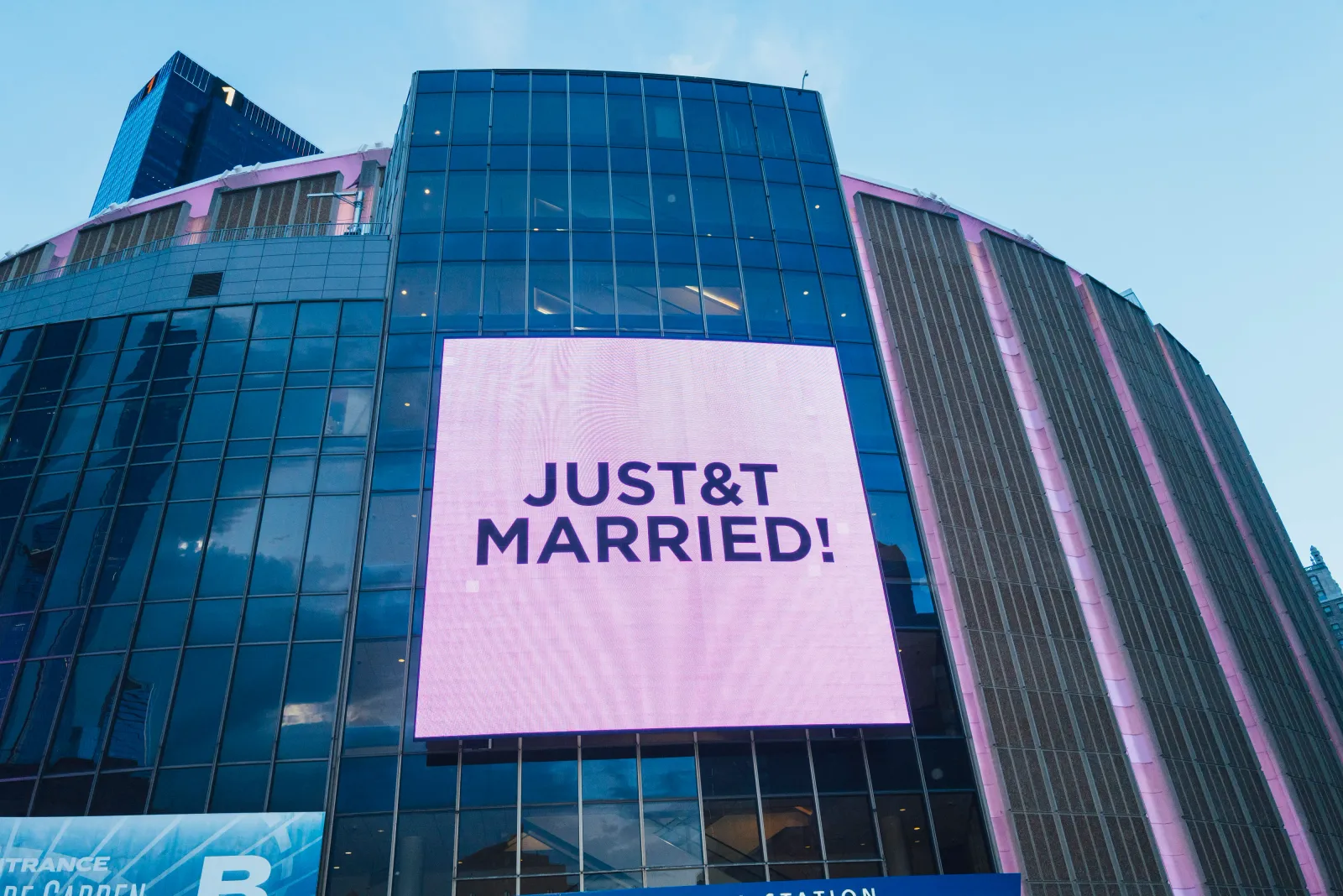
Madison Square Garden disabled its surveillance system for Taylor Swift’s wedding, according to a new Wired report. The reported reason was a client privacy request, a step the article describes as unheard of in the venue’s history.
Madison Square Garden disabled its surveillance system for Taylor Swift’s wedding, and the reason matters: a new Wired report says the shutdown happened because of a “client privacy request,” something described as unheard of in the venue’s history.
That simple phrase, “client privacy request,” is the entire story. Wired’s reporting frames the move as a rare reversal of the normal assumption that major venues run surveillance continuously and without making case-by-case exceptions. For executives who sit on security, legal, and risk committees, this is a high-signal reminder that “privacy” is not a theoretical concept, it can be a concrete operational constraint that changes what the facility does, when it does it, and what it can later prove.
Zoom out to how surveillance usually works in large venues like Madison Square Garden. These spaces are built for crowds and incidents. Surveillance systems support day-to-day operations and incident response, and they can also become evidence in disputes, investigations, or law enforcement requests. In practice, that means surveillance is often treated as default infrastructure: always on, always there, and not something that gets turned down without a defined trigger.
So when Wired reports that the venue shut it off because of a client privacy request, it signals an unusual kind of leverage and coordination. The client in question is Taylor Swift, and the occasion is her wedding. That combination changes the risk equation. High-profile events concentrate attention, amplify the stakes around media, and increase the number of parties that care about what is captured and what is not. The operational reality is that turning surveillance off can create gaps that are difficult to justify after the fact if anything goes wrong. That is exactly why the reported reason is so consequential.
There is also a board-level angle here: the venue’s incentives are not purely about privacy. They are about safety, legal exposure, contractual obligations, and reputational risk. If you are the operator of a landmark entertainment venue, you have a balancing act. Keep the security posture strong enough to protect guests and staff. Satisfy legal duties and cooperate with legitimate requests. And still be commercially flexible when the client is significant and the event is extraordinary.
This is where a privacy request becomes more than a legal checkbox. It becomes a decision that affects operations, documentation, and future precedent. Wired describes the request as something unheard of in Madison Square Garden’s history. That is not just a trivia point. Once a “privacy shutdown” happens, even once, it becomes part of the institutional memory and potentially part of what high-profile clients expect going forward. For executives and boards, precedent is a hidden cost. You might not want to set it, but you also cannot ignore that clients watch how systems behave under pressure.
The regulatory background is straightforward but important for executives. Privacy is typically governed by a web of laws and expectations, and those rules can intersect with surveillance practices. Even when specific requirements vary by jurisdiction, the operational question stays the same: what should be captured, when, for what purpose, and with what safeguards. A client privacy request, as Wired reports, suggests that the venue found a way to accommodate privacy concerns for this event. That accommodation may have required internal alignment between security operations and legal teams, and it likely required careful handling to ensure the venue could still meet its core obligations.
Second-order implications follow quickly. If surveillance can be disabled for one major client and one major occasion, other parties may push for similar accommodations. That does not necessarily mean surveillance becomes optional, but it does mean the default is no longer absolute. The risk for venue operators is that clients might treat surveillance shutdown as a bargaining chip, which can increase negotiation time and uncertainty. The risk for boards is that they must ensure any exceptions are governed, consistent, and defensible.
For peers in the venue, security, and event-operations world, this Wired report is a live-wire example of how privacy requests can become operational events, not just legal communications. And for decision-makers across industries that rely on surveillance or always-on monitoring, the takeaway is broader than Madison Square Garden. Systems built to be constant can face real-world moments where the “always on” assumption breaks, and the reason for the break, described as “client privacy request” and noted as unprecedented, can become a blueprint other clients try to replicate.
In other words, this is not only about a wedding. It is about how quickly executive priorities can shift when privacy expectations collide with security infrastructure, and how a single accommodation can quietly change what the market thinks is possible.
This story's Key Insights and Take-aways are locked.
Create a free account to unlock Executive Actions for one credit.
Register to UnlockAlways free for Executives Club members. Join the Club
More in Entertainment

Ali G's 'stooge' says he was in on joke, outplayed Sacha Baron Cohen
A 54-year-old aspiring actor says he recognized Sacha Baron Cohen mid-shoot, kept his MAGA act up, and let the film-makers think they had fooled him.

Entertainer Russell Brand denies 7 sex charges amid accuser's 'couldn't breathe' claim
The alleged victim's account sharpens the reputational and legal stakes for Brand, his platforms, and any business tied to a public figure under criminal scrutiny.

Russell Brand's accuser 'bewildered and confused' as he denies 7 sex charges
The criminal case against the comedian is a live test of how media companies manage talent risk when serious allegations go public.