

Malaysia shuts Balaji Srinivasan’s Network School; he signs Kazakhstan MOU next day
The “Network State” builder scrambles from a Forest City campus after licenses are revoked on July 21.
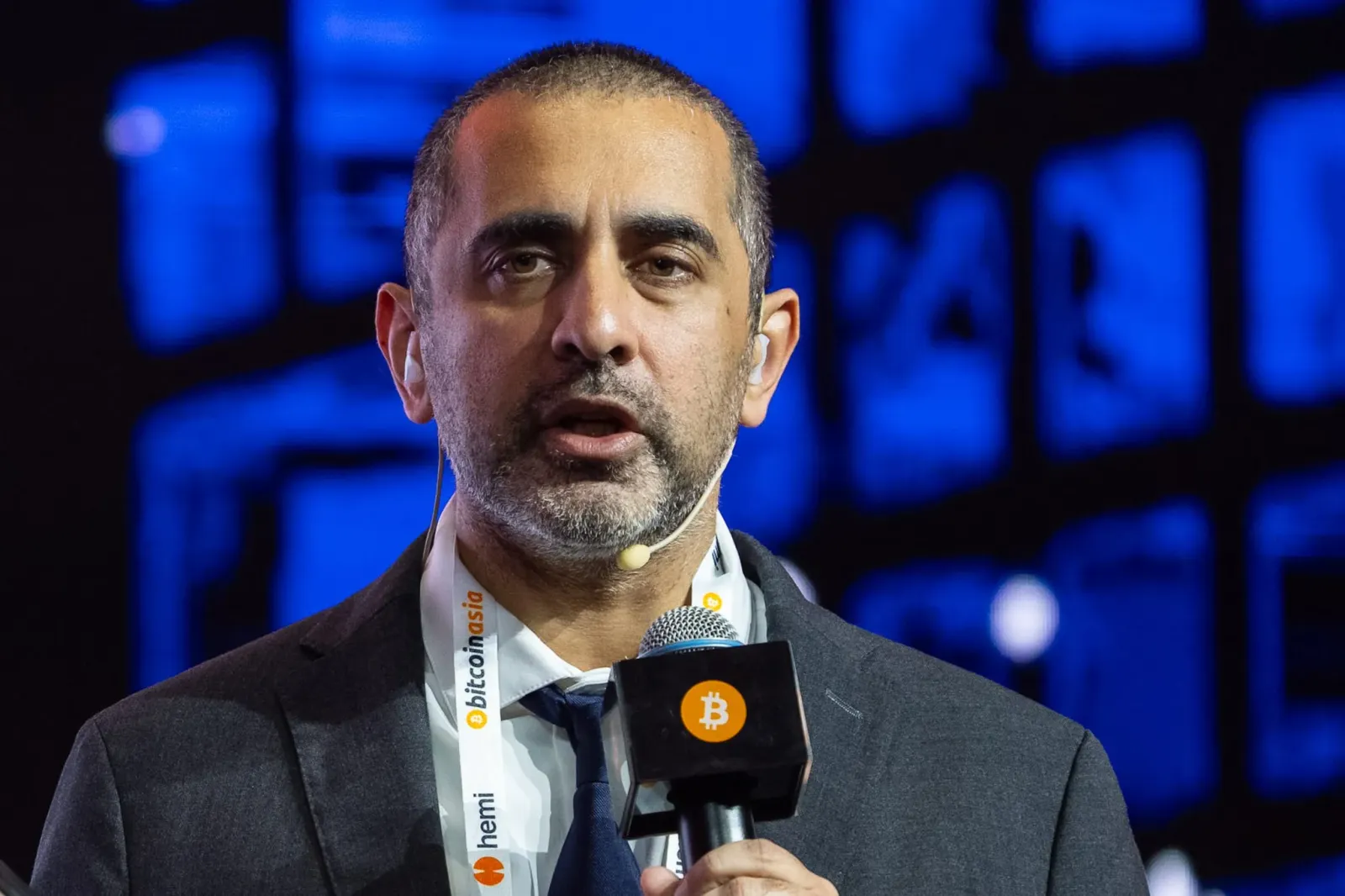
Balaji Srinivasan, former Coinbase chief technology officer, moved his Network School from Malaysia after the Iskandar Puteri City Council revoked its business and advertising licenses on July 21. The shutdown and fast Kazakhstan pivot raise fresh questions for executives about how quickly immigration, licensing, and geopolitics can derail global tech experiments.
Balaji Srinivasan did not wait for a court date or a slow paperwork process. Network School, his Malaysia-based “nomad” education community, got its business license revoked by the Iskandar Puteri City Council on July 21, and the next day he was already in Central Asia signing a memorandum of understanding with Kazakhstan authorities. In a July 22 post on X, Srinivasan said: “Our new campus will become a haven for global techno-optimism, with expedited visas, streamlined redomiciliation, and active recruitment of talent.”
If you are trying to read the tea leaves for global tech ventures, this is the part that matters: the reason Malaysia shut him down was not a simple technical violation. It started with a social media buzz cycle about the school’s location and who was entering the country, escalated into a regulatory crackdown, and then widened into a diplomatic headache involving Israel, U.S. citizenship, and summons at the ambassador level. The Malaysia shutdown was the immediate trigger. The Kazakhstan MOU is the continuation of the same bet: that a “network state” model can keep rolling even when governments slam doors.
Here is what led to the July 21 decision. Malaysian authorities launched an investigation after online allegations that Israeli nationals joined Network School’s program and entered Malaysia on “second-country passports.” Malaysia does not recognize Israel and generally bars entry to Israeli passport holders. The probe found no evidence of travel document violations. Even so, the Iskandar Puteri City Council chose to revoke Network School’s business license on July 21, arguing it breached licensing conditions and premises-use requirements. The council also revoked Network School’s advertising license, after finding that the business activities at the Forest City premises differed from what was authorized under its office-use license. Johor state officials publicly supported the council’s action, with Johor chief minister Onn Hafiz Ghazi saying in a July 21 social media post that all activities of NS0 Malaysia Sdn. Bhd. (Network School) in Forest City would cease effective July 22, 2026.
The dispute did not stay inside local regulatory channels. Malaysia’s foreign minister told Bernama that one dual U.S.-Israel citizen was ordered to leave the country. That, in turn, prompted the U.S. State Department to summon Malaysia’s ambassador to explain Malaysia’s position on Israel. Fortune reached out to Network School for comment, but the story’s through-line is clear: the licensing decision became a cross-border signal about how a country views Israeli-related activity, even when evidence of document violations is not found.
For context, Network School itself is not a typical startup program. Srinivasan launched the school in Malaysia in 2024 as a 90-day pilot for around 100 global participants. He expanded it into a year-long program in early 2025. The campus operates as a co-living space for technopreneurs and content creators. Pricing is part of its pitch: for $1,500 per month, it offers lodging, meals, gym access, and a regular schedule of tech workshops and hackathons. Participants told The Straits Times that the program was cheaper than similar offerings in Silicon Valley and the United Arab Emirates, which can cost between three and five times more.
The Malaysia story also rides on place-based marketing. Srinivasan emphasized proximity to Singapore, calling it a selling point because participants could focus during the week and travel into Singapore on weekends, with Changi and easy regional access. Then, on July 10, a social media advertisement highlighted that the school was on a “man-made island near Singapore.” Online sleuths dug in and concluded the school was actually based in Johor, the Malaysian state across the Singaporean border. The same day, an Instagram post from a pro-Palestinian activist group accused Network School of bringing Israelis to Malaysia in violation of Malaysia’s laws. Earlier friction mattered too: in 2023, Srinivasan used the term “tech Zionism” to describe the network-state strategy of accumulating land and pursuing self-determination. Even if Srinivasan framed it as an abstract governance analogy, the term landed badly in a country where public sentiment is strongly pro-Palestinian.
Now connect the dots to the real estate crash backdrop and you start to see why this got messy fast. Network School’s Malaysia operations were tied to Forest City, a residential mega-project launched in 2016 by Chinese developer Country Garden, supported by China’s Belt and Road Initiative. The plan was a city for up to 700,000 people on the Malaysian side of the Strait of Johor, just across from Singapore. But despite nearly $100 billion in committed investment, construction was never finished: only 15% built, and roughly 1% occupied. Forest City apartments were too pricey for many Malaysians and targeted Chinese buyers, but capital controls, COVID, and the property crisis tied to Evergrande undercut demand. Country Garden has been in debt restructuring since 2023, and its reported revenue last year was $22.9 billion, more than two-thirds lower than its 2022 peak of $63.6 billion.
So when Malaysia shuts a high-profile “global techno-optimism” experiment inside a partially built, geopolitically sensitive real estate asset, the impact is bigger than one school. It is a warning about how “network state” thinking meets the reality of national boundaries, licensing regimes, and political pressure. Srinivasan is not a random influencer either: he served as Coinbase’s chief technology officer in 2018 after the exchange acquired his startup, previously co-founded Counsyl, and was a general partner at Andreessen Horowitz. He has long pushed to detach the global tech sector from national sovereignty, including arguing in 2013 that the U.S. tech industry should leave the country. He also published a book in 2022 detailing his “Network State” idea.
Kazakhstan is now the next test bench, but the details are scarce. Fortune reports that Network School’s new campus plans are not fully spelled out. Still, Srinivasan promises space for educational and research opportunities in AI and support for tech start-ups. The immediate question for executives in adjacent spaces is brutally practical: when a venture relies on mobility, visas, “redomiciliation,” and international recruitment, how resilient is it to sudden license revocations or geopolitical frictions? Srinivasan’s weekslong saga suggests the answer is not “very,” at least not without rapid jurisdictional switching. And his speed, signing an MOU the day after the shutdown, shows the strategic playbook now includes contingency campuses, not just contingency plans.
This story's Key Insights and Take-aways are locked.
Create a free account to unlock Executive Actions for one credit.
Register to UnlockAlways free for Executives Club members. Join the Club
More in Technology

Google quietly links your phone number to every Android account on your SIM
Adding a SIM now ties your phone number to all Google accounts - and future accounts inherit it. Here's the security and privacy stakes.

Hijacker AI 'Skynet mode' runs 100,000 attack steps against exposed models
Symantec caught a criminal AI agent that borrows other models, steals data, and mines crypto; the only relief is no confirmed victims yet.

Nvidia's AI-financier shift faces its first big test as neoclouds stumble
A rout in neocloud stocks is forcing investors to weigh Nvidia's hidden exposure as both supplier and lender to the AI buildout.