
Male marathoners may hit the wall twice as often, and the cause is efficiency
New research suggests men and women burn energy differently, reshaping how coaches and race organizers interpret performance.
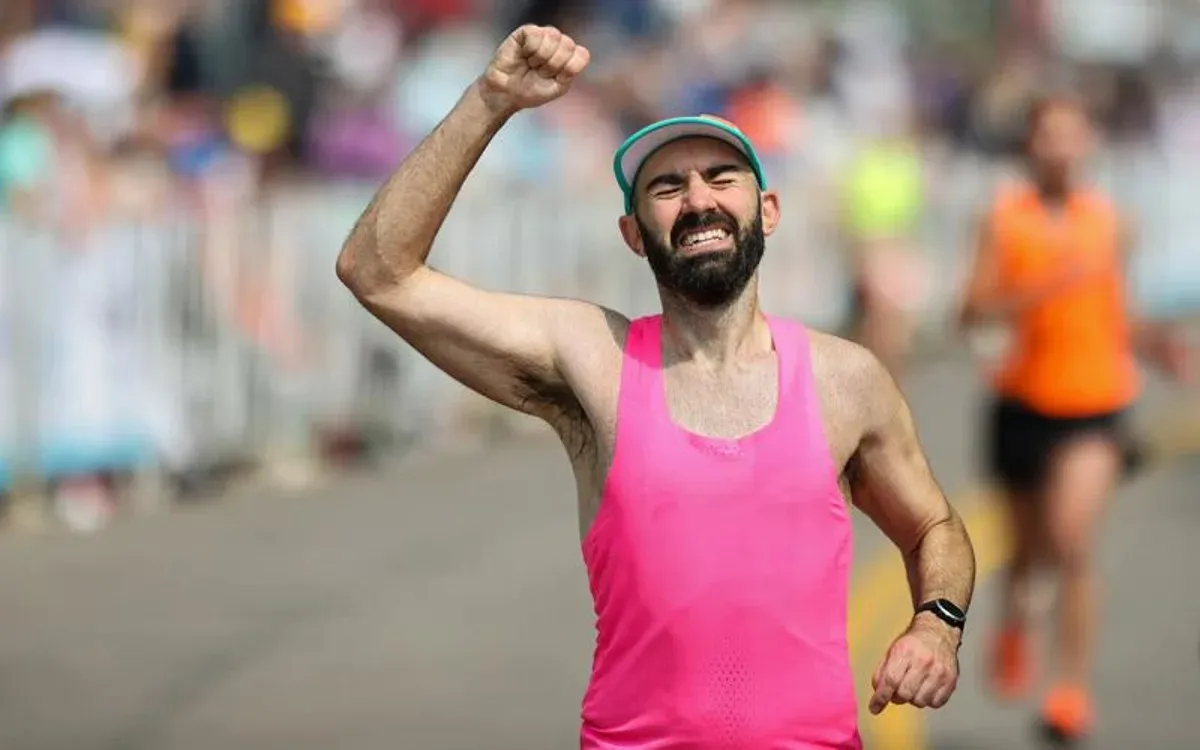
Scientific American highlights a key performance difference between men and women in marathon running: the way women use energy differs fundamentally from men. For decision-makers in sport science, coaching, and analytics, it changes how to diagnose fatigue, not just who looks fast.
Male marathoners might be twice as likely to “hit the wall” as women. That is the headline-sized claim at the center of the Scientific American piece, and it is more than a curiosity about endurance. It points to a mechanistic reason, not just a training story: the way women use energy while running is fundamentally different from men.
In practical terms, the “wall” is the moment endurance performance can abruptly drop. The research framing in Scientific American makes the difference sound less like a mindset or a purely physical weakness and more like a built-in energy strategy. If men and women are handling energy differently during a long run, then “hitting the wall” can be understood as an outcome of how that energy management plays out over time.
Why would this matter outside athletics? Because the modern sports economy runs on prediction and optimization. Teams, training programs, sponsors, and performance analytics all try to forecast when an athlete will fade and what lever to pull next. If the fatigue cliff is tied to fundamental differences in energy use, then the lever might not be simply “more miles” or “harder intervals.” It could be tuning pacing, intensity distribution, and recovery around how the body actually fuels movement.
For executives at sports-tech companies, coaching platforms, and wearables, this is a serious product implication. Many training and health tools operate on a one-size-fits-all assumption: the same model of effort and output should apply across athletes, with only personalization for baseline fitness. But if energy usage patterns differ in a gender-linked way, then algorithms that estimate fatigue risk, recovery windows, or performance potential may need separate calibration. Otherwise, the system can be correct for some users and misleading for others, producing confident recommendations that are mismatched to physiology.
There is also a governance and fairness angle. Sports science lives in a world where performance comparisons can trigger debates about equity, categories, and rule design. The Scientific American discussion does not claim that men and women are inherently destined for different outcomes. Instead, it emphasizes that the energy pathway differs, which reframes the conversation from “who is better” to “how bodies behave under sustained load.” That matters when organizations write protocols for testing, interpret results for selection, or set expectations for what “normal” looks like across groups.
The second-order implication for boards and leaders is risk management of reputational and operational decisions. When a company or team publicizes performance claims, they often anchor content to simple narratives. “Men hit the wall more” sounds like an easy story. But the more accurate and actionable story is “the cause might be energy use differences,” and that can change how products are marketed and how findings are translated into training guidance. Leaders who ignore the mechanism risk creating internal misalignment: coaches may change training plans while an analytics team keeps using a model built on assumptions that no longer hold.
There is another angle that decision-makers should care about: how research informs training without turning it into overreach. The Scientific American piece is specific about energy use differences as the core reason. That suggests a conservative, mechanism-forward approach rather than broad speculation. In a world full of viral performance advice, the operational lesson is to treat mechanistic findings like this as signals to refine protocols and measurement, not as excuses for rigid stereotypes. The boardroom takeaway is not “lower expectations” or “optimize one group differently forever.” It is “use the evidence to improve diagnosis of fatigue.”
Finally, consider the coaching and athlete management reality. A “wall” often feels random to the athlete: some days it arrives early, other days it holds off. If energy use differs fundamentally, then that unpredictability can be reduced by better pacing strategies and better monitoring of how effort is being converted into motion over time. For executives and investors in sport ecosystems, the strategic stakes are clear: the next wave of competitive advantage will come from teams and tools that can translate physiological mechanisms into better decision-making at runtime, not just better training plans on paper.
This story's Key Insights and Take-aways are locked.
Create a free account to unlock Executive Actions for one credit.
Register to UnlockAlways free for Executives Club members. Join the Club
More in Science

2026 Nikon Small World Winners Reveal the Hidden Machinery of Everyday Life
A mycologist's frozen Edinburgh garden became the backdrop for vivid views inside cells, a reminder of what advanced imaging now makes visible to researchers and the industries built on biology.
Study: 1 in 4 depression cases may be a body-clock problem, not a chemical one
A 10,000-person study finds standard antidepressants often fail these patients, but melatonin and morning sunlight may hit the real root cause.

Start-Up Says A.I. Designed a Virus to Attack One Patient's Superbug
If the claim holds up, personalized phage therapy could become a new frontline weapon against antibiotic resistance - but proof is far from final.