

Marc Isaacs says AI lab licensed his 25-year film archive for “Synthetic Sincerity”
A filmmaker built a fake lab story, then revealed the real version: his entire body of work was licensed.
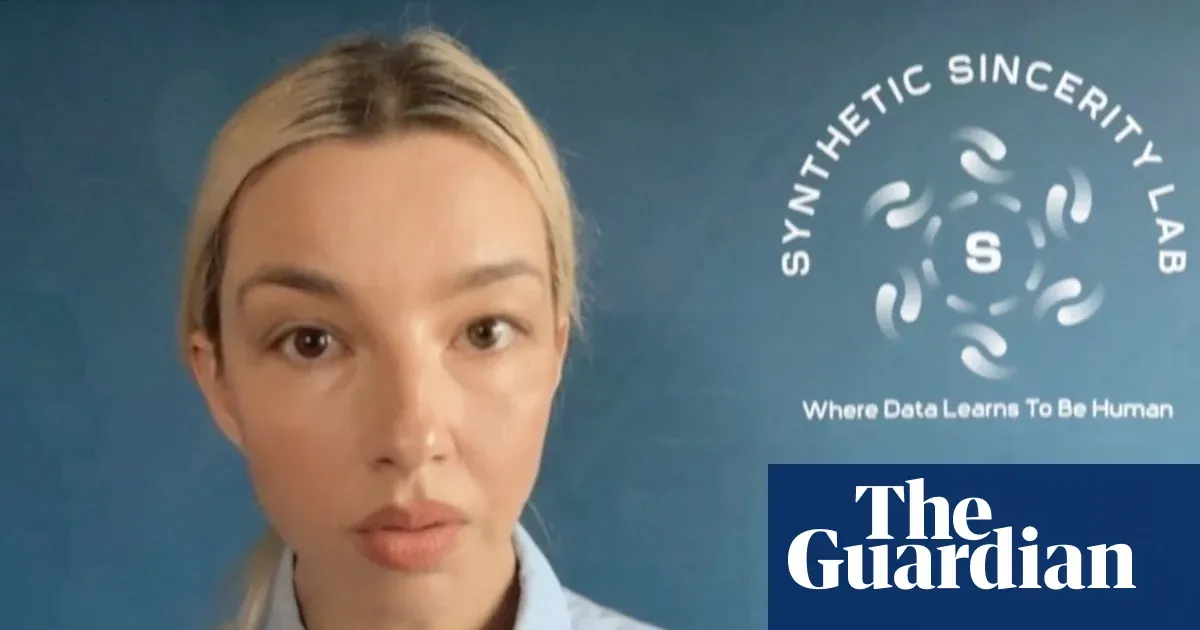
Marc Isaacs, the documentary maker behind Synthetic Sincerity, says an AI research laboratory licensed his entire body of work. For decision-makers, it is a blunt reminder that the biggest AI training stories may be happening offscreen.
Marc Isaacs’ newest film looks like a documentary, but the premise is so audacious it reads like a dare: a lab that scrapes movies to harvest human emotions. And then Isaacs, 59, drops the real-world kicker from the same fictional world. He says an AI research laboratory recently licensed his entire body of work, turning 25 years of observational filmmaking into training material.
The film’s title, Synthetic Sincerity, points to the lab at the center of the story. But the twist is how “real” it feels. Isaacs describes how data analysts at the University of Southern England fed his documentaries into a system to harvest “authentic human emotions” that could be used to create AI characters. In other words, the line between art and data is not just blurry. It is contract-shaped.
Isaacs’ work itself is built from ordinary life, usually played straight and deadpan. The Guardian piece names multiple titles that sit inside this idea: Lift, a poetic study of the comings and goings in a London tower block; The Curious World of Frinton-on-Sea, set in the sleepy retirement town nicknamed “God’s waiting room”; and Philip and His Seven Wives, where a secondhand furniture dealer declares himself to be a Hebrew king. Over 25 years, he has made droll portraits of Britain that feel specific down to the texture, accents, routines, and silences.
That specificity is exactly what makes the licensing claim so consequential. Training data is often treated like an abstract input, but here it is tied to discrete creative assets that represent both artistic choices and the lived experience of people on screen. The source also emphasizes that Isaacs agreed to let “data analysts” feed these and other documentaries into the system. That means the author is not talking about accidental exposure or scraped chaos. It sounds like a deliberate permissions pathway.
And Synthetic Sincerity keeps pressing the question of how far synthetic can go. In the film, the fictional lab uses emotion-harvesting to build AI characters. In the production of the film itself, that theme does not stay trapped in the script. The article reports that the restaurant chef and owner, Ablikim Rahman, appears in Synthetic Sincerity as an avatar. Rahman’s role shows how the concept works in practice: he is photographed by the AI boffins and turned into an AI version. The chef has not seen the film yet, and he says “Soon,” with a sheepish smile, which is a small detail but a telling one. It underscores how quickly people can become part of an AI pipeline even when they are not prepared for what the output will look like.
There’s also a regulatory and governance angle hiding in the word “licensed.” When creative works are licensed for training, the debate shifts from “Can companies scrape publicly available data?” to “What did the license cover, who was included, and what were the consent mechanics?” The source does not provide legal specifics like jurisdiction, contract terms, or how the university lab relationship was structured beyond the licensing claim and the fictional framing. But for decision-makers, the second-order lesson is clear: licensing is not a synonym for clarity or control. It can be a gateway for downstream uses that are harder to contest once models are built and tested.
This matters beyond one filmmaker because the incentives are similar across the AI ecosystem. Emotion, voice, and character behavior are valuable inputs for systems that generate lifelike content. If an AI research laboratory can license an entire body of work and treat it as raw material for synthetic characters, boards and executives should assume that comparable arrangements could exist across other creative domains, including film, television, music, and writing. The risk is not only reputational. It is also operational: how do you handle takedown requests, audit training sources, or manage attribution and consent when “human emotions” are the target feature?
Isaacs’ film is subversive precisely because it forces a question people often avoid until it becomes personal: when your work becomes training data, what do you still control? Synthetic Sincerity tells that story through a fake university and a fictional lab, but it lands harder because Isaacs frames the real licensing as having happened. For executives, the strategic stakes are simple. If the data pipeline can absorb a quarter-century of a filmmaker’s voice and world, it can also absorb yours, your company’s IP, or your employees’ likenesses, and do so in ways that are contractually permitted but culturally destabilizing. The future here is not just technical. It is about who gets to define the terms of participation when “authentic human emotions” become model output.
This story's Key Insights and Take-aways are locked.
Create a free account to unlock Executive Actions for one credit.
Register to UnlockAlways free for Executives Club members. Join the Club
More in Entertainment

Starfleet Academy names newcomer Ruaridh Aldington a Season 2 series regular
At San Diego Comic-Con's Star Trek 60th anniversary panel, Aldington joins as Keats, a high-stakes mystery for the cadets.

Akiva Goldsman drops Strange New Worlds Season 4 timing: weekly until Sept. 24
Star Trek’s co-showrunner uses Comic-Con to lock in the release calendar for Paramount+ Season 4.

Marvel’s Avengers: Doomsday Doom armor stays faithful to comics, but adds samurai-style upgrades
A fresh look at Robert Downey Jr. as Victor von Doom at Comic-Con shows what Marvel kept, changed, and why it matters.