

Mark Lamb vs Daniel Keenan: $1.6M self-funded primary turns sex scandal into a Trump loyalty test
In Arizona’s 5th District, Keenan is outspending Lamb and weaponizing an investigation into alleged sexual improprieties.
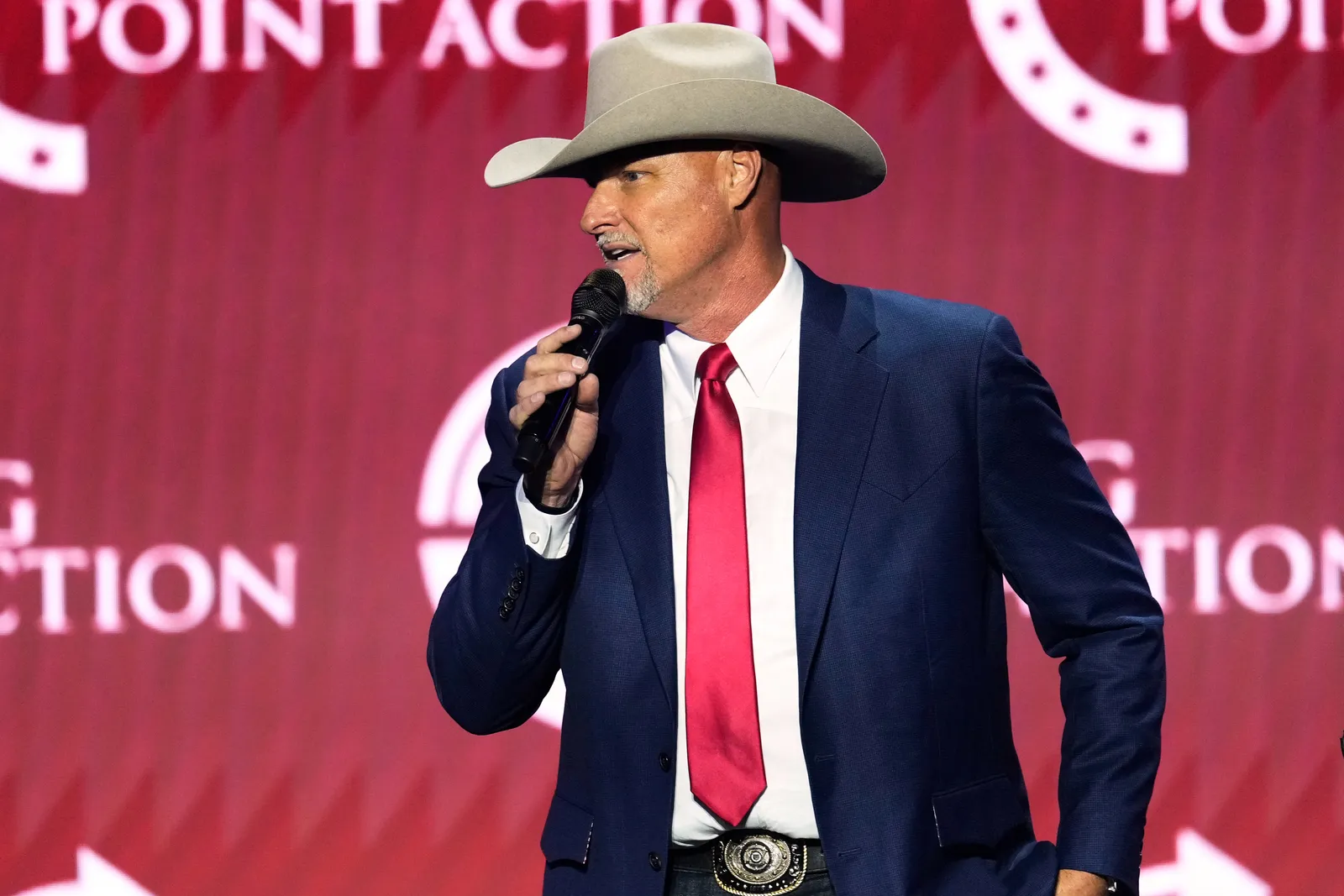
Mark Lamb, a Trump-endorsed former sheriff, is facing Republican challenger Daniel Keenan, who is funding his Arizona 5th District primary bid with $1.6 million of his own money. The race is forcing GOP voters to decide whether Trump’s endorsement can outweigh sex-scandal allegations and election-fraud attacks.
Mark Lamb is the Trump-endorsed candidate in Arizona’s 5th District. Daniel Keenan is the challenger trying to pry him off the ballot with $1.6 million of his own cash, after a multi-part Arizona Republic investigation described yearslong alleged sexual improprieties involving Lamb, his wife, and others.
Keenan’s strategy is blunt: make voters choose between the party’s preferred brand of loyalty and the reporting that, according to the Republic, alleges Lamb engaged in a pattern of sending sexual images and encouraging intimate encounters. The investigation centers on allegations from Jillian Stannard, who said Lamb encouraged her husband to have sex with other women, including Lamb’s wife. Stannard also alleged that when she raised concerns with leaders of The Church of Jesus Christ of Latter-day Saints, Lamb threatened her with “there would be consequences.” Screenshots the Republic obtained of messages with another woman, Tammy Peacock, suggest Lamb, then a sitting county sheriff, threatened to leverage Arizona’s revenge porn law against her. Lamb spokesperson Ed Morabito responded in a statement that “these allegations are false and come from long-discredited political opponents,” and Stannard told POLITICO her allegations are “accurate and true.”
This is, on its face, a primary fight. But it’s also a high-stakes stress test for how Republican voters treat scandal when a sitting president has effectively handed you the spotlight. Morabito insists the endorsement gives Lamb staying power, saying Lamb is “confident Republican voters will stand with him.” Keenan, meanwhile, frames the issue as character and fitness for office, saying in an interview that the messaging contradicts “God, family freedom” while Lamb is “sending pictures of himself” and encouraging sexual relations involving his wife. That contrast matters in a district where cultural alignment can be an electoral asset, not just a background detail.
Arizona’s 5th District, sometimes called the “Mormon district,” includes Gilbert, Queen Creek, and parts of Mesa, with significant Latter-day Saint populations. That community became part of the story not only because of the alleged conduct, but because the women in the Republic investigation said they repeatedly raised concerns with church leaders. It is unclear what disciplinary action, if any, the church took, and the church does not publicly disclose membership status or disciplinary proceedings. The church did not respond to a request for comment. Still, the political ripple is real: as the Republic’s reporting rocked the valley, a group of prominent Latter-day Saint politicians and strategists tried in late May to force Lamb out of the race, warning it could create a vulnerability for Republicans in November or drag down statewide Republicans in the governor race. That pressure reportedly tapered off when it became clear Lamb, or his supporters, would not budge.
And then there’s the money, because money is how these fights become unavoidable. Keenan has put more than $1.6 million of his own cash into the effort and says he’s using that to make sure voters see the reporting. His campaign has spent more than $1.8 million on TV advertising listing the allegations in the Republic. He’s also hosting numerous town halls a week and deploying significant mail advertising. Lamb’s campaign, according to AdImpact’s tracking service, hasn’t put a penny onto the airwaves. That is the kind of imbalance that changes voter information diets. If voters are learning about the race from whatever is loudest on their screens, the candidate who funds the noise sets the narrative tempo.
Even so, Lamb is not starting from zero in political protection. Morabito highlights that Lamb has Trump’s endorsement, and Keenan’s own argument implicitly acknowledges that the Trump label can be a shield. Keenan also claims he has been in touch with the White House about his bid, portraying himself as a steadfast Trump supporter. He adds a comparative case: Georgia businessman Rick Jackson’s recent gubernatorial primary win without Trump’s endorsement, as Keenan put it, “shows he can win without the president’s nod,” even if it is hard.
If you’re trying to predict the outcome, you can’t ignore the “what are we measuring?” problem. Is this primary about the alleged conduct, or about whether voters accept Trump-backed candidates who have baggage? Early polling suggests the answer may be closer than everyone would like. An internal poll from Keenan’s campaign obtained by POLITICO shows Keenan leading Lamb 42 percent to 40 percent, within the poll’s margin of error. Keenan’s earlier polling from late June had shown Lamb leading 43 percent to 35 percent, which is a notable swing in a relatively short window. Lamb’s allies are taking Keenan’s rise seriously enough to read it as vulnerability. Club For Growth poured $250,000 into pro-Lamb advertising in recent weeks, a move Keenan says signals Lamb is “in trouble.” A spokesperson for Club For Growth pointed to the organization’s own internal poll from a few weeks ago showing Lamb up by a 34-point margin.
In the background, legal and procedural facts also complicate the story. Lamb was never charged with a crime for his alleged actions. A Pinal County attorney investigation found no criminal wrongdoing, though it concluded a previous county attorney failed to adequately investigate the accusations. Meanwhile, Keenan is also attacking Lamb over another issue that matters to Arizona Republicans: Trump’s false claims that the 2020 election was stolen. Keenan told POLITICO that Lamb “betrayed our president after the 2020 election,” saying Lamb testified for Democrats and that he “there was no fraud” and “President Trump lost the election.” The White House did not respond to a request for comment.
For executives and board members watching this, the broader lesson is uncomfortable but actionable: when endorsements, media narratives, and money converge, they can overwhelm slower institutional processes. In a deep-red district, the question is not whether scandals matter, but how quickly campaign infrastructure can turn controversy into voter sorting. Keenan is essentially running an information war with ad spend, town halls, and direct messaging about the Republic’s allegations, while Lamb’s campaign has been quiet on the airwaves. If Keenan’s momentum holds, it won’t just reshape one seat in Phoenix-area politics. It will signal to every organization and political operator built around “the endorsement will carry us” that the carry depends on the capacity to fight back in real time.
This story's Key Insights and Take-aways are locked.
Create a free account to unlock Executive Actions for one credit.
Register to UnlockAlways free for Executives Club members. Join the Club
More in Politics

Glacial collapse, not rain, killed 180 in Nepal's Himalayan flood
The Himalaya's extreme geography hid the true cause of Nepal's catastrophic flood, a glacial collapse that turned a geological battleground into a mass-casualty zone.

Iran’s Esmail Baghaei says Oman talks start shipping via Hormuz, not US talks yet
Temporary route plans with Oman aim to restart commerce while Tehran says Washington dialogue is not on the table.

Standards watchdog opens probe into Reform UK deputy leader Richard Tice over interests
The parliamentary standards commissioner says it began an investigation on 28 July into a possible undeclared interest.