

Marvel’s newest Magic set adds Plan, Connive, and Teamwork - here’s the smartest entry path
For Marvel fans considering MTG, IGN maps the quickest on-ramp and the least expensive way to learn fast.
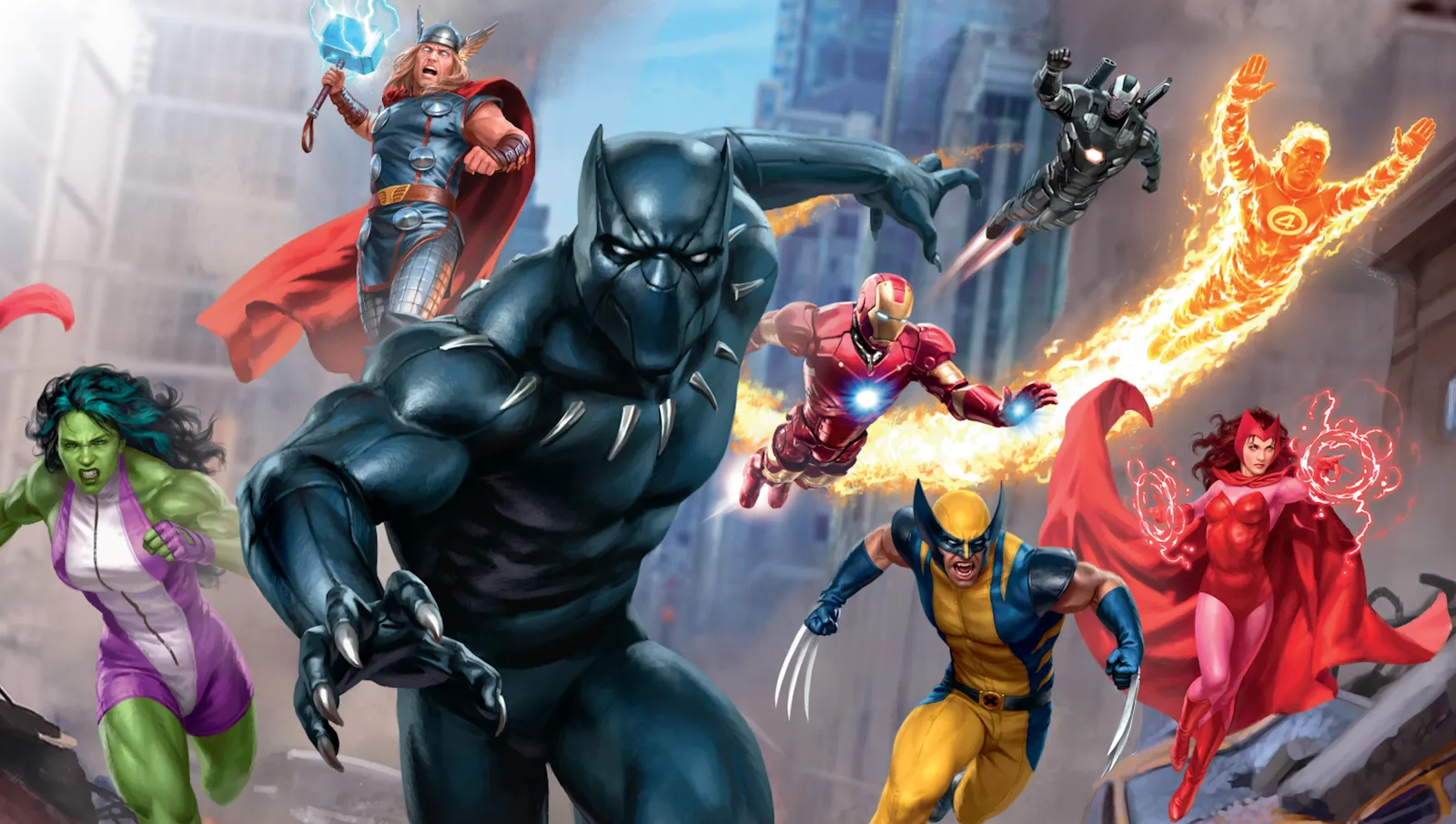
IGN reviews “Marvel Super Heroes” as the latest “Universes Beyond” Magic: The Gathering release, and tests it as a newcomer entry point. The consequence for decision-makers in media, gaming, and IP partnerships: the set is designed to be playable without deep lore, but you still need a guided learning route.
Getting into Magic: The Gathering can feel like trying to jump into the middle of a 30-plus-year TV series. There’s a mountain of cards, mechanics, lore, and an ever-evolving meta driven by constant releases. For new players, that’s intimidating. Even for casual fans, it can be tricky to keep up with what matters right now. Magic definitely has the same “learn a lot fast” pressure as a live service video game. But it also offers something unusual: ways to interact with cards and history on your own terms, and formats that let you start playing without chasing the highest-competitive deck.
That’s where IGN’s take on “Marvel Super Heroes” lands. This newest Universes Beyond release is framed as one of the most welcoming entry points for Marvel fans, and IGN’s answer is blunt: yes, and the best way to start is to ignore the collecting side at first. The set brings a lineup of Marvel “heavy hitters” into card form, including Iron Man, The Hulk, Captain America, Doctor Doom, The Scarlet Witch, Black Widow, Daredevil, Thanos, Black Panther, Elektra, Ant-Man, Loki, Thor, Storm, Wolverine, Jessica Jones, and Nick Fury. If you can connect to those names, the mechanics are also built to resonate with the characters and settings they come from, so you’re not learning generic fantasy. You’re learning superheroes through gameplay.
From a design standpoint, the set gives newcomers multiple handles to grab. IGN points to “Hero” and “Villain” creature types, with tribal synergy so heroes get bonuses for fighting alongside other heroes, while villains get similar synergy with villains. It also introduces a keyword called “Teamwork,” which lets you use members of your team, meaning creatures you control, to trigger an additional effect. There are also characters who can “Power-up” once per game to trigger a stronger additional ability. When “Thanos, the Mad Titan” powers up, you get a choice of odd or even, and then you destroy every other creature with a mana value of the chosen quality. That’s a clear, high-impact lever that’s easy to recognize while you’re learning, even if you don’t yet fully grasp all the deeper deck-building implications.
IGN also highlights a mechanic that helps Marvel-lovers feel like they’re getting the cinematic logic of the franchise: transformation via dual-faced cards. A small subset of characters come on dual-faced cards where one side is Bruce Banner and the flipside is The Hulk. On the other, it’s Peter Parker and the reverse is Spider-Man. Each side has value, and you choose which side to play, but you can also transform mid-game, so Tony Stark can become Iron Man “just in time to turn things around.” For players, that matters because it lowers the “wait, what is this game doing?” barrier. You’re not just memorizing rules. You’re watching familiar character arcs expressed in mechanics.
Then there’s the villain side, which IGN says the set includes through “Plans.” Plans are villainous mechanics with conditions that typically take multiple turns to be met, but the longer the build-up, the bigger the pay-off. “Doom Reigns Supreme” lets you play a couple of your opponent’s cards for free, while “Construct a Cosmic Cube” helps you spawn token creatures and eventually lets you take over and play your opponent’s turn. Another villainous mechanic is “Connive,” described as drawing then discarding a card. In practice, IGN explains that Connive can boost creature stats, cycle through your deck, trigger “second card draw” effects, and synergize with discard mechanics. Put all of this together and you get a set that is mechanically specific enough to feel like Marvel, but still structured enough to teach you what to look for as you play.
IGN also underscores the “feel” layer, because Magic is both a game and a collectible universe. The art is described as a key draw, showing iconic characters and scenes through MTG’s artist stable. There are collectible variations too, including cards featuring source material art from a wide array of eras and artists, with formats like three-panel scenes, cards presented like comic book covers, and borderless presentations. But IGN explicitly pushes back on the collecting mindset for beginners. The article’s premise is that the set is a good entry point, yet the best start is to learn to walk first. Spend money on understanding core mechanics, how different colors play, basic archetypes, and how to identify strong cards and build a rounded deck. Collecting can come later.
So what does IGN recommend if you’re actually starting out? It boils down to lowering complexity and getting immediate reps. For learning to play “with as little complexity as possible,” IGN points to Jumpstart. The concept: buy two Jumpstart booster packs and combine them into a deck. If you’re playing against a friend doing the same, power levels are likely to be reasonably close. That gives you a fast on-ramp, though the packs only include “very basic instructions,” so brand-new players should still consult an online resource or a friend. If you’re genuinely starting from zero, IGN says the Beginner Box should come first. It contains eight Jumpstart half-decks, plus two tutorial decks with step-by-step instructions. The tutorial introduces basic turn flow, key mechanics, and highlights what you should think about in combat, with two playmats to arrange cards and a rules reference guide for keywords and interactions. You’ll still probably Google some stuff as you go, but at least the first ramp is guided.
Once you’ve done that tutorial, IGN says you can shift to Jumpstart to explore different color combos and archetypal strategies. IGN notes there are 51 different Jumpstart booster themes, meaning you’ll be “playing in the shallow end,” but you can pick favorites and modify decks later once you understand the basics. And if you want another beginner-friendly route, IGN also suggests playing Commander using preconstructed decks. Commander uses 100 cards with no duplicates except basic lands. You pick a legendary creature as the commander that sits aside from the start, summoned into battle rather than drawn. When it dies, you return it to that zone with a cost to call it back into play. Commander’s twist is that games are different each time, which keeps learning interesting, even as your decision-making matures.
On the second-order business side, this matters because Universes Beyond is more than a content drop. IGN frames it as an “onramp” after Wizards of the Coast has been doing Universes Beyond content for more than five years. Those releases can be self-contained, letting players try Magic without needing official lore or characters. For anyone involved in IP partnerships, product design, or community strategy, “Marvel Super Heroes” illustrates how familiar franchises can reduce friction in an ecosystem that otherwise requires time, pattern recognition, and social learning. And for players making their own investment decision in time and money, the strategic stake is simple: if you jump in without a guided learning path, you’ll still be overwhelmed by Magic’s complexity. IGN’s recommended route is the opposite. Learn the core loop first, then let the Marvel flavor do what it’s best at: make the game click faster.
This story's Key Insights and Take-aways are locked.
Create a free account to unlock Executive Actions for one credit.
Register to UnlockAlways free for Executives Club members. Join the Club
More in Entertainment

Artists Equity greenlights doc Shot in the Dark on U.S. Paralympic blind soccer push
The partners track the first U.S. Paralympic Blind Soccer team from 2022 roots to a 2028 gold attempt.

Percy Jackson Season 3 lands November 20, 2026, with Titan's Curse footage at SDCC
Disney+ set the premiere date and previewed first footage, turning SDCC Hall H into a countdown for stakeholders.

John Mayer donates about $5M to PTSD research, aimed at destigmatizing veterans
The Heart and Armor nonprofit has funded studies since 2019 after Camp Lejeune sparked action in 2012.