
Mbappe brace after 2-hour weather delay lifts France to 3-0 over Iraq
A lightning-stalled World Cup opener turns into Mbappe and Dembele dominance, with group I implications depending on other results.
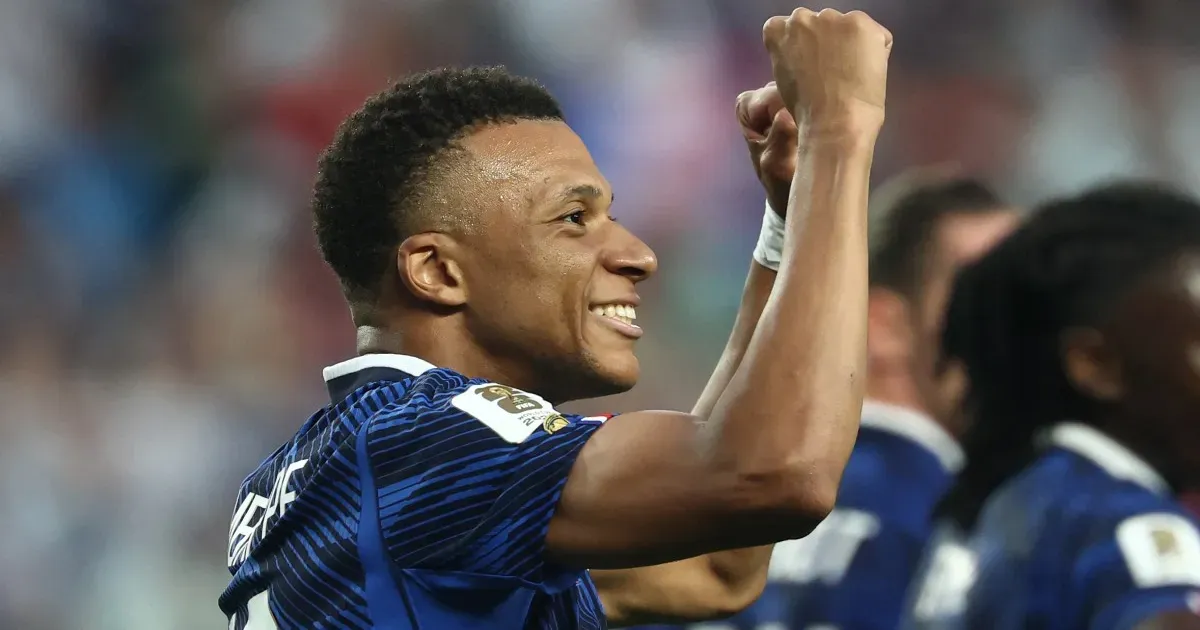
Kylian Mbappe scored his second brace of the tournament and France beat Iraq 3-0 in the first match of a World Cup repeatedly disrupted by a lengthy weather stoppage. For decision-makers watching the tournament, the result tightens Group I while leaving Iraq’s knockout hopes alive but fragile.
Kylian Mbappe scored the first two goals for France, and after a second-half kickoff delayed by nearly two hours due to thunderstorms, France still cruised to a 3-0 win over Iraq in the tournament’s opening match for Group I. It was “business as usual” on the scoreboard even when the stadium couldn’t quite find its rhythm in the air.
Mbappe’s first strike came in the 14th minute, and then he added his second goal only after the restart. The article puts the timing on it: the second-half kickoff was delayed “by a shade under two hours,” while Mbappe’s goals arrived nearly three hours apart because the weather effectively reset the match. France did not just survive the delay. They used it as a backdrop to keep asserting control.
For Mbappe, this was not a one-off highlight. The source says he scored his second brace of the tournament, taking his all-time World Cup tally to 16, pulling him level with former record-holder Miroslav Klose. That matters because it ties individual star power to historical benchmarks rather than just a single game. It also places him in the 2026 Golden Boot conversation: his four goals leave him one behind Messi in the Golden Boot race.
The third goal came from Ousmane Dembele, who also played like the kind of player who turns “good enough” into “game over.” Dembele scored after half-time, with the source describing him as providing the finishing touch after controlling Michael Olise’s pass into the 18-yard box and firing low past Ahmed Basil. In practical terms, it’s the classic knockout-avoidance pattern for a tournament favorite: get an early lead, add a second goal as soon as the game opens, and remove any remaining suspense before the match starts inventing new problems.
France’s early dominance is described plainly, and the goals reflect that control. For Mbappe’s opener, the source details a sequence starting with Michael Olise’s pass: Mbappe took one touch to his left, and because Iraqi defenders gave him space, he produced a powerful strike from the edge of the penalty area that sailed beyond Basil’s dive. The second goal reads like a cautionary tale about what happens when you’re chasing a match, even after you think you’ve contained it. The source says Iraq gifted France and Mbappe a second through a dreadful mistake from a goal kick, and Dembele was then the provider for Mbappe’s tap-in.
And then there’s the “everything that could go wrong did” part, which the source lays out with unusual specificity because it affected the match itself. The referee, Drew Fischer, blew the half-time whistle as storms were already beginning. After that, the skies opened further and spectators were told to seek shelter in stadium concourses. Players re-emerged for warm-ups about 1 hour and 40 minutes later. Even then, the restart did not immediately flow, because stadium personnel used squeegees to shuttle standing water off the east side of the pitch. That sequence is the real narrative: the weather did not just delay kickoff, it forced a full operational pause, then an imperfect recovery.
With the result decided, the tournament stakes shift to what it means for Group I and the path to the knockout stage. The source states France are all but assured of progressing. Their last-32 place becomes official if Norway win or draw against Senegal in the other Group I fixture. That other match is staged about two hours away by car in northern New Jersey and kicked off near-simultaneously with the start of the long-awaited second half at Philadelphia Stadium.
Iraq, meanwhile, remain alive for one of the eight knockout spots allocated for third-place teams. But their life depends on more than just their performance. The source says they will probably need a win in their group finale against Senegal and help elsewhere. It also flags a potential injury concern: Iraq could be without Aymen Hussein, who scored their only goal in the tournament in their opener, but exited on Monday in the 26th minute with an apparent injury.
The bigger second-order implication for executives is not the soccer itself, it’s what sports organizations have to manage when unpredictability collides with broadcast windows, fan operations, and competitive fairness. This match shows how quickly a “schedule risk” becomes an operational risk, right down to pitch maintenance procedures after storms. If you’re used to thinking in terms of planning assumptions and contingency buffers, this is a reminder that even when the talent performs, the infrastructure and timing still set the constraints. For a board or operations lead in any live-event ecosystem, it’s a live case study in resilience: control the controllables, communicate during disruption, and protect the competitive product while conditions change.
This story's Key Insights and Take-aways are locked.
Create a free account to unlock Executive Actions for one credit.
Register to UnlockAlways free for Executives Club members. Join the Club
More in Entertainment

Marjane Satrapi, 56, dies: Saudi culture ministry also backs RCA-linked Riyadh arts program
Two culture signals land at once: a global creative loss and Saudi Arabia moving to systematize homegrown art talent.

The Traitors goes fully WhatsApp: UK and Ireland fans can play at home
A licensed, show-inspired social deduction game from CityDays and All3Media International turns “watching” into participation.

Goalhanger picks 6 creators for 3-month Accelerator, including The Receipts host
The Hollywood Reporter’s exclusive: what the program funds, who it opens doors to, and why creator-influenced media matters now.