

Merck tries to lock in generic HIV pill access, but Latin America is still uncertain
Generic versions in Africa and India could cost as little as $5 per person per year, while access in Latin America remains unclear.

Merck is taking steps to ensure access to a new HIV prevention pill as companies in Africa and India prepare generic versions. Decision-makers will need to plan for uneven rollout economics, since Africa and India may see low pricing but much of Latin America may not.
Merck is moving to secure access to a new HIV prevention pill, even as the rollout map looks uneven. Generic versions produced in Africa and India could cost as little as $5 per person per year. That price point is the kind of number that can change real-world adoption, because it reframes the question from “is prevention affordable?” to “can systems deliver it at scale?”
But the most important caveat sits in the next sentence: access to the drug, and other new products, remains uncertain in much of Latin America. In other words, Merck’s push is not a universal fix. It’s a bet that the combination of generic competition where it can happen and access efforts where it is harder will determine whether the prevention pill actually reaches the people who need it.
To understand why those two regions matter together, zoom out for a second. HIV prevention pills are not just a product release problem. They are an ecosystem problem. Countries need the right regulatory pathways to approve and import, healthcare systems need the distribution and procurement rails to get the pill to clinics, and payers need pricing that doesn’t turn every prescription into a budgeting crisis. Generic manufacturing in Africa and India speaks to one end of that chain: unit cost and supply. When generics can be made cheaply, the remaining bottlenecks are often administrative and political rather than purely financial.
That is exactly why “as little as $5 per person per year” is such a loud signal. It tells you where the market thinks the floor could be for affordability. If that figure holds in practice, it can put pressure on how expensive branded or interim options look, and it can expand the addressable market for prevention by lowering the cost barrier for programs, clinics, and insurers. It can also change the negotiating dynamics for public procurement. When generics can anchor price, budgets tend to stretch further, and decision-makers become less afraid of scaling something that is new.
However, the source also makes it clear that Latin America is not seeing the same level of certainty. Access remaining “uncertain” implies that at least one part of the chain is weaker there. It could be related to how quickly regulators clear new products, how contracting and procurement move, or how quickly health systems can integrate a prevention option into existing care pathways. The key point for executives is not which specific bottleneck applies. The key point is that regional variability is real enough to be called out explicitly, which means companies and investors should treat launch planning as a region-by-region exercise rather than a single global rollout.
Merck’s “steps to ensure access” fit into a broader pattern in global health, where new medicines often hit a predictable split. Some regions get faster access because there are clearer generic manufacturing and distribution pathways, while other regions move slower because approval, reimbursement, or market authorization takes longer or is more complex. That split can create second-order effects for nearly every stakeholder around the deal.
For Merck, the strategic stake is straightforward but high consequence: hopes are high for the new HIV prevention pill, and access is the difference between scientific promise and public health impact. If generic versions can be produced in Africa and India, Merck is aligning itself with lower-cost routes that can drive uptake. But if Latin America is uncertain, Merck will likely face reputational and operational scrutiny, because the promise of “new prevention” can sound less compelling if only some geographies actually get it.
For boards, the implication is equally practical. When access depends on regulatory and market conditions that differ by geography, the risk profile changes. Revenue forecasts, supply commitments, and partnership expectations all become less linear. For partners and competitors, the lesson is that generic economics are only one lever, and pricing is only one moment in the journey. Distribution, authorization, and procurement timing can decide whether the product reaches clinicians and patients in time to matter.
The takeaway for decision-makers who operate in adjacent markets is to treat the rollout map as part of the product. The source gives you the headline facts: generic versions in Africa and India could cost as little as $5 per person per year, while access in much of Latin America remains uncertain. When you see that contrast, you should assume the bottleneck risk is structural, not temporary, and plan accordingly for uneven adoption across regions that matter to global health outcomes and to company performance.
This story's Key Insights and Take-aways are locked.
Create a free account to unlock Executive Actions for one credit.
Register to UnlockAlways free for Executives Club members. Join the Club
More in Politics

LA County: DOJ's 20,000 'noncitizen' voter list is 'unreliable,' includes U.S.-born
Preliminary review by Los Angeles County election officials finds errors in the federal list, raising the stakes for voter roll integrity ahead of November.

Trump's $1.5B Pentagon chip investment lands in North Carolina
A $1.5 billion defense infusion for North Carolina chipmaking signals a new era of Pentagon-backed reshoring - here's what it means for the industry.
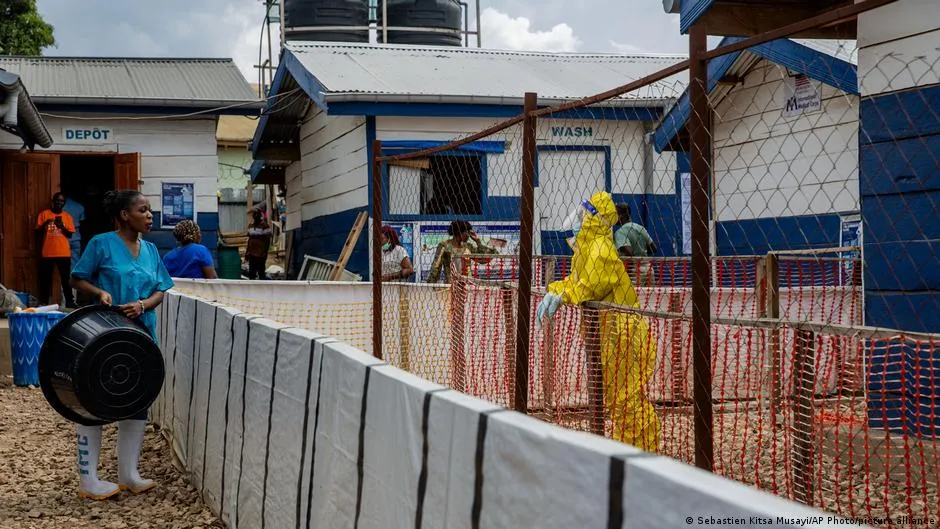
Nigeria confirms first Ebola case in Abuja, a woman just off a Uganda flight
Health Minister Muhammad Ali Pate says the patient flew in from Uganda, putting Africa's latest outbreak on Nigeria's doorstep.