
Messi, 39, coached-on-pitch and turned England's physical plan into dead ends
England expected a physical fight. Messi used a coach-like read-and-rewire approach on the fly, and it worked.
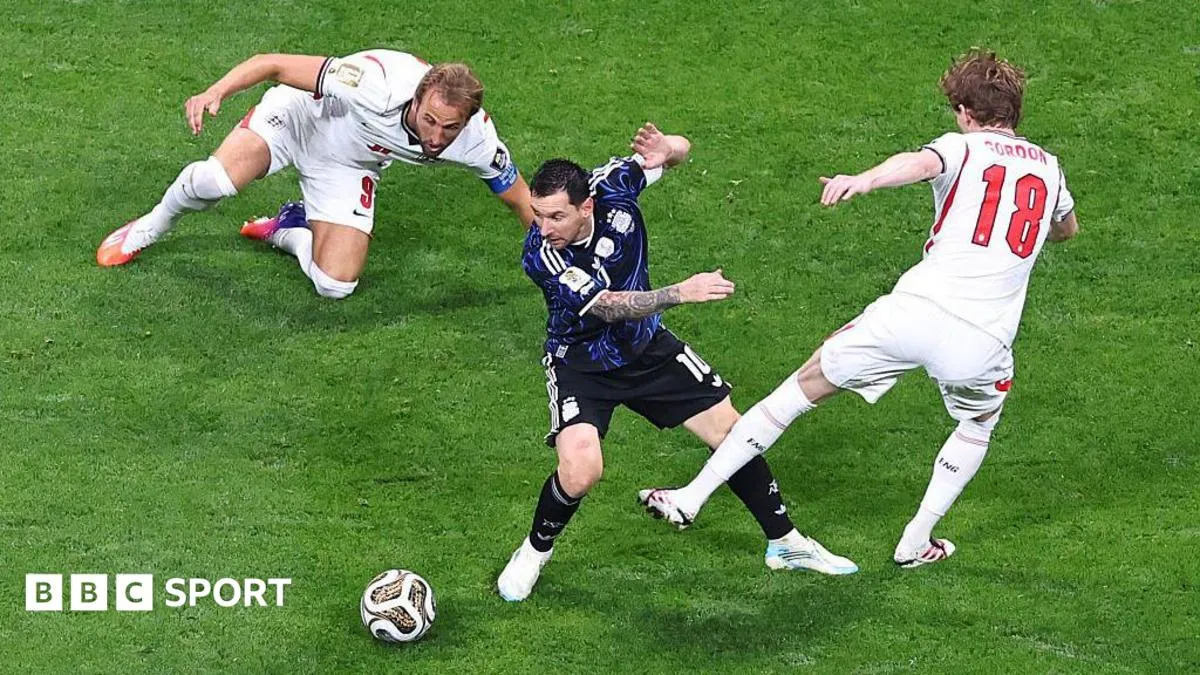
Lionel Messi, 39, undid England's tactics during a match through a coach-on-pitch approach, as BBC Sport football tactics correspondent Umir Irfan explored. The consequence for decision-makers is a sharp reminder: even physically dominant game plans collapse when an elite attacker dictates the match's adjustments.
England pride themselves on physicality, so the matchup logic almost writes itself. They would be facing a 39-year-old who spends most of his time walking. That should have suited England. Except it didn't, because Messi did something more dangerous than out-run his opponent. He managed the game like a coach while the match was still happening, reading England's shape and undoing it in real time.
That is the core of what BBC Sport football tactics correspondent Umir Irfan highlighted: Messi's masterclass was not just about flashes of brilliance. It was about control. England arrived with an approach that assumes physical pressure equals advantage, because the opponent has limited ability to react to chaos. Messi, at 39, played into the exact psychological trap England's plan creates. He allowed England to feel comfortable with their “this should be our kind of fight” storyline, then navigated their tactical assumptions until their intended pattern stopped producing the outcomes they needed.
For executives, the temptation is to treat tactics like a fixed blueprint. In football, boards and coaching setups often prefer simple narratives: “We win duels, we win the game.” Physicality is tangible. It is easy to measure in moments, easy to communicate in training, and it plays well in post-match analysis. But the Messi lesson is that matches are not just played by who looks strongest. They are won by who can force the other side to rethink their plan mid-execution.
In practical terms, the coach-on-pitch idea matters because it breaks the rhythm of a structured system. England pride themselves on physicality, but physical teams also tend to be organized around predictable triggers. If you know when the press is coming, or which zones the opponent will attack after contact, you can plan. Messi, as Irfan's analysis frames it, neutralized that planning by adjusting what mattered and when it mattered. The result is that England's physicality no longer produced control. It produced effort without reward.
This is where the market context of sport, and really any high-stakes performance environment, becomes relevant. Teams do not just spend time training, they spend time building confidence. When your identity is physicality, you can get stuck in a loop where every moment feels like it should tilt your way because your core advantage is “what you do.” Messi showed why that loop is fragile. Even when the opponent appears slower or more passive on the surface, their intelligence can turn waiting into dominance.
Regulatory background is not the headline here, but it is part of why the tactical stakes keep rising. Modern football rules and officiating tendencies often push teams to manage contact, pressing, and aggression carefully. That means physicality is powerful, but it is also conditional. If you chase the ball with the wrong timing, or commit to challenges that leave you exposed, you can end up punished by an opponent who is comfortable letting you build pressure and then exploiting the gaps your pressure creates. A 39-year-old who spends much of his time walking is not a reduction in threat. In a tactical sense, he can be a reduction in your margin for error.
Second-order implications follow quickly. When Messi can “coach” during the match, the opposition cannot rely on pre-game confidence alone. That forces a rethink at the decision-making level: who owns adaptation, and how quickly can the group translate information into action. On a staff level, it means communication channels and role clarity matter as much as athletic output. On a board level, it changes what you prioritize in recruitment and player development. Not just “can they run,” but “can they process and adjust under pressure.”
The strategic stakes for peers are blunt. If England's physical identity could be undid in this specific way, no team can assume their style is automatically dominant just because the opponent looks, on paper, like the weaker athletic option. Against an elite attacker, especially one who operates like a strategist in motion, you need more than toughness. You need a plan for what happens when the game refuses to behave.
And that is the bigger point that Irfan's framing brings into focus. Messi's masterclass was not built on denying England their physicality. It was built on making that physicality irrelevant to the problem England thought they were solving. England pride themselves on physicality, so shouldn't it have suited them? The answer is that it would have, in a world where physical plans stay intact. Messi changed the world. He turned the match into a shifting puzzle, and England's pieces did not move correctly once the picture shifted.
This story's Key Insights and Take-aways are locked.
Create a free account to unlock Executive Actions for one credit.
Register to UnlockAlways free for Executives Club members. Join the Club
More in Entertainment

12TB Steam 'teraleak' goes beyond Valve: GTA 3, Mafia 2 prototypes exposed
A 12-terabyte dump of Steam data reveals prototypes and builds of third-party classics like GTA 3 and Mafia 2, plus unreleased Valve content, rewriting game history.

LinkedIn's romance problem: 1 in 4 workers say dating on it is fair game
A new survey shows a quarter of U.S. employees treat the professional network as fair game for romance, even as LinkedIn bans it and removes hundreds of thousands of offending posts.

Enhypen's first No. 1 album breaks K-pop's Billboard 200 streak
The K-pop group's 98,000-unit debut tops the chart while Dolly Parton's catalog reentry shows how death reshapes streaming.