
MI5 chief warns AI could 'change the stakes' on bioweapons
The UK's top spy says AI is making biological attacks more accessible; Johns Hopkins' Tom Inglesby explains why governments are scrambling and what safeguards could stop it.
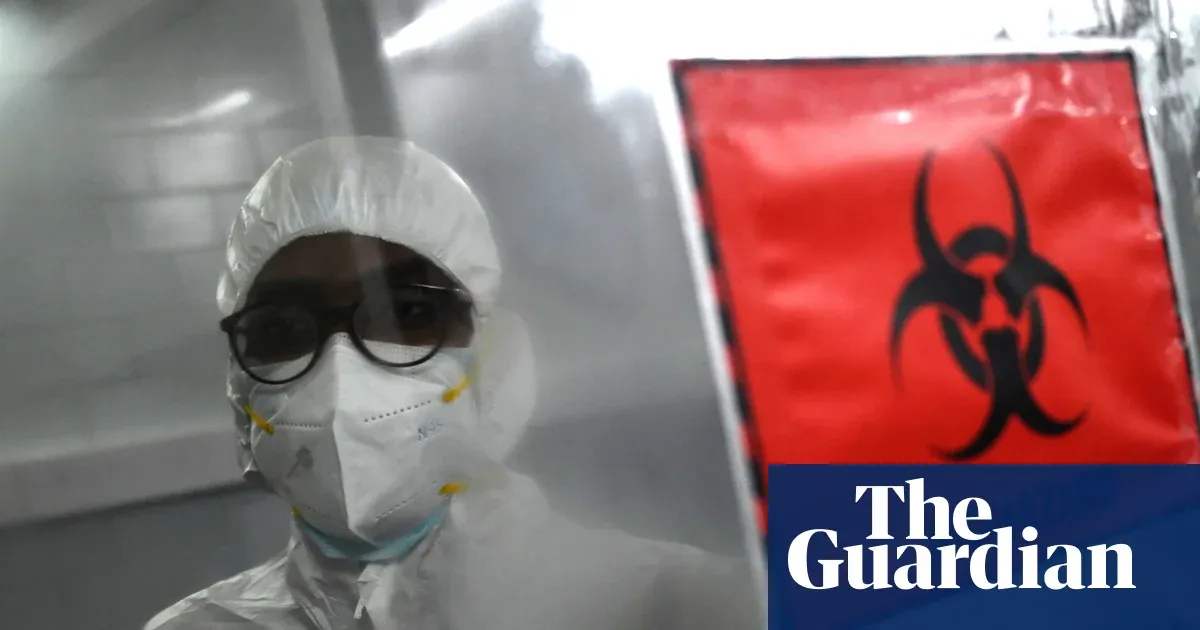
Sir Ken McCallum, head of UK intelligence service MI5, warned in his annual threat speech that AI could 'change the stakes' on existing and new bioweapons. Dr Tom Inglesby of Johns Hopkins explains the risk and potential safeguards, signaling a new front in biosecurity for governments and companies.
The UK's top counterintelligence chief is putting AI-powered bioweapons on the national threat map. In his annual speech on threats to the nation, Sir Ken McCallum, head of MI5, warned that AI had the potential to 'change the stakes' on existing and even new bioweapons. The warning lands as governments and tech companies race to understand what artificial intelligence can actually do in the hands of bad actors, and it is not a distant hypothetical.
The risk is real, according to Dr Tom Inglesby, director of the Johns Hopkins Center for Health Security and the Bloomberg School of Public Health. Speaking to the Guardian's Ian Sample, Inglesby says 'these risks are real' and explains what has governments so worried. The core concern: AI could lower the barrier to designing or deploying biological weapons, making knowledge that once required years of specialized training accessible to people with malign intent. That is why McCallum says AI could 'change the stakes'. Not just by making old threats easier, but by enabling entirely new ones.
For decades, bioweapons were the domain of state programs with advanced labs and PhD-level scientists. AI changes that calculus by compressing the learning curve. A model trained on biology, chemistry, and engineering could help a non-expert navigate the steps to create a pathogen, or suggest approaches that even experts have not considered. That is the 'new' in McCallum's warning: AI does not simply digitize an old threat, it expands the possibility space. The interview comes amid a broader regulatory push. Governments on both sides of the Atlantic have been debating how to govern AI, with biosecurity emerging as one of the highest-consequence use cases. The UK has positioned itself as a hub for AI safety, hosting the first global AI Safety Summit in 2023, and MI5's public warning signals that the intelligence community is now treating biological risk as a core part of that agenda.
Inglesby, who leads one of the world's most respected centers for health security, is asked what measures could be put in place to reduce the risks. The interview explores what measures could be put in place, a question that is moving from academic debate to policy reality. Experts in this field have long discussed a familiar set of tools: screening of DNA synthesis orders to catch dangerous sequences, oversight of AI models that could help design pathogens, and international coordination to ensure that safety measures do not stop at borders. These are not hypotheticals; they are already being discussed in policy circles and in some cases implemented. But the challenge is scale: AI models are being deployed faster than safeguards can be built, and the same technology that powers drug discovery can also be turned to harm.
For executives, the warning is not just a national security story. AI models are being built and deployed by companies that may not have biosecurity on their risk register. If regulators respond to warnings like McCallum's, they could impose new obligations on AI developers, cloud providers, and DNA synthesis firms, from pre-release safety assessments to screening requirements. That would reshape the cost structure of AI development and create new compliance burdens for any company touching biological data. The deeper point is that AI bioweapons are a low-probability, high-consequence risk that is hard to model but impossible to ignore.
For boards, the question is not whether the threat is imminent, but whether their organizations are prepared for a world where the same technology that drives productivity can also be turned to catastrophic use. That means asking hard questions about who has access to models, what safeguards are built in, and how the company would respond if its technology were implicated in an attack. McCallum's warning, and Inglesby's insistence that 'these risks are real', should be a wake-up call for anyone building or deploying AI. The technology that is transforming industries is also changing the threat landscape. The question is whether governments, companies, and researchers can put safeguards in place before the stakes get even higher.
This story's Key Insights and Take-aways are locked.
Create a free account to unlock Executive Actions for one credit.
Register to UnlockAlways free for Executives Club members. Join the Club
More in Science

Study: 1 in 4 depression cases may be a body-clock problem, not a chemical one
A 10,000-person study finds standard antidepressants often fail these patients, but melatonin and morning sunlight may hit the real root cause.

Start-Up Says A.I. Designed a Virus to Attack One Patient's Superbug
If the claim holds up, personalized phage therapy could become a new frontline weapon against antibiotic resistance - but proof is far from final.
1000 mathematicians pledge to shun AI in their research
A thousand researchers are publicly refusing AI tools, and the reason is a warning for every company betting on AI-generated answers.