
Michael Cloud Duguay builds a solar-powered organ archive after a Newfoundland tour detour
His album Kingdom Come, Kingdom Go turns July 2024 pipe-organ recordings into a living, exportable MIDI archive.
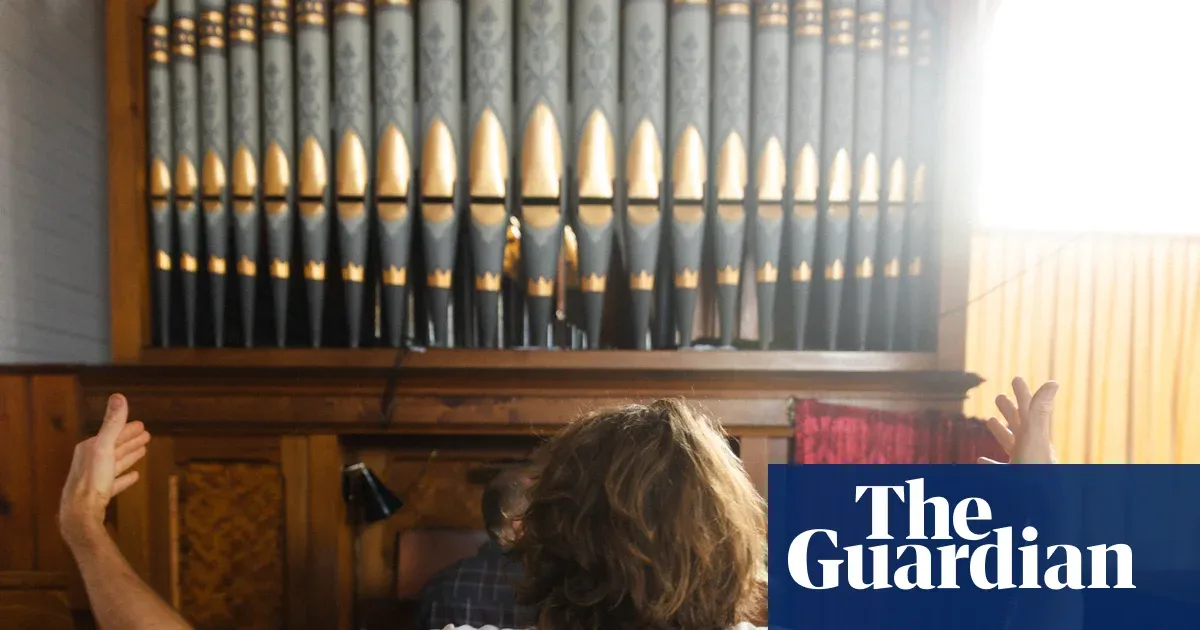
Musician Michael Cloud Duguay’s new album, Kingdom Come, Kingdom Go, grew out of a near-ending pipe organ tour of Newfoundland and a recording hitch in Aguathuna. For decision-makers, it is a rare example of cultural preservation using portable, solar-powered capture that can become a reusable digital asset.
Michael Cloud Duguay’s new album, Kingdom Come, Kingdom Go, did not start as an album at all. It started as a mission: capture the sound of majestic pipe organs that are increasingly rare, while Duguay and his band were nearing the end of their pipe organ tour of Newfoundland. The turning point came when, during their run at old churches in remote communities, they encountered a “hitch in Aguathuna,” a town of about 400 people on a craggy peninsula jutting out from the Canadian island’s south-western edge.
Here is what matters for the curiosity gap the headline sets up: the Aguathuna hitch did not derail the project. It sharpened it. For the past week before that hitch, the team had been arriving at old churches like Aguathuna with a solar-powered mobile studio, recording instruments whose complex systems are built to vibrate air until the sound “approximates the sound of God.” Those pipe organs did not just get mic’ed. Duguay’s process also treated the organs as a story people tell themselves, which is why the resulting album is collaged not only from recordings of the organs, but also from church leaders and ordinary congregants speaking about their lives, plus whatever else was happening around them while the tape was rolling.
That combination, quietly and effectively, turns a preservation problem into an archiving problem. Pipe organs have deep physical complexity. They involve keys, stops, hand cranks, foot pedals, bellows, and reeds, and they behave like living machines because their sound depends on how air moves through a particular building. If you care about preserving “the sound,” you quickly learn that preserving only an instrument photograph is not enough. You need a capture method that can reach remote rooms, survive variable conditions, and record long sessions where the “environment” is part of the output. The source describes a solar-powered mobile studio doing exactly that, showing up at old churches in remote communities like Aguathuna and recording both “humble and monumental” instruments.
Now zoom out to the second-order angle: digital reusability. Duguay’s team documented the organs and, crucially, the recordings “will be available as Midi instruments later this summer.” That is the bridge between cultural preservation and practical technology. MIDI is not a replacement for pipe organs, but it changes who can access the material. It allows musicians, producers, and educators to interact with the captured performance data without traveling to each church. For executives and board members thinking about culture, assets, or brand IP, this is a reminder that the most durable preservation efforts often include a “translation layer” from physical craft to interoperable digital formats.
The album itself gives that translation a narrative backbone. Kingdom Come, Kingdom Go is described as a collection of quietly elegiac pieces that doubles as a sort of audio documentary about Newfoundland’s organs and the congregations to which they belong. Duguay made the core recordings on that trip in July 2024, including the organ sounds that will become MIDI instruments, but also voices and ambient sounds that create a time capsule effect. Listening in headphones on a spring day can feel mildly hallucinatory, the source notes, because bird calls, rustling wind, and chattering people can blur the boundary between “music” and “world outside.” This matters because it tells you something about method: Duguay is not merely extracting tones, he is preserving context, the way the building and the moment participate in the instrument.
There is also a subtle incentive structure inside the creative work. Pipe organs are “still taking shape” in Duguay’s mind, which means the final output is not a catalog of recordings. It is an editorial act: collaging organ audio with spoken testimony and incidental sound to create an elegiac arc. That editorial choice turns preservation into authorship, and authorship changes funding logic. Cultural institutions and donors often understand one kind of value, but boards increasingly need another: value that can be reused across formats, demonstrated in new contexts, and shared beyond the location where the original asset exists.
What should peers in adjacent roles take from this? For technology leaders and operators, it is a field-tested example of deploying portable infrastructure that can function in remote settings, using solar power as the backbone for mobility. For investors and foundation strategists, it is proof that “cultural tech” can be more than an app idea. It can be a capture-and-convert pipeline that turns physical heritage into assets that remain playable. And for executives at museums, labels, or media orgs, the project signals a practical roadmap: document the instrument, record the people and room, then export into a format that others can use. When an increasingly rare tradition is at risk, the strategy is not only to save it. It is to make it shareable without flattening it.
This story's Key Insights and Take-aways are locked.
Create a free account to unlock Executive Actions for one credit.
Register to UnlockAlways free for Executives Club members. Join the Club
More in Entertainment
DTF St. Louis sneaks “Aquarius/Let The Sunshine In” into Emmy Title Design politics
The opening credits go grounded, malleable, and non-flashy. That’s exactly why awards season should pay attention.

“Last Night” (1998) is a top apocalypse pick on Amazon Prime Video
The 1998 cult favorite delivers real stakes, even if you missed it the first time around.

George Lucas lands a role in Minions 3, Illumination confirms.
The Star Wars creator will voice a character in “Minions & Monsters,” and hints at what could come next.