
Michael Sarnoski says Death Stranding movie script is nearly done after Kojima and A24 read it
IGN Live 2026 update: Sarnoski is writing and directing for A24 with Kojima producing, balancing new characters and fan expectations.
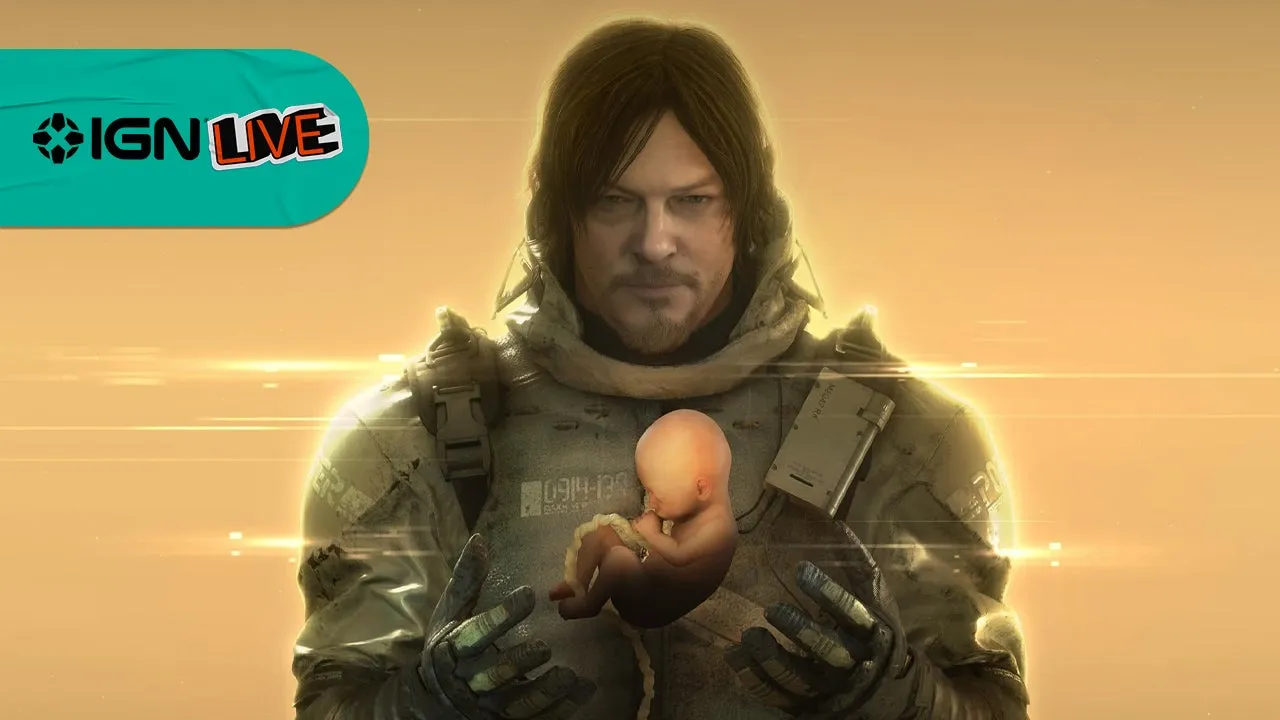
Writer/director Michael Sarnoski updated IGN Live 2026 on his Death Stranding movie for A24, which he is writing and directing with Hideo Kojima producing. He says the script is almost done, after Kojima and A24 read a draft and are working through revisions.
Michael Sarnoski is almost done writing his Death Stranding movie. Speaking at IGN Live 2026, the writer and director said, “I’m writing the script right now and hopefully almost done with that,” and added that Kojima and A24 have already read a draft and are collaborating on revisions.
That matters because Death Stranding is not just another game adaptation. It is Hideo Kojima’s world, built on specific tone, rules, and player expectations, and Sarnoski is trying to expand it without blowing up the canon. He told IGN’s Tom Jorgensen that he has been “talking to Kojima and A24 a lot” and that the team is “super excited and happy” with what they have seen so far. Kojima, specifically, has been “generous” in letting Sarnoski play inside his world while still telling “a story with my own characters and my own sort of corner of this world,” in a way that stays “honest to the game.”
If you zoom out, this is a classic tension in entertainment deals, especially when the original creator is heavily involved as a producer. The producer role often comes with less day-to-day control than directing, but it can still act like a quality bar, or like a taste filter, at script stage. Sarnoski’s comments paint a picture of shared momentum early, not a late-stage rescue. In other words, the project is not waiting until the film is fully shaped to find out whether the key stakeholders like the direction. Instead, the script got read, feedback landed, and revisions are already underway.
Sarnoski also made clear what he thinks is the “why” behind his creative choices. He previously said his goal was to focus on new characters rather than simply transplanting the game’s cast. At IGN Live, he tied that approach to what he learned from working within an existing sandbox on Quiet Place: he can still “have my own characters” and explore “something that’s meaningful” to him. For Death Stranding, he pointed to “fundamental themes... about connection and expression,” and said it was “easy for me to find a character that made sense in that world that I could really dive into.” This is not just creative branding. It is a strategy for reducing the risk of adaptation fatigue, where fans get a remix rather than a story with real emotional ownership.
The update gets even more specific on how closely the movie might hew to game elements. Sarnoski said, “You might see some characters from the game pop up.” But he also stressed that the film should “definitely feel[] like something that could happen alongside the game,” while remaining “very much... its own thing.” That line is basically the entire adaptation tightrope in one sentence: satisfy continuity enough to feel authentic, but re-center the narrative so it does not read like a side quest with a different runtime. For executives, this is important because it affects everything downstream, from casting and production design to marketing messaging and audience retention.
There is also a behind-the-scenes detail here that signals what kind of collaboration this is likely to be. Sarnoski described his experience with Kojima reading the script: “I was impressed that when he read this script... he knew every single [movie] reference.” He said Kojima identified specific references like a “Come and See reference,” and reacted without Sarnoski needing to explain them. That suggests the script is leaning into cinephile texture, and that the producer is not only checking for “does it match the game,” but also for “does it match the filmmaker sensibility.” In an industry where IP-heavy projects often smooth out distinctive creative flourishes for safety, this reads like a green light for tone and texture.
For decision-makers across media, the second-order implication is the stage of development. If the script is “hopefully almost done,” and revisions are already happening with Kojima and A24, the project is past the earliest uncertainty phase. That reduces the odds of a prolonged rewrite cycle that can derail timelines and budgets. It also increases the probability that other teams can start planning in parallel, since stakeholder alignment is already taking shape.
Finally, Sarnoski’s comments land as a reminder that fandom is not a mood, it is a measurement. Death Stranding has an audience that cares deeply about consistency and thematic intent. Sarnoski said he is working to keep the story “honest to the game” and to deliver something “that fans will really like.” Translating that into board-level stakes: when the original creator is producing and the adaptation is being shaped during script revisions, the project can either become a coherent extension of the brand or a costly mismatch. Based on this update, the early signals are that the mismatches are being caught now, not later.
This story's Key Insights and Take-aways are locked.
Create a free account to unlock Executive Actions for one credit.
Register to UnlockAlways free for Executives Club members. Join the Club
More in Entertainment

Christopher Nolan’s “The Odyssey” posts his biggest Tuesday haul, surpassing “The Dark Knight’s” record
The film’s Tuesday breakout reframes Nolan’s box-office ceiling and forces competitors to rethink timing, budgets, and release strategy.

Kacey Musgraves cancels Aug. 20, 29, Sept. 2 Middle of Nowhere shows
Ticketmaster emails are telling fans refunds are coming, while the tour still starts Aug. 21 in Chicago.

Billie Joe Armstrong launches Epiphone Les Paul Junior and Marshall 1959BJA signature gear
Two limited releases turn decades of Green Day’s tone into branded hardware, including Marshall’s first artist amp in 14 years.