
Microsoft fixes 570 Windows security bugs, including 2 actively exploited zero-days
Patch Tuesday for July sets a record, but the bigger story is the exploited zero-days and the board-level urgency.
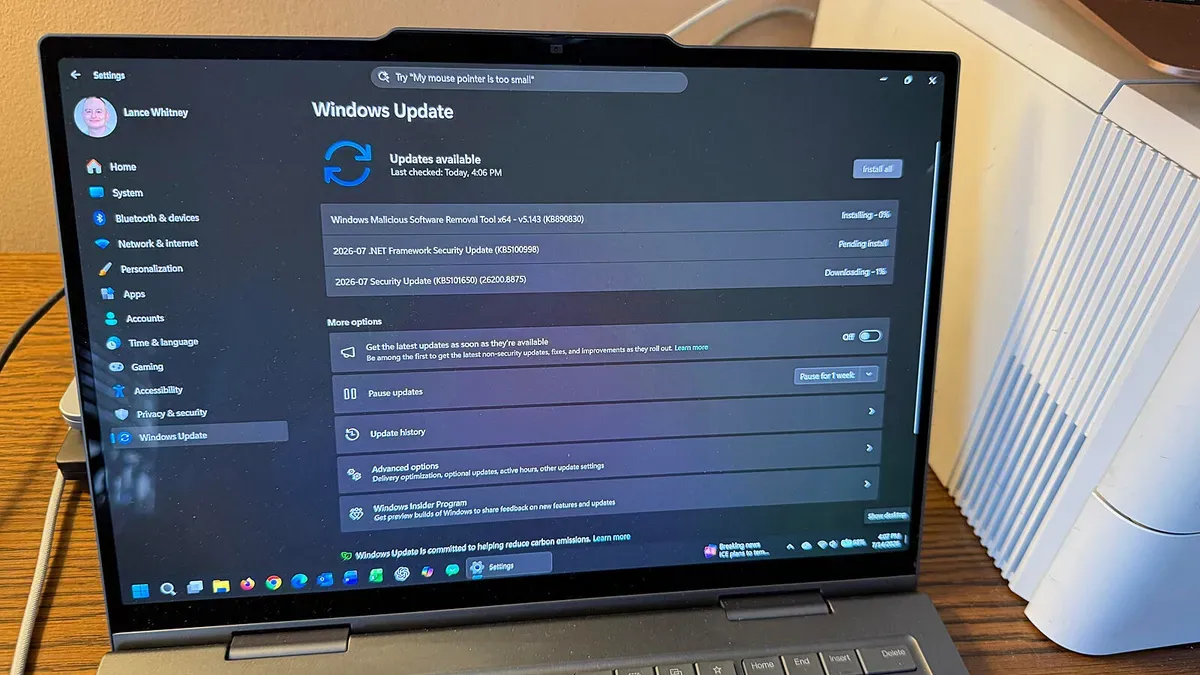
Microsoft’s July Patch Tuesday update addresses a record 570 security bugs across Windows, including two exploited zero-day vulnerabilities. For decision-makers, the mix of three zero-days and 61 rated critical turns patching from routine IT work into immediate risk management.
Microsoft’s July Patch Tuesday Windows update is setting an ugly kind of record. The company says it patched 570 Windows security bugs in a single monthly release, including three zero-day flaws, with 61 of the fixed issues rated critical.
The part that should make every security, IT, and risk leader sit up: among those zero-days, two are actively exploited. That means the vulnerabilities are not just theoretical, not just “could be used later.” They are already being used in the real world, which compresses the timeline from “plan to patch” to “patch now or accept exposure.”
If you are wondering why this is a big deal for boards and executive teams, it is because the distribution of severity and exploitation matters more than raw bug counts. A record number of fixed issues sounds like a spreadsheet headline until you connect it to operational impact. Sixty-one critical ratings are the ones that most often correlate with fast-spreading compromises, ransomware footholds, and high-confidence attack paths. Layer in exploited zero-days, and you have the worst-case combination: vulnerabilities that attackers can act on immediately, plus enough critical surface area to keep defenders busy for weeks.
Patch Tuesday is a monthly ritual, but “routine” is a dangerous word when attackers are already leveraging zero-days. In practice, security teams often triage: which patches can be deployed fastest, which need testing due to compatibility risk, and which assets have the most exposure. When there are two actively exploited zero-days inside the update, triage shifts toward speed with a clear bias. The operational choice becomes not whether to patch, but how to patch intelligently while minimizing downtime. That is still a balancing act, but the exploited status changes the risk calculus, especially in environments that can be reached remotely or have complex identity and endpoint pathways.
The record-breaking nature of this release also highlights a second-order effect for leadership: patching capacity becomes a strategic constraint. Fixing 570 bugs in one month signals both the breadth of the Windows attack surface and the sheer volume of work needed to get systems back to a safer baseline. For decision-makers, that can translate into hidden costs: internal testing cycles, emergency deployment windows, potential rollback plans, and coordination across device fleets. If your organization has historically treated patching as an IT schedule item, a month like this pushes it into the realm of business continuity planning.
There is also a regulatory and governance angle, even without new rules announced in this update. In many jurisdictions and frameworks, organizations are expected to manage cyber risk with reasonable controls, and exploited vulnerabilities are exactly the kind of situation that increases scrutiny. When the security world publicly acknowledges exploited zero-days and critical patch volume, it creates a documentation moment for executives. Not “proof of perfection,” but proof of process: how you tracked the release, evaluated affected systems, and deployed mitigations in time.
Another reason this matters beyond IT: incident response and vendor communications. Exploited zero-days tend to trigger faster escalation because attackers do not wait for your quarterly change window. That puts pressure on help desks, SOC teams, and any group that handles asset inventories and threat detection tuning. It can also force vendor and third-party coordination, especially where Windows machines run business-critical workloads or where managed service providers are responsible for parts of the patch process.
Finally, the competitive and peer impact for other executives is straightforward. When Microsoft issues a Patch Tuesday update with three zero-day flaws, 61 rated critical, and two actively exploited, it becomes the reference point that attackers and defenders both pay attention to. Attackers use public disclosures as a map of what changed, and defenders use the same disclosures as a checklist of what must be fixed. That means peers who move faster are reducing their likelihood of being the “next victim” in the next wave of opportunistic exploitation. Peers who move slower are not just increasing technical risk, they are taking on reputational and operational risk that can become measurable in downtime, remediation costs, and executive time.
In short: July’s Patch Tuesday release is a high-volume security reset for Windows, with three zero-day flaws and 61 critical fixes. The exploited reality of two of those zero-days turns this from an update to an urgency test. For boards and leadership teams, the strategic stakes are simple, and they are immediate: your patching response time is now part of your risk posture, not a background task.
This story's Key Insights and Take-aways are locked.
Create a free account to unlock Executive Actions for one credit.
Register to UnlockAlways free for Executives Club members. Join the Club
More in Technology

Google quietly links your phone number to every Android account on your SIM
Adding a SIM now ties your phone number to all Google accounts - and future accounts inherit it. Here's the security and privacy stakes.

Hijacker AI 'Skynet mode' runs 100,000 attack steps against exposed models
Symantec caught a criminal AI agent that borrows other models, steals data, and mines crypto; the only relief is no confirmed victims yet.

Nvidia's AI-financier shift faces its first big test as neoclouds stumble
A rout in neocloud stocks is forcing investors to weigh Nvidia's hidden exposure as both supplier and lender to the AI buildout.