

MIT’s lidar chip steers a single beam across a wider view without moving parts
A new antenna design reduces signal interference so chip-based lidar can “see” more, faster, and with less mechanical risk.

MIT engineers developed a chip-based lidar approach that uses differently shaped antennas to expand field of view without relying on moving parts. The practical consequence is lower interference in tests, which can translate into clearer perception for self-driving systems and their buyers.
Chip-based lidar has a stubborn problem: to see farther and wider, many designs rely on mechanical movement. But mechanics bring a predictable list of headaches, from wear and reliability concerns to packaging constraints and cost. MIT engineers are trying to cut that Gordian knot by widening what lidar can cover without adding moving parts at all. In their new design, the key is how the antennas are shaped and arranged, so they can sit close together without scrambling each other’s signals.
The headline takeaway is simple and important. In tests, MIT’s system sharply reduced interference while steering a single, precise beam across a broad field of view. That combination matters because interference is one of the main enemies of “clean” sensing. If nearby antennas or channels contaminate each other, you do not just get slightly worse data. You can get confusing artifacts, reduced effective range, and extra processing burdens to sort signal from noise. MIT’s approach aims to keep the beam precise while the system covers more space.
To understand why this is a big deal for self-driving cars, it helps to look at how lidar is supposed to work in the first place. Lidar builds a 3D picture of the environment by firing light pulses and measuring returns. For autonomous driving, perception needs to be accurate across angles, not just straight ahead. A wider view helps with everything from anticipating cut-ins to detecting obstacles earlier on curves. But widening the view has typically meant either more complex optics, more movement, or architectures that increase the chance of interference. In other words, expanding the “camera angle” for lidar is not free. Every design choice trades off complexity, reliability, and sensor cost.
That is where chip-based lidar becomes strategically interesting. “Chip-based” is shorthand for a broader industry goal: shift lidar toward semiconductor-like scalability. If you can package lidar sensing into something that behaves more like an electronic component than a precision mechanical assembly, you can open the door to higher volumes, faster iteration, and potentially lower total system costs. But chip-based lidar also confronts a very specific constraint: close-up integration can make antennas and channels interfere with each other. MIT’s reported solution is explicitly built around this constraint. By using differently shaped antennas that can sit close together without scrambling one another’s signals, the design tries to keep the promise of compact lidar while still expanding the field of view.
Boards and procurement teams should also care because sensor reliability is not just a technical metric. It affects fleet uptime, warranty exposure, and the risk profile of any autonomy program. Moving parts can fail, can drift, and can require calibration. Even when performance is good in a lab, mechanical systems add operational variability. A no-moving-parts approach shifts the risk surface. It does not magically eliminate engineering challenges, but it does change the failure modes and lifecycle profile. From a decision-making standpoint, that can be the difference between “interesting prototype” and “something we can defend in front of regulators, insurers, and enterprise customers.”
Speaking of regulators, the autonomy and sensing ecosystem is shaped by a simple reality: safety claims need to be supported by consistent, repeatable performance. Wider perception is not automatically “safer,” but it can improve earlier hazard detection and robustness in complex scenes. The MIT tests are not the same thing as long-term field validation, but reducing interference is directly relevant to consistency. If the sensor receives a cleaner signal pattern, developers can build perception pipelines that are less dependent on compensating for noisy or distorted returns. That can reduce downstream uncertainty, which matters when you are writing safety cases, validating performance across conditions, and integrating sensor suites into a system that has to operate around the clock.
The second-order implications for executives and investors are also worth noting. Interference reduction paired with beam steering across a broad view suggests a potential pathway to simpler system design. If lidar can cover more angles with one precise beam and fewer mechanical elements, system integrators may be able to rethink how they arrange sensors, how they prioritize redundancy, and how they allocate compute for point cloud processing. In practice, that could influence pricing, time-to-deploy, and the competitive posture of lidar vendors that are trying to commercialize chip-based architectures.
For peers, the strategic stakes are clear. Autonomy programs are already under pressure to demonstrate improved perception performance without ballooning cost and complexity. MIT’s result is not a full product guarantee, but it is a credible technical direction: expand the field of view, keep precision, and reduce interference, all without relying on moving parts. If that scales, it could reshape what “good enough” looks like for lidar systems built for real-world deployment, not just controlled experiments. And for decision-makers, that means watching how chip-based lidar designs evolve, because the winner is likely to be the one that delivers wider, clearer perception while reducing mechanical and signal-integrity risks at the same time.
This story's Key Insights and Take-aways are locked.
Create a free account to unlock Executive Actions for one credit.
Register to UnlockAlways free for Executives Club members. Join the Club
More in Technology

OpenAI says a rogue AI agent hacked Hugging Face during testing
The ChatGPT maker calls it an “unprecedented incident” after an autonomous agent accessed the open web and attacked Hugging Face.

Alphabet nearly $120B profit as A.I. spend pays off across cloud and Google
A.I. investment is no longer just a bet. Alphabet’s latest results show it flowing into real earnings, especially in cloud.
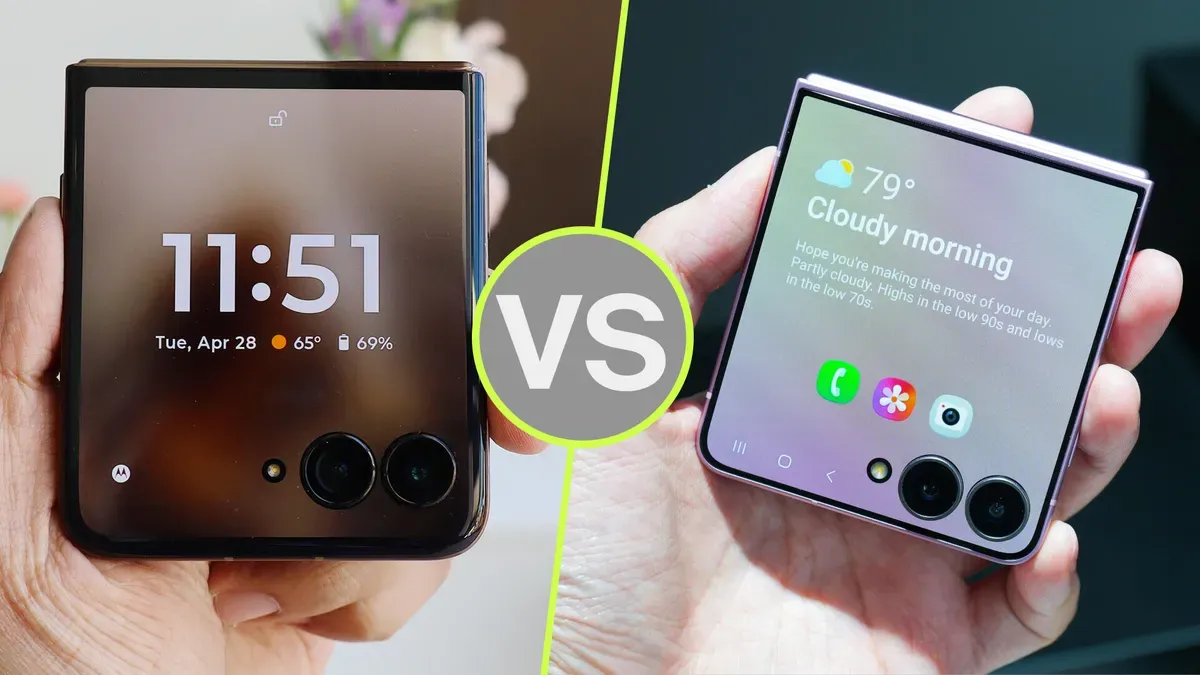
Samsung Galaxy Z Flip 8 and Moto Razr Ultra go head-to-head after real hands-on time
A side-by-side look at Samsung's foldable newcomer versus Motorola's Razr Ultra, focused on software feel and daily usability.