
Miyamoto admits The Super Mario Galaxy Movie directly triggered Star Fox 64 Remake and Yoshi game
The director ties game releases to movie casting, with Nintendo treating synergy as a two-way development pipeline.
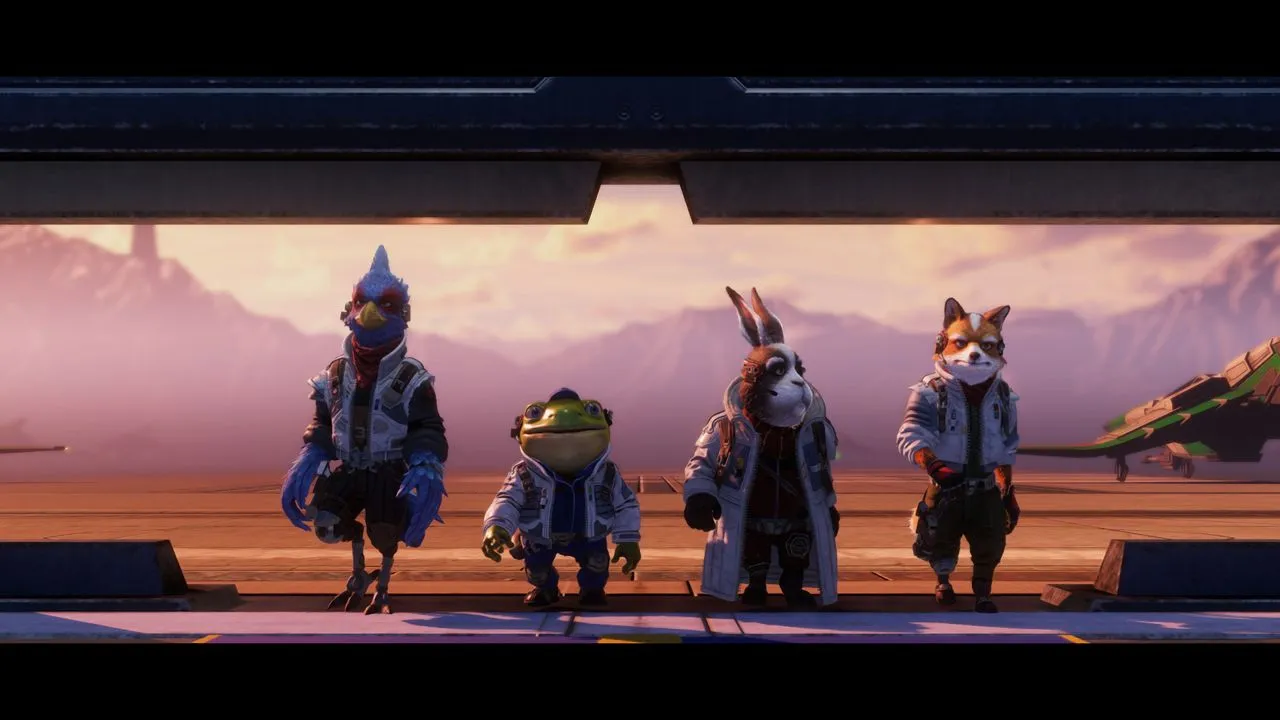
Shigeru Miyamoto said Star Fox 64 Remake and Yoshi and the Mysterious Book were prompted by character appearances in The Super Mario Galaxy Movie. He also described how working on The Super Mario Bros. Movie and Princess Peach Showtime influenced each other, reinforcing a consistent Nintendo playbook for cross-media releases.
Shigeru Miyamoto just made Nintendo's cross-media strategy a lot less mysterious. Speaking to Famitsu, the Mario creator said the Star Fox 64 Remake and Yoshi and the Mysterious Book “happened because” characters were included in The Super Mario Galaxy Movie, and that the team wanted a new Star Fox game after deciding to include Fox in the movie script.
In Miyamoto's telling, it was not coincidence. He explained, “I don’t decide everything about the lineup, but we did discuss that ‘we have an idea to include Fox in the script for the [Super Mario Galaxy] Movie, so we definitely want a new Star Fox game.’” So Fox McCloud is not just a cameo on the movie side. The movie-side casting was treated as a trigger for the game-side lineup, including the Switch 2 era resurgence of Star Fox.
To understand why this matters for decision-makers, zoom out to how risky it is when game franchises cool off. The source lays out the whiplash: Star Fox was considered one of Nintendo's “dead” franchises after the monumental flop of Star Fox Zero on the Wii U. Then, in just a few months, it came back in a major way. The timeline looks like a multi-stage relay: Fox McCloud, played by Glenn Powell, was announced for The Super Mario Galaxy Movie right before it was released. Less than a month later, a new (well, old) Star Fox game was announced, and the following month it was released as a Nintendo Switch 2 exclusive. Miyamoto's comments supply the missing connective tissue, reframing the sprint from “what a run” into “planned synchronization.”
What’s especially telling is how the same logic applied beyond Star Fox. Miyamoto said “It was decided early on that Yoshi would appear in The Super Mario Galaxy Movie,” and “so we decided to make a Yoshi game,” which is how development of Yoshi and the Mysterious Book began. In other words, Nintendo is not only using movies as marketing for existing products. It is shaping what gets built by using the movie as an upstream planning tool. That is synergy as an engineering input, not a poster placement.
The reverse pipeline is where it gets even more interesting for execs. Miyamoto described working on The Super Mario Bros. Movie while Nintendo was also developing Princess Peach Showtime, saying they “talked about things like, 'If we have this game, shouldn’t Peach be more energetic in the movie too?'” He calls it “a case-by-case situation,” but the key point is that cross-media alignment is not one-way. Games and films are treated like two versions of the same story engine, with each side informing the other while still allowing flexibility.
For boards and leaders thinking about capital allocation, that “case-by-case” phrasing is not fluff. It signals that Nintendo is managing dependencies without pretending every asset must match perfectly. That matters because film production and game development operate on different schedules, budgets, and risk profiles. When the source says Nintendo “continue[s] to maintain a good relationship between games and other developments,” it reads like an operational principle: keep coordination tight enough to capture upside, but loose enough to avoid locking teams into brittle, one-size-fits-all decisions.
This strategy has also been around since the beginning of movie games, and Miyamoto's comments implicitly confirm Nintendo keeps treating the space like an industry craft, not a novelty. The source even notes that you could speculate Super Mario Bros. Wonder to be part of this based on the proximity of its release to the first film, though Miyamoto did not mention it. The reminder here is important: while executives love clean narratives, the real world is messy. Still, the specific cause-and-effect Miyamoto described is unusually direct, naming the discussion that linked Fox in the movie script to “definitely” wanting a new Star Fox game, and naming Yoshi’s early decision as the start signal for a Yoshi title.
Now bring in the broader industry context and the second-order implication for similar players. The source points out Nintendo has been pumping out “a lot of remakes” as The Legend of Zelda: Ocarina of Time remake approaches, saying Miyamoto admits that most people stopped playing the original games within 5 years anyway. Whether you read that as justification or as a market reality statement, it supports a pattern: Nintendo prioritizes recognizable, high-performing IP loops, then refreshes them at moments when attention spikes from major media events. Even the mention that the Donkey Kong design that would be brought forward into the Switch 2 era was debuted in the movie reinforces the point that movies can function as design laboratories.
For executives watching Nintendo, the strategic stakes are clear: cross-media does not merely sell existing worlds. It can dictate product roadmaps, pull dormant franchises back into relevance, and synchronize releases across hardware generations. If you are running a studio, managing a portfolio, or overseeing IP partnerships, Miyamoto’s comments suggest the winning move is not “make a movie and hope.” It is building a pipeline where casting decisions, script inclusions, and character prominence can translate into game development priorities in time to impact the market.
This story's Key Insights and Take-aways are locked.
Create a free account to unlock Executive Actions for one credit.
Register to UnlockAlways free for Executives Club members. Join the Club
More in Entertainment

Ali G's 'stooge' says he was in on joke, outplayed Sacha Baron Cohen
A 54-year-old aspiring actor says he recognized Sacha Baron Cohen mid-shoot, kept his MAGA act up, and let the film-makers think they had fooled him.

Entertainer Russell Brand denies 7 sex charges amid accuser's 'couldn't breathe' claim
The alleged victim's account sharpens the reputational and legal stakes for Brand, his platforms, and any business tied to a public figure under criminal scrutiny.

Russell Brand's accuser 'bewildered and confused' as he denies 7 sex charges
The criminal case against the comedian is a live test of how media companies manage talent risk when serious allegations go public.