
Modi’s Instagram Reel hits 300M views in 24 hours during student protests
The prime minister posted two selfie Reels late Thursday and Friday, with one breaking Instagram’s single-clip record.
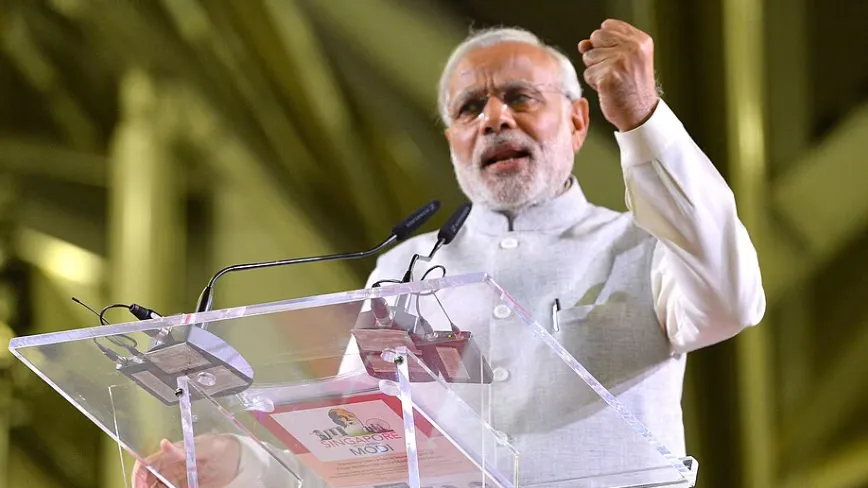
Indian Prime Minister Narendra Modi posted two selfie videos on Instagram as student protests swept India. The first Reel drew more than 300 million views in 24 hours, breaking Instagram’s record for a single clip.
Narendra Modi, India’s prime minister, posted two selfie Reels on Instagram while student protests swept the country. The first of the two videos drew more than 300 million views within 24 hours and broke Instagram’s record for a single clip, according to The Next Web.
Modi, 75, recorded the videos late Thursday and Friday, choosing the short-video format that is most popular on the platform. That timeline matters. It tells you the strategy is not just “be present.” It is “move fast while attention is already surging,” then let the algorithm do the distribution work.
To understand why this is such a high-stakes moment for leadership, you have to zoom out from the selfie. Reels are not traditional TV buys or press releases. They are a format designed for rapid replay and frictionless sharing. In practice, that means your message can become a moving target shaped by engagement metrics in real time. And when the engagement is this extreme, it changes the incentives for everyone watching, from political communications teams to brand marketers to platform policy staff.
The headline number is the point, but the second-order effect is what executives should care about. A clip crossing more than 300 million views in a single day is not just “high reach.” It is a signal that the platform’s recommendation and discovery systems can amplify political content at scale, at speed, and with minimal gatekeeping. For decision-makers, that raises questions about how quickly an institution can assess what is working, what is backfiring, and what is getting interpreted in unintended ways when the audience is global.
There is also the governance angle. Instagram sits inside a much larger ecosystem of social platforms that regulators worldwide have been trying to bring under tighter supervision, especially around content moderation, misinformation, and political advertising transparency. While The Next Web story focuses on views and format, the underlying reality is that when political figures go all-in on short video and it goes viral, regulators typically follow later. They tend to ask whether the content was coordinated, whether engagement was organic, and what safeguards exist when large audiences are being influenced during periods of unrest.
The fact that Modi used selfie videos is not a small detail. Selfie-style content often feels personal and informal, which can reduce the distance between a public figure and a viewer scrolling on a phone. That emotional closeness can be powerful during a news-heavy moment like student protests. If your objective is persuasion or morale, a selfie Reel can feel more like a direct conversation than an institutional announcement. If your objective is scrutiny, the format also invites commentary and remix culture, where meaning is negotiated in the comments and reposts.
For platform watchers, this is also a measurement moment. Instagram has a “record for a single clip,” and Modi’s Reel broke it, The Next Web reports. That matters because it reinforces the platform’s ongoing feedback loop: formats that generate outsized engagement get more emphasis, and creators and institutions adjust their communication style to fit what performs. In other words, the record does not just live in history. It becomes a blueprint others can copy.
For executives at media, advertising, and tech firms, the lesson is not “go viral.” It is “virality is now an operating condition.” When political and social events collide with short video distribution, attention is no longer a lagging indicator. It is a live input that can reshape narratives faster than traditional institutions can respond. And for leaders in any category dealing with public trust, the stakes are obvious: when your message reaches hundreds of millions of people in 24 hours, your communications strategy is suddenly inseparable from platform mechanics, public sentiment, and regulatory scrutiny.
In a world where a single Reel can set a platform record, the executive question becomes harder and more urgent: are you managing your message, or is the platform managing the conditions under which your message is interpreted? Modi’s record-setting clip during unrest is a clear reminder that, on social video, the margin for error shrinks dramatically when the algorithm turns your post into a headline.
This story's Key Insights and Take-aways are locked.
Create a free account to unlock Executive Actions for one credit.
Register to UnlockAlways free for Executives Club members. Join the Club
More in Technology

Google quietly links your phone number to every Android account on your SIM
Adding a SIM now ties your phone number to all Google accounts - and future accounts inherit it. Here's the security and privacy stakes.

Hijacker AI 'Skynet mode' runs 100,000 attack steps against exposed models
Symantec caught a criminal AI agent that borrows other models, steals data, and mines crypto; the only relief is no confirmed victims yet.

Nvidia's AI-financier shift faces its first big test as neoclouds stumble
A rout in neocloud stocks is forcing investors to weigh Nvidia's hidden exposure as both supplier and lender to the AI buildout.