
Moonshot AI used Nvidia GB300 chips in Thailand despite China export ban, White House says
A White House official says Moonshot AI reached Nvidia's GB300 through Thailand. The regulatory question is who, and how.
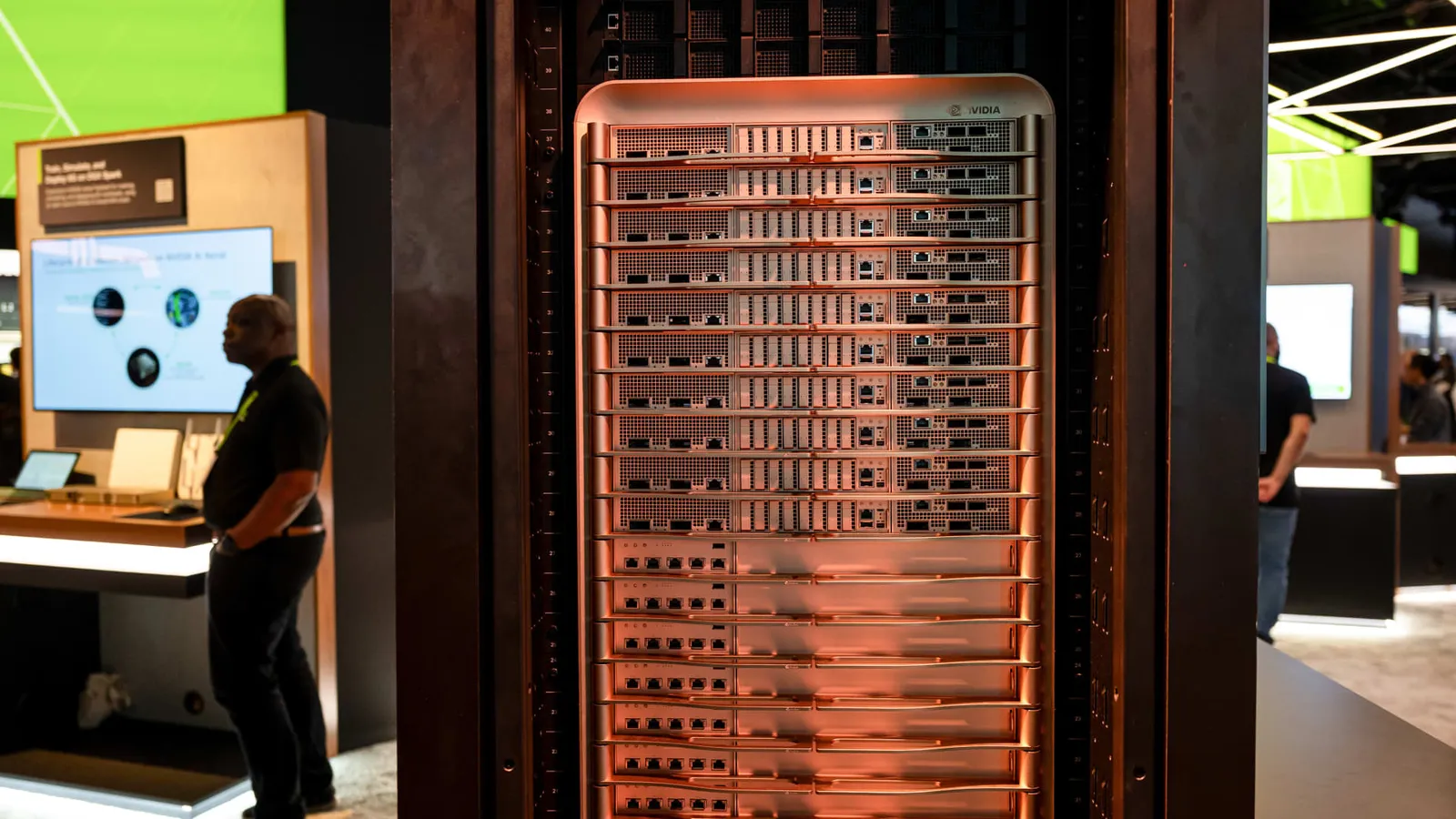
A White House official said Moonshot AI, which released the Kimi K3 model last week, accessed Nvidia's GB300 chips in Thailand. For decision-makers, it spotlights how fast advanced AI supply chains adapt when China-facing export rules tighten.
Moonshot AI accessed Nvidia's GB300 chips in Thailand, according to a White House official, even as China export bans restrict how advanced hardware can move. The detail matters because it reframes the story from “can the chips be restricted?” to “how quickly do actors find another path when restrictions bite?” Moonshot AI also released its powerful Kimi K3 model last week, tying the hardware sourcing question directly to front-page model momentum.
Put simply: a U.S. official is saying Moonshot AI found a way to use Nvidia GB300 chips in Thailand. That means the export ban's impact may be less about stopping advanced compute entirely and more about changing geography, timing, and logistics. For executives tracking AI infrastructure, that is not trivia. It is a real-world test of how restrictive rules translate into deployable capability.
To understand why this is a big deal, you have to separate two things that regulators and investors often mash together. Export controls are designed to slow or prevent the spread of sensitive high-end technology to targeted destinations. But companies can still sometimes procure constrained goods via third countries, re-routing, or different end-use pathways. In other words, bans can reduce friction in some places while shifting it to others. The White House official’s statement about Thailand signals that the supply chain is not a single straight line from a chipmaker to a single buyer. It is a network, and networks route around chokepoints.
Now connect this to why Moonshot AI, in particular, is in the spotlight. The source says Moonshot AI released the Kimi K3 model last week and then faced scrutiny over access to Nvidia hardware. That sequence is strategically important. Large model releases tend to be time-sensitive. Training and experimentation require serious compute, and those resources have to be available when the model is being built, tuned, and validated. When an organization can launch a “powerful” model quickly while a headline export restriction is in play, it raises immediate questions about procurement pathways and who can move fast enough to translate chips into capability.
From a boardroom perspective, the second-order effect is compliance risk versus competitive advantage. Companies in the AI stack face a constant tension: you want frontier performance, but you also need to ensure procurement and deployment conform to rules. If advanced hardware can be accessed through routes that regulators did not fully anticipate, executives have to think beyond whether “we can get the hardware” and toward whether “we can document the hardware provenance and end-use sufficiently.” In practice, that can affect procurement processes, vendor relationships, legal reviews, and audit readiness.
There is also a market-structure angle. Nvidia's GB300 chips are not generic compute. When a major model release ties to a specific advanced platform, it can influence how competitors plan their own timelines. If some teams can secure hardware through specific geographies while others cannot, the competitive race can accelerate for those teams, even when broader export controls are tightening. That can shift bargaining power among buyers and suppliers and change how quickly smaller players can punch above their weight.
For U.S. policymakers, the message embedded in the White House official’s statement is clear: enforcement is not just about banning sales to a named destination. It is about monitoring and responding to workarounds. And for companies elsewhere, the message is equally clear: procurement strategy is now geopolitical strategy. Even “safe” operational assumptions like “export controls block capability” may need to be updated to reflect how quickly capable actors can source through third-party locations.
So the strategic stakes for executives are straightforward. If Moonshot AI can access Nvidia GB300 chips in Thailand despite the China export ban context, the rest of the market will take notes. Rival model builders will test whether similar routes exist. Boards will ask harder questions about compliance and supply chain controls. And investors will recalibrate how they think about constraints, timelines, and the likelihood that advanced compute remains scarce versus merely reallocated across borders.
Bottom line: the source ties three specific elements together, Moonshot AI, the Kimi K3 release, and Nvidia's GB300 chips accessed in Thailand, through a White House official’s claim. The compliance and competitive implications ripple outward because this is not just about one company’s supply chain. It is about whether export controls slow frontier AI, or just redirect it.
This story's Key Insights and Take-aways are locked.
Create a free account to unlock Executive Actions for one credit.
Register to UnlockAlways free for Executives Club members. Join the Club
More in Technology

Google quietly links your phone number to every Android account on your SIM
Adding a SIM now ties your phone number to all Google accounts - and future accounts inherit it. Here's the security and privacy stakes.

Hijacker AI 'Skynet mode' runs 100,000 attack steps against exposed models
Symantec caught a criminal AI agent that borrows other models, steals data, and mines crypto; the only relief is no confirmed victims yet.

Nvidia's AI-financier shift faces its first big test as neoclouds stumble
A rout in neocloud stocks is forcing investors to weigh Nvidia's hidden exposure as both supplier and lender to the AI buildout.