

Mouse study suggests most neurons are generalists, not specialists
If the brain is built more like a Swiss Army knife, how we model disease and design interventions may need an overhaul.
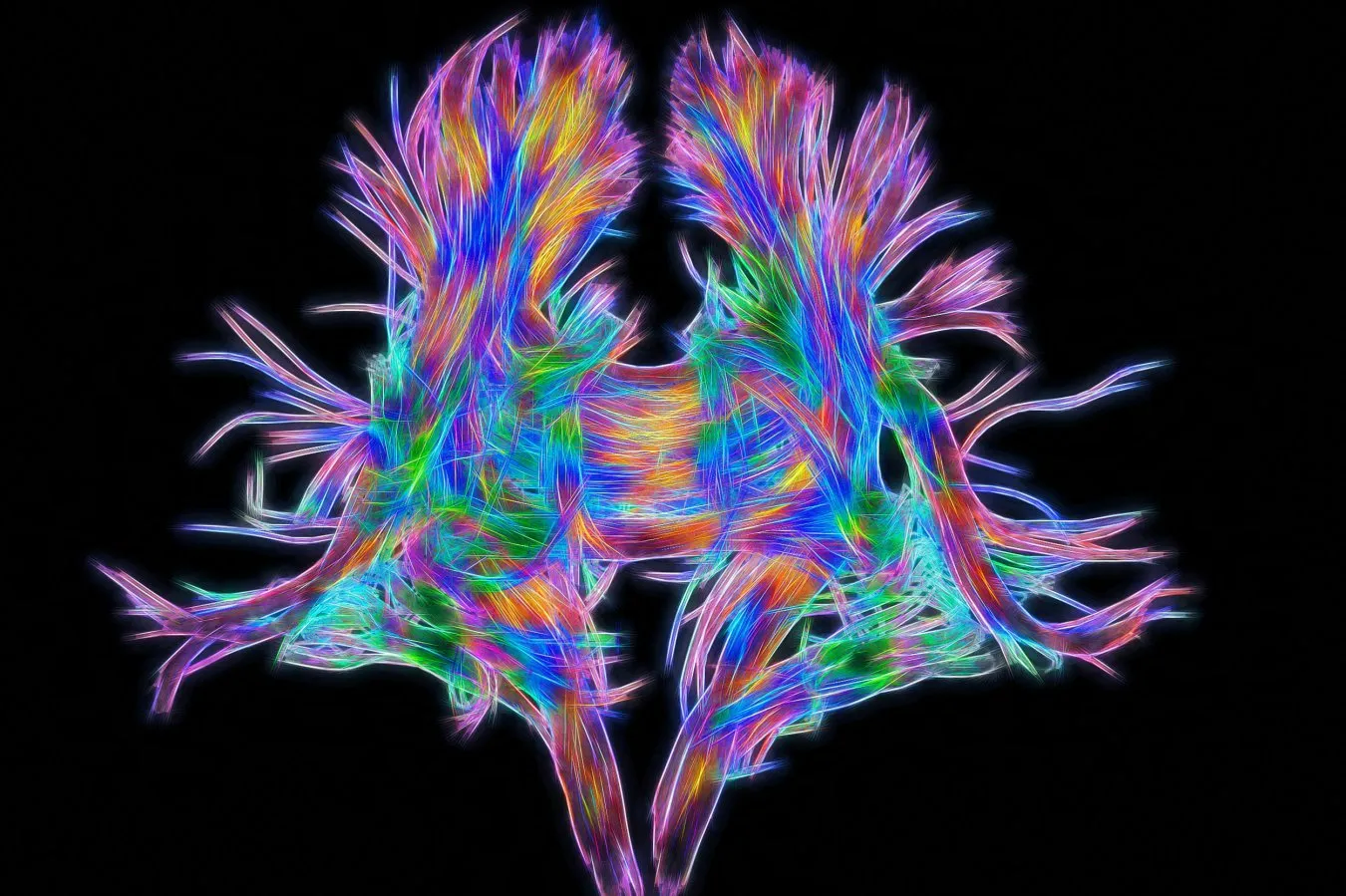
A study in mice, covered by New Scientist, challenges the idea that the brain is mostly made of highly specialized cells. Instead, it suggests that most neurons behave as generalists, reshaping how researchers think about brain circuits.
We tend to picture the brain as a museum of specialist cells: finely tuned units assigned to one job, wired to one function. But a study in mice, reported by New Scientist, suggests the opposite pattern. Most neurons appear to be generalists, jacks-of-all-trades rather than specialists.
That is not just a cool biology fact. It changes the starting assumptions behind how teams map circuits, interpret signals, and build models of what breaks in neurological disease. If most neurons can flex across roles, then “one neuron equals one function” is probably too neat. The mouse results are the spark here, but the implication is bigger: the brain may rely more on adaptable versatility than on strict division of labor.
To understand why this matters to executives and decision-makers, it helps to zoom out on how neuroscience research typically gets funded and translated. Investors and biotech teams often bet on specificity: a target population, a pathway, a mechanism, a drug effect. The more the brain is assumed to be modular, the more attractive it becomes to pursue therapies aimed at very specific neuron types or circuit functions. In that world, a neuron class being a specialist is a marketing-friendly story with scientific scaffolding.
Now consider the generalist angle. If many neurons are capable of multiple roles, a therapy or diagnostic that assumes a narrow function might hit a moving target. That does not automatically mean “everything is unpredictable.” It means the system might be more context-dependent, with neurons whose behavior depends on local wiring, brain state, or network demands. For modeling, that pushes researchers toward approaches that capture flexibility rather than hard-coded roles. For product strategy, it raises the value of robust biomarkers and careful validation, because you are not just testing whether a target exists. You are testing whether it behaves the way your hypothesis says it should.
There is also a translation problem. Neurons are not measured like widgets. In practice, mapping function to cell type is hard, noisy, and often probabilistic. When the underlying biology is assumed to be specialized, it is easier to interpret ambiguous results: if a cell shows activity in a task, you can more confidently label it as the responsible subtype. But if the majority of neurons are generalists, then activity patterns may reflect multiple potential roles. That means the interpretation layer becomes more important, and the gap between bench discovery and clinical confidence can widen unless teams design experiments that explicitly test generalist behavior.
Zooming further out, this is where regulatory thinking and oversight come into the picture. While the source does not mention specific regulators or requirements, the general issue is familiar across biomedical development: regulators want clear mechanisms, consistent effects, and evidence that the intervention does what it claims in relevant settings. If neuron behavior is more flexible than specialist-only models predict, then a company’s evidence package has to do more than show “engagement” with a target. It needs to demonstrate functional impact that survives the brain’s inherent variability.
Second-order implications for boards and leadership teams show up in risk management. Generalist neurons suggest a system that may have more internal redundancy and adaptability. That can be a double-edged sword. It might buffer some dysfunction, but it could also complicate efforts to isolate failure points. A therapy that relies on disabling a single specialist function might need a different framing. Instead of “block neuron X’s job,” teams might need to prove that the therapy shifts network behavior in a beneficial way across the relevant generalist landscape.
So what is the strategic stake for peers in adjacent roles, from platform neuroscience to clinical translation? The brain may not be structured as clean, dedicated components. If most neurons are generalists, then competitive advantage will likely come from better system-level measurement and better hypothesis discipline. Teams that can characterize flexibility, build models that match it, and validate effects under realistic conditions will be better positioned than teams that cling to overly rigid neuron-to-function assumptions.
Bottom line: the mouse study highlighted by New Scientist adds weight to a reframe of how we think about brain organization. If most neurons are generalists, then understanding the brain is less like cataloging specialists and more like studying a dynamic team that can cover multiple roles. For decision-makers, that means strategies built on strict specificity should be stress-tested against the possibility of adaptable neuron behavior, because that could determine whether a promising mechanism scales into reliable outcomes.
This story's Key Insights and Take-aways are locked.
Create a free account to unlock Executive Actions for one credit.
Register to UnlockAlways free for Executives Club members. Join the Club
More in Science
2026 Nikon Small World Winners Reveal the Hidden Machinery of Everyday Life
A mycologist's frozen Edinburgh garden became the backdrop for vivid views inside cells, a reminder of what advanced imaging now makes visible to researchers and the industries built on biology.

Study: 1 in 4 depression cases may be a body-clock problem, not a chemical one
A 10,000-person study finds standard antidepressants often fail these patients, but melatonin and morning sunlight may hit the real root cause.

Start-Up Says A.I. Designed a Virus to Attack One Patient's Superbug
If the claim holds up, personalized phage therapy could become a new frontline weapon against antibiotic resistance - but proof is far from final.