

N+ Infinity Times Two turns ninja platforming into PvP mayhem, with “Tag” and “Race” modes now
Metanet’s next entry proves it still has the floaty precision to make a party-game hit, not just a sequel.
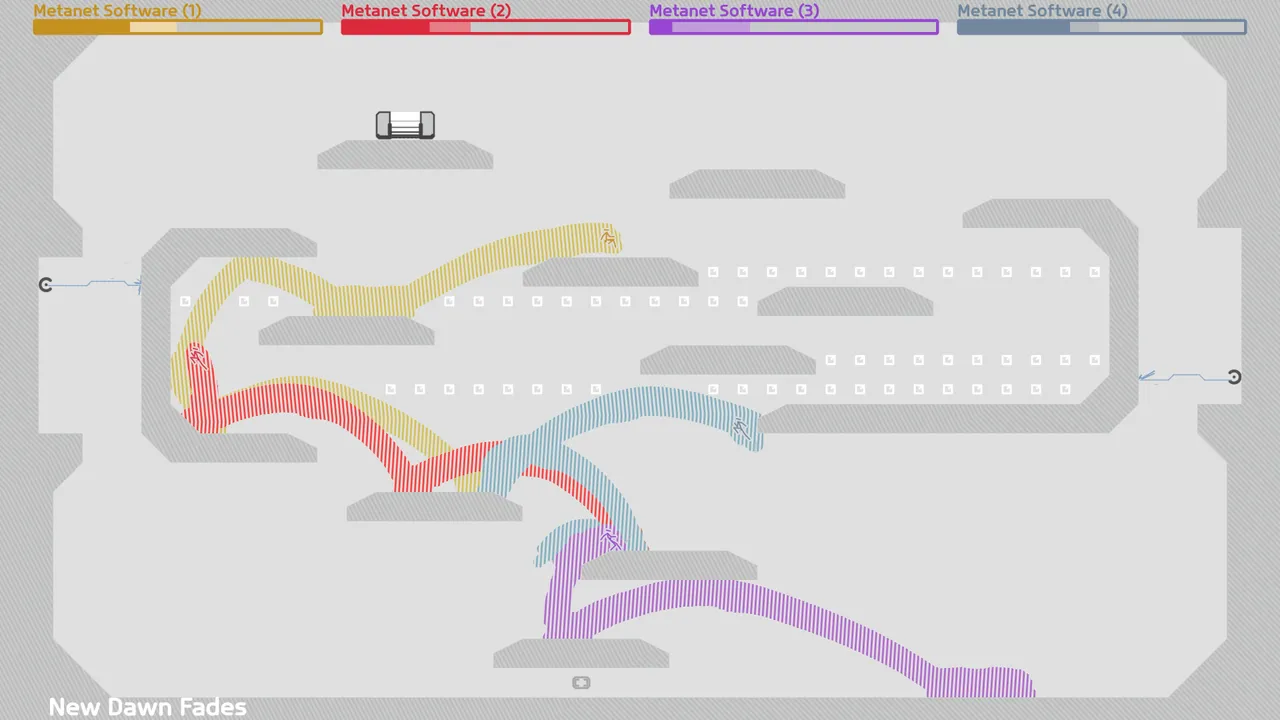
Metanet is back with N+ Infinity Times Two, a multiplayer-focused sequel in a series that began over 20 years ago and grew through N+ (2008) and N++ (2015). In a hands-on at Summer Game Fest Play Days in Los Angeles, two modes, Race and Tag, showed why the franchise’s momentum-based movement finally clicks for competitive play.
My thumbs are raw, my pulse is elevated, and I just watched a roomful of strangers become a pack of overly confident ninjas and hunters. That is the actual headline from Summer Game Fest Play Days in Los Angeles. Metanet is showing off N+ Infinity Times Two, and in the time I spent playing, it landed the rarest thing in games: a sequel that feels like it understands exactly what made the original special, then evolves it for multiplayer.
Here is the key proof point. Metanet is running N+ Infinity Times Two as a multiplayer-focused sequel with five modes in the full game, but the event only offered two. Race is a mad dash through bespoke 2D tracks built around dodging hazards and exploiting exaggerated momentum, ending with a finish-line transformation into a steerable missile that can blow up the competition. Tag is a 2v2 keep-away duel where if a hunter touches a ninja, they are dead, and hunters can turn into missiles whenever they want. Simple rules, fast decisions, and enough chaos that even “casual and gentlemanly” sessions quickly give way to strategy.
If you have followed this franchise at all, the controls will feel familiar. The beauty of N+ is that you can map its moves to an NES gamepad: move, jump, and sometimes become a missile. That matters because it lowers the onboarding curve, which is exactly what competitive party games need. The series started over 20 years ago as a browser game. Then it became an Xbox Live Arcade darling in 2008 with N+. In 2015, N++ refined the concept. Now, Infinity Times Two arrives with a multiplayer-first shape and the same movement DNA, which means the learning curve is mostly about timing and reading momentum, not figuring out a new control scheme.
Both showcased modes revolve around the same second-order mechanic: you do not just play the level, you play other people’s movement. In Race, for example, the game eventually rewards the kind of thinking that looks like “strategy” and feels like sabotage. You can hang back in the middle of the pack and bet that the lead ninja will hit a trap, making your path easier. Or you can hunt for the gold pickups placed along the outskirts of the stage, turning second place into first if you are quick. And there is an asymmetry baked in that experienced players immediately exploit: the quickest player still gets the major advantage of not having to dodge player-controlled missiles. That turns speed into survivability, not just points.
I was not the fastest, which is how I ended up “showing everyone where not to jump” by immediately blowing up more times than I can count. That is not a bad sign, though. In N+ style gameplay, punishment is part of the fun. If you are building a multiplayer product, the worst outcome is a game where failure feels random and unrecoverable. Here, when you mess up, you learn what momentum does and why other players are making the choices they are making.
Tag is where the energy spiked. Were this Mario or Super Meat Boy, platforming at each other would be more clunky than clever. But N+ is floaty and expressive, and that translates directly into a PvP playground. Tracking down ninjas requires anticipation: reading their movements, their routes, and cutting them off based on where you believe momentum will carry them. One showdown played out like an interpretive dance at the top of a spire: fidgeting in place to be hard to read, bouncing up walls, and accelerating on anything that qualifies as a ramp. It is tag on the moon, but with laser mines and brutal fall damage.
From a market and product perspective, this matters because low-barrier, high-skill-ceiling games have historically done something unusual. In the early 2010s, titles in this space had a moment. They disappeared around the same time Jackbox Party Pack was born, and audiences pivoted to improv-first social formats. Jackbox is still great, but the source is blunt about why people get bored: endless improv and silly drawings burn out. The last time the writer hosted friends, they switched to TowerFall for the first time in probably 10 years, and the room locked in for sweaty arrow flinging. That anecdote is the real business lesson hidden in the hands-on: when a game nails “timeless game design,” it becomes a default for gatherings.
For Metanet, the strategic bet is that N+ Infinity Times Two can be that default for a new era. The writer says they believe Metanet’s track record of perfectly precise platformers positions the studio to deliver the same kind of timeless design. The full game will include co-op levels that play like traditional N+, sometime in 2027, which extends the audience beyond pure PvP and creates more ways to stay engaged after the first party-night binge.
For executives, investors, and studio teams watching this kind of launch runway, the second-order takeaway is about how multiplayer modes create retention. Race and Tag both create a loop of reading, repositioning, and exploiting momentum, so mastery can accumulate quickly in short sessions. That makes the game more resilient to changing social habits, because it works as a quick tournament at a gathering and as a deeper skill chase when players return. If Metanet pulls off the same precision across all five modes, N+ Infinity Times Two will not just be “a perfect videogame.” It will be a product that shows why party-game physics still matter in a world that keeps reinventing itself.
This story's Key Insights and Take-aways are locked.
Create a free account to unlock Executive Actions for one credit.
Register to UnlockAlways free for Executives Club members. Join the Club
More in Entertainment

Christopher Nolan’s “The Odyssey” posts his biggest Tuesday haul, surpassing “The Dark Knight’s” record
The film’s Tuesday breakout reframes Nolan’s box-office ceiling and forces competitors to rethink timing, budgets, and release strategy.

Kacey Musgraves cancels Aug. 20, 29, Sept. 2 Middle of Nowhere shows
Ticketmaster emails are telling fans refunds are coming, while the tour still starts Aug. 21 in Chicago.

Billie Joe Armstrong launches Epiphone Les Paul Junior and Marshall 1959BJA signature gear
Two limited releases turn decades of Green Day’s tone into branded hardware, including Marshall’s first artist amp in 14 years.