

NASA adds 4K Starlink laser terminals to Orion for Artemis III live video from space
SpaceX will help Orion beam high-definition video and data-heavy downlinks through Starlink lasers into Houston.
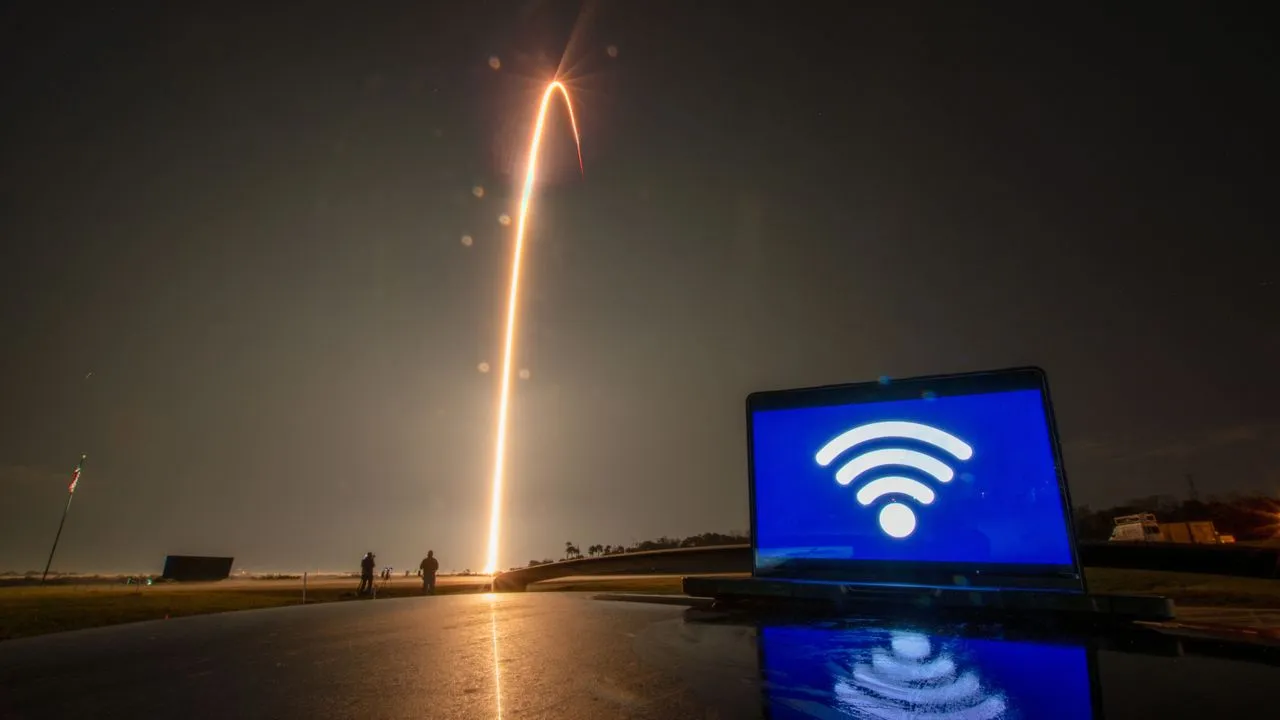
NASA is partnering with SpaceX to equip the Artemis III Orion spacecraft with two Starlink mini laser communication terminals for high-definition video and data-heavy downlinks. The upgrade is designed to boost Orion's data capacity to NASA mission control in Houston ahead of the Artemis III launch window in the second half of 2027.
NASA is getting a very specific kind of “WiFi” upgrade for Artemis III: two Starlink mini laser terminals on the Orion spacecraft, aimed at enabling high-definition live video from orbit and bigger data loads into Houston. The point is straightforward. Radios can only do so much when you need to push heavy mission data. Laser links, like the ones Starlink already uses, can carry far more information, which matters when your crew is literally going to the Moon and your mission managers want video, telemetry, and other bandwidth-hungry signals at the same time.
This is not theoretical, and it is not just for bragging rights. For Artemis III, NASA expects the added laser capability to increase data capacity from Orion to NASA’s mission control in Houston, which “may include high-definition live video from orbit,” according to a NASA update carried by Space.com. NASA’s current plan has Artemis III scheduled for the second half of 2027, and it will also include another major SpaceX contribution: a Starship rocket.
To understand why everyone is paying attention, you have to look at what SpaceX already built. SpaceX currently operates more than 10,000 Starlink satellites in low Earth orbit (LEO), providing internet coverage across nearly the entire globe for commercially available wireless terminals about the size of a laptop. Those satellites are not just broadcasting internet. They are also part of a tightly connected laser network. Combined, those more than 10,000 and counting satellites are equipped with over 25,000 lasers currently in operation in LEO to keep the network interconnected, per the NASA update referenced in the report.
SpaceX has also shown it can use Starlink lasers in the real world for communication relay. The company previously demonstrated the Starlink constellation's use as a communication relay network during the privately funded Fram2 mission, which launched the first human into a polar orbit around Earth in 2025. The relevance for Artemis III is simple: if you can relay communications in orbit, you can support the kinds of data-heavy downlinks NASA needs when traditional communications pathways are not enough.
And yes, SpaceX already likes to show off high data rates. The company frequently uses its high-data capabilities to stream high-definition live views of its Falcon 9 and Starship rocket launches from orbit. Translating that behavior to NASA’s Orion mission is not the same thing as swapping in consumer streaming, but it signals something important to decision-makers: laser-linked, high-throughput transmissions are no longer only a lab concept. They are operational, iterative, and already integrated into a large network.
There is also a “why now” tied to the specific mission architecture. Artemis III is the third in a NASA mission program aimed at returning astronauts to the Moon and establishing a permanent base on the surface. Artemis III is designed as a practice run for NASA’s Orion capsule to rendezvous and dock with commercial lunar lander vehicles, including SpaceX’s Starship and Blue Origin’s Blue Moon spacecraft, in LEO. That is a shorter communications hop than the Artemis II mission. Artemis II was Orion’s first flight with astronauts onboard, launched in April of this year, and it flew a 10-day mission around the far side of the Moon. For Artemis II, NASA used laser communications too, with terminals on Orion and ground stations at NASA’s Jet Propulsion Lab in California and the White Sands Complex in New Mexico to transmit data loads too big for the agency’s Near Space and Deep Space radio networks.
With Artemis III staying in LEO, communication limitations become easier to surmount. That matters to planners because it reduces the uncertainty and friction of pushing high-bandwidth signals across longer distances. If Artemis III goes as planned, NASA has scheduled the first Artemis Moon landing on the following mission, Artemis IV. NASA is targeting 2028 to launch Artemis IV and has selected Starship as the lunar lander that will return astronauts to the lunar surface. In other words, Artemis III is not just another crewed capsule test. It is a staging area for a communications and systems posture that NASA likely wants to carry forward into the harder lunar timeline.
For executives, founders, and investors watching the space economy, this is the quiet kind of competitive pressure. When the biggest buyer for deep space communications keeps moving capability upstream, it raises the bar for every vendor that relies on data throughput as a product feature, from mission services to tracking and ground infrastructure. SpaceX is not only providing rockets here, with Starship also on the manifest. It is also supplying network-grade communication hardware and the underlying operational know-how behind laser links. NASA is effectively asking for better bandwidth now, then using Artemis III as the practical runway before Artemis IV. That is how “small terminal upgrades” become platform bets across the entire ecosystem.
This story's Key Insights and Take-aways are locked.
Create a free account to unlock Executive Actions for one credit.
Register to UnlockAlways free for Executives Club members. Join the Club
More in Science

2026 Nikon Small World Winners Reveal the Hidden Machinery of Everyday Life
A mycologist's frozen Edinburgh garden became the backdrop for vivid views inside cells, a reminder of what advanced imaging now makes visible to researchers and the industries built on biology.

Study: 1 in 4 depression cases may be a body-clock problem, not a chemical one
A 10,000-person study finds standard antidepressants often fail these patients, but melatonin and morning sunlight may hit the real root cause.

Start-Up Says A.I. Designed a Virus to Attack One Patient's Superbug
If the claim holds up, personalized phage therapy could become a new frontline weapon against antibiotic resistance - but proof is far from final.