
NASA and L3Harris test an automated cryocoupler to refuel in orbit
Two test tracks show whether ultra-cold propellant transfer can work reliably beyond Earth, without spacewalks.
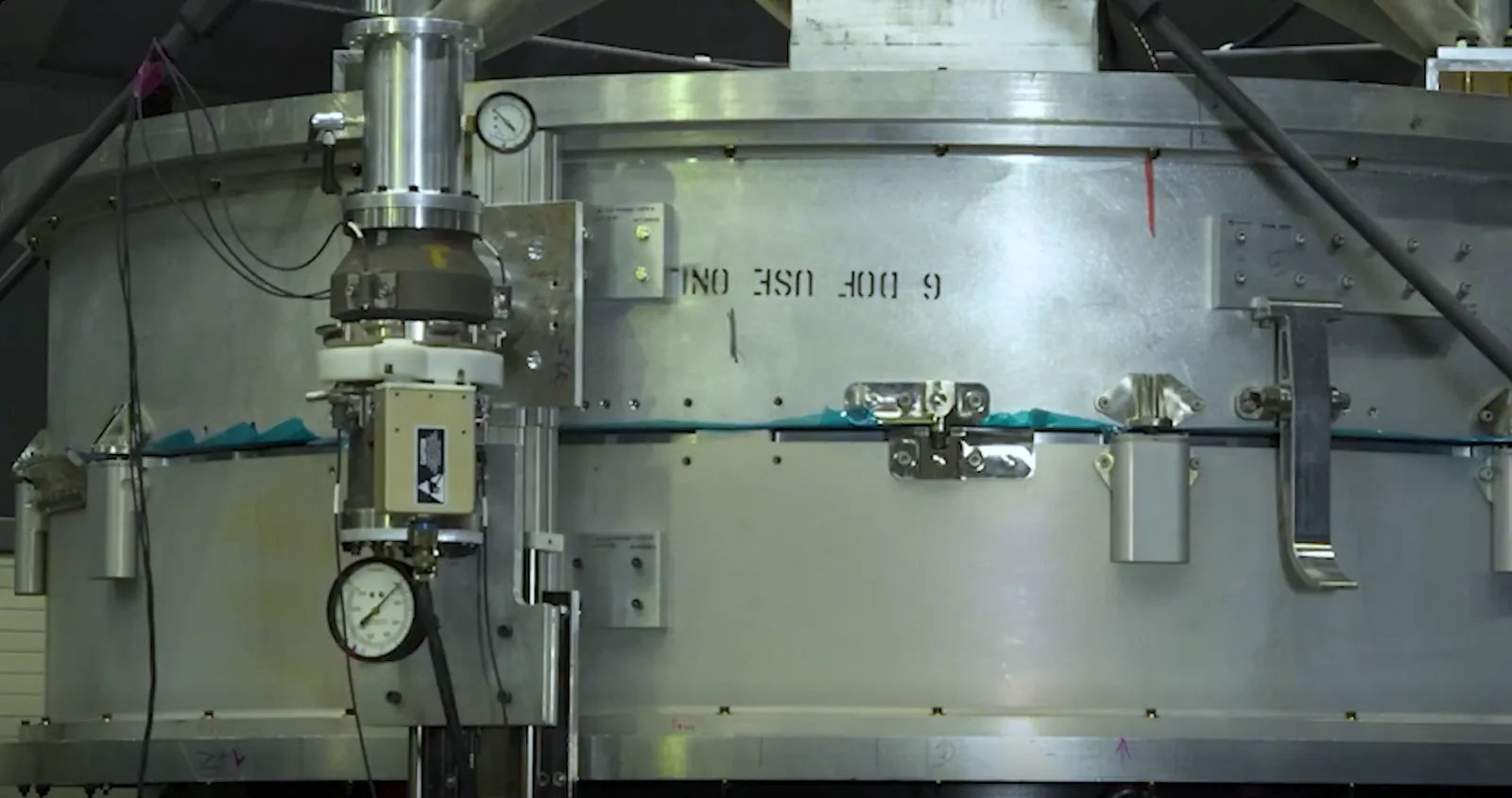
NASA’s Marshall Space Flight Center, with L3Harris, is conducting operational testing on a developmental cryocoupler for future in-orbit spacecraft refueling. The tests tackle how to repeatedly connect, detach, and transfer cryogenic propellants in harsh space conditions.
Engineers from NASA’s Marshall Space Flight Center in Huntsville, Alabama, and L3Harris are testing a developmental cryocoupler that could make in-orbit refueling real, not hypothetical. Cryocouplers are the “nozzle” piece for spacecraft, enabling one spacecraft to connect to future orbital propellant depots, which would function as gas stations of space. The core problem is nasty and straightforward: transferring cryogenic, super-cold fluids without losing propellant or performance.
Travis Belcher, cryocoupler project manager at NASA’s Marshall Space Flight Center, put it bluntly. In-orbit cryogenic refueling between two spacecraft has yet to be done, and remains one of the toughest engineering challenges in spaceflight. That challenge is exactly why NASA is running operational testing on the coupler now, including tests designed to confirm performance limits and how the hardware handles extreme cold and docking misalignment.
Cryogenic propellants like liquid hydrogen and liquid oxygen must stay chilled to hundreds of degrees below zero Fahrenheit. That temperature requirement turns refueling into a materials and mechanics stress test. Seals, materials, and moving mechanisms must perform reliably while temperatures swing dramatically between propellant and hardware. The coupler has to manage thermal contraction, flow behavior, and the practical reality that spacecraft rarely meet perfectly aligned every time.
This is also where the “why now” gets interesting for decision-makers. NASA says ground-based couplers like those used to fill the SLS for Artemis missions are not an option for orbiting propellant transfers. The reason is twofold: they release quickly while a rocket is launching, and they are manually reconnected for the next flight. They also are not designed for the harsh environment of space and are much larger than what would be used to refill an orbiting spacecraft’s fuel tank. In other words, what worked for launch logistics does not translate to a repeatable, autonomous orbital fueling system.
To address that gap, NASA tested a cryocoupler developed by L3Harris. The couplers in this development can attach and detach multiple times and are fully automated, which NASA says means astronauts would not have to perform a spacewalk to transfer propellant. Belcher also emphasizes that the hardware is rigorously designed to withstand space and is sized for expected tank designs, not a one-off demo sized to fit what happened to be on hand.
The joint NASA and L3Harris team recently conducted two types of tests at NASA Marshall. First, to make sure the cryocoupler can handle the extremely cold temperatures it will encounter, they ran liquid nitrogen at minus 321 degrees Fahrenheit through multiple connected and disconnected configurations. The point was to observe how the coupler reacts to thermal contraction, flow, and significant temperature differences between propellant and materials. Second, they carried out operational tests to determine performance limits. In one setup, one coupler half was mounted to a robotic table that could move and rotate in any direction, simulating misaligned docking, while the other half remained stationary above the table. This matters because the cryocoupler is designed to accommodate some misalignment if a spacecraft and depot are not perfectly aligned during docking.
Importantly, NASA frames these tests as early development work focused on basics. These cryocouplers are very early in development, so testing is mostly focused on basic functionality, according to Belcher. Future test campaigns are expected to be designed for specific missions and assessed more meticulously based on those mission requirements. That sequencing matters: it is how you de-risk a new product category in space, where every hardware failure is expensive and every schedule slip reverberates across mission planners.
The testing also sits inside a broader NASA collaboration and portfolio structure. NASA says the cryocoupler testing was done as part of a 2022 Announcement of Collaboration Opportunity, a partnership where NASA centers provide select companies with expertise, facilities, hardware, and software at no cost. The Cryogenic Fluid Management Portfolio, a cross-agency team based at NASA Marshall and NASA’s Glenn Research Center in Cleveland, oversees cryocoupler development. For peer organizations and partners watching the space economy, this is a signal that cryogenic fluid management is moving from lab curiosity toward mission-grade capability with structured industry involvement.
Strategically, the second-order implication is that in-orbit refueling is not just a fueling technology. It is an architecture enabler. If the cryocoupler can reliably connect, detach, and transfer cryogenic propellants under realistic docking misalignment, it could reduce the amount of propellant some missions need to launch from Earth. That can change how mission teams design payload, flight plans, and timelines, especially for deep space exploration. And for decision-makers across aerospace, the question is simple: if this type of autonomous, repeatable cryogenic transfer can be proven, who is positioned to build, integrate, and supply the next generation of orbital refueling systems?
This story's Key Insights and Take-aways are locked.
Create a free account to unlock Executive Actions for one credit.
Register to UnlockAlways free for Executives Club members. Join the Club
More in Science

2026 Nikon Small World Winners Reveal the Hidden Machinery of Everyday Life
A mycologist's frozen Edinburgh garden became the backdrop for vivid views inside cells, a reminder of what advanced imaging now makes visible to researchers and the industries built on biology.

Study: 1 in 4 depression cases may be a body-clock problem, not a chemical one
A 10,000-person study finds standard antidepressants often fail these patients, but melatonin and morning sunlight may hit the real root cause.

Start-Up Says A.I. Designed a Virus to Attack One Patient's Superbug
If the claim holds up, personalized phage therapy could become a new frontline weapon against antibiotic resistance - but proof is far from final.