
NASA APOD Aug 1: Buck Moon rises with Belt of Venus, setting up Aug 12 eclipse
A vivid sky sequence from Croatia explains Earth’s shadow, the Belt of Venus, and why the August 12 total solar eclipse matters.

NASA’s Astronomy Picture of the Day for August 1, 2026 spotlights a full Buck Moon rising above a twilight Earth-shadow band, plus the Belt of Venus. For decision-makers, the practical value is how astronomy communication turns complex geometry into a clear, repeatable public narrative.
NASA’s APOD for August 1, 2026 is all about a timing trick the sky plays on you. The “Buck Moon” is the traditional name for the full moon of July, and in today’s photo it is “just rising over distant mountains” along the Adriatic coast of Croatia, captured on July 28. The key detail is that a full moon rises as the Sun sets, which means Earth’s shadow also rises into the scene, forming a “diffuse gray band” above the mountainous southeastern horizon.
On top of that Earth-shadow band sits the thing most people only notice after someone points it out: the pinkish antitwilight arch, which APOD notes is more widely known as the Belt of Venus. The picture makes the sequence feel almost choreographed. You’re seeing the Belt of Venus share the eastern horizon with Earth’s atmospheric shadow while the full Buck Moon appears to “set the stage” for what comes next: the New Moon of August 12, which APOD says “will cast its own shadow on planet Earth” in a “much anticipated total solar eclipse.”
Why this matters beyond pretty colors is that APOD is doing something surprisingly operational with science communication. APOD is a daily astronomy image and explanation “written by a professional astronomer,” and it’s explicitly built to make cause and effect legible to non-specialists. In this case, the explanation gives a chain you can actually follow: full moon timing aligns with sunset geometry, which creates a visible Earth-shadow band. Then backscattered sunlight produces a tinted arch, identified as the Belt of Venus. That is not just descriptive. It is a template for how viewers learn. When public understanding is sticky and intuitive, it can reduce confusion during big shared events like an eclipse.
For executives and boards, the second-order lesson is about narrative reliability. The APOD page lists credit and editorial staff (Branko Nadj credited for the image credit and copyright, and authors and editors including Robert Nemiroff, Jerry Bonnell, Cecilia Chirenti, and Keighley Rockcliffe). That matters because it signals process: there is a structured pipeline behind a single daily image, with named contributors and editors. In other words, the organization is not just broadcasting content. It is running a repeatable system for quality and clarity.
There is also a public-facing “calendar” logic embedded in the page itself. APOD points forward to “Tomorrow’s picture: fire and rainbow” and to an archive of what came before, including “Yesterday’s Image APOD: 2026 July 31 - NGC 4372 and the Dark Doodad.” This is more than website housekeeping. It is how you keep audiences coming back, and it is how you keep attention anchored to an ongoing scientific arc. When the next major event is already in the reader’s peripheral vision, curiosity gets converted into follow-through. Today’s Buck Moon and Belt of Venus explanation functions like a pre-brief for a time when many people will look up at once.
If you zoom out to the institutional level, this APOD entry also reflects how NASA packages “Science Activation” and outreach work. The page is described as a service of “ASD at NASA / GSFC, NASA Science Activation & Michigan Tech. U.” That combination is interesting because it blends NASA’s technical ecosystem with activation and an academic partner. In practical terms, that sort of structure helps ensure explanations can survive contact with real audiences: people who want meaning, not math; people who remember images better than equations.
So what should leaders in adjacent fields take from this? The strategic stake is not that you’ll suddenly become an astronomer. It is that eclipse season and other rare sky events act like mass “engagement spikes,” where clarity beats cleverness. APOD’s explanation shows how to take a complex geometry story and make it visual, time-bound, and emotionally resonant, without dropping the underlying mechanics. The Buck Moon rising at sunset, Earth’s shadow band appearing in twilight, and the Belt of Venus described as backscattered sunlight are all ways of telling a coherent story that a broad audience can reuse.
And as APOD closes this arc, it ties today’s scene to the next public moment: the New Moon of August 12 casting its own shadow in a total solar eclipse. If you are an executive thinking about public communication, education programs, or any technical product that depends on trust, the playbook is consistent. Make the sequence understandable. Name what people are actually seeing. Then connect the daily moment to the bigger event that everyone will remember.
This story's Key Insights and Take-aways are locked.
Create a free account to unlock Executive Actions for one credit.
Register to UnlockAlways free for Executives Club members. Join the Club
More in Science
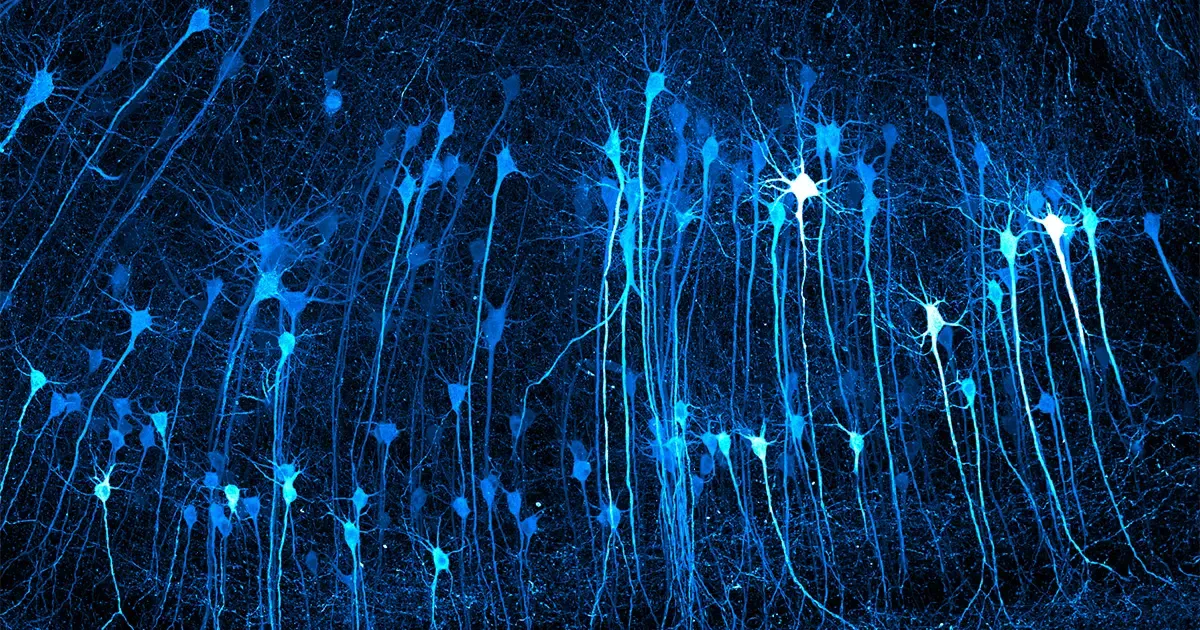
2026 Nikon Small World Winners Reveal the Hidden Machinery of Everyday Life
A mycologist's frozen Edinburgh garden became the backdrop for vivid views inside cells, a reminder of what advanced imaging now makes visible to researchers and the industries built on biology.

Study: 1 in 4 depression cases may be a body-clock problem, not a chemical one
A 10,000-person study finds standard antidepressants often fail these patients, but melatonin and morning sunlight may hit the real root cause.

Start-Up Says A.I. Designed a Virus to Attack One Patient's Superbug
If the claim holds up, personalized phage therapy could become a new frontline weapon against antibiotic resistance - but proof is far from final.