
NASA's Roman Telescope Launches Sunday, Aiming to Map Dark Energy
A new NASA observatory will probe the universe's accelerating expansion and hunt for exoplanets, with launch set for Sunday.
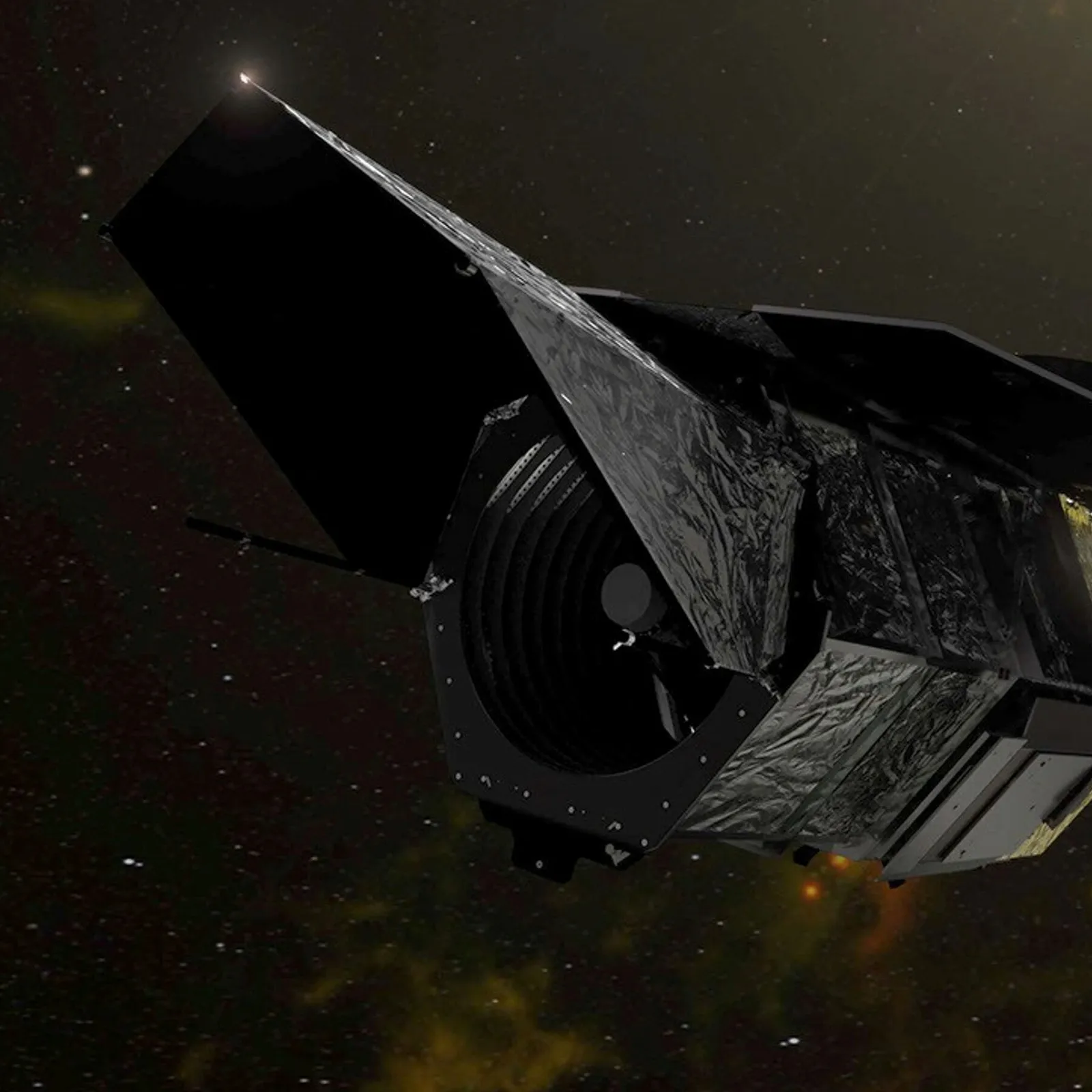
NASA's Nancy Grace Roman Space Telescope launches Sunday to study dark energy and discover exoplanets. For scientists and space stakeholders, the mission promises a vast new dataset that could rewrite cosmology.
NASA will launch the Nancy Grace Roman Space Telescope on Sunday, sending a new observatory into orbit with a sweeping mission: study dark energy and discover a multitude of planets. The telescope, named after Nancy Grace Roman, NASA's first chief of astronomy, is designed to tackle two of the biggest open questions in astrophysics: what is driving the universe's accelerating expansion, and how common are worlds beyond our solar system.
Dark energy, the name scientists give to the unseen force causing cosmic expansion to speed up, is estimated to make up about 68% of the universe, yet its nature remains unknown. Roman will take on this puzzle by imaging billions of galaxies across vast stretches of sky, measuring how their light bends and shifts over time. That data will help astronomers map the expansion history of the cosmos with unprecedented precision.
For context, the mission's design sets it apart from its famous predecessors. Where the Hubble Space Telescope captures deep, narrow views, Roman's field of view is roughly 100 times larger, allowing it to conduct wide-field surveys quickly. That makes it a survey instrument, a cosmic census-taker, rather than a portrait artist. Its resolution is expected to be comparable to Hubble's, but its ability to cover ground in a single image is what gives Roman its power.
Roman's second major goal is planetary discovery. Using a technique called gravitational microlensing, the telescope will watch for the telltale flicker of light as a star's gravity bends and magnifies the light of a more distant star, revealing planets that orbit the foreground star. This method is particularly suited to finding planets in wide orbits and even rogue planets that drift through space unattached to any star. Together with missions like James Webb and the Transiting Exoplanet Survey Satellite, Roman will fill a gap in the census of planetary systems.
For the space community, the launch marks a high-stakes moment. Roman has been in development for years, and Sunday's liftoff is the culmination of that work. The mission's data pipeline will be enormous, generating hundreds of petabytes over its lifetime, and scientists will spend decades mining it. For NASA, success would validate a decade of investment in a flagship astrophysics mission and reinforce the agency's broader science agenda.
For executives and investors, the telescope's launch is more than a science story. Large NASA missions like Roman anchor a supply chain of contractors, engineers, and data analysts, and they push the boundaries of detector technology, software, and image processing that often find their way into commercial applications. The mission also feeds the talent pipeline, drawing early-career researchers into fields like cosmology and planetary science, which in turn supply the workforce for the broader space economy.
The risks are real. Launch day is always the most dangerous phase of any space mission, and the telescope must survive the ride to space and then cool to its operating temperature before it can begin science operations. Once data flows, the challenge shifts to handling the sheer volume and turning it into usable insights. But if Roman performs as designed, it will give humanity a new window into the universe's oldest questions, from the fate of cosmic expansion to the prevalence of Earth-like worlds.
Sunday's launch is thus a bet on the value of fundamental research. The payoff may come in a revised understanding of physics, or in the discovery of a planet that becomes a target for future life-hunting missions. For the curious, it is a chance to watch science history unfold. For leaders, it is a reminder that the boldest investments in knowledge often return the least predictable dividends.
This story's Key Insights and Take-aways are locked.
Create a free account to unlock Executive Actions for one credit.
Register to UnlockAlways free for Executives Club members. Join the Club
More in Science
2026 Nikon Small World Winners Reveal the Hidden Machinery of Everyday Life
A mycologist's frozen Edinburgh garden became the backdrop for vivid views inside cells, a reminder of what advanced imaging now makes visible to researchers and the industries built on biology.

Study: 1 in 4 depression cases may be a body-clock problem, not a chemical one
A 10,000-person study finds standard antidepressants often fail these patients, but melatonin and morning sunlight may hit the real root cause.

Start-Up Says A.I. Designed a Virus to Attack One Patient's Superbug
If the claim holds up, personalized phage therapy could become a new frontline weapon against antibiotic resistance - but proof is far from final.