
NASA will outfit Artemis IV astronauts with Prada undergarments to manage heat
Axiom Space and Prada’s Liquid Cooling and Ventilation Garment becomes Artemis IV’s base layer under the AxEMU suit.
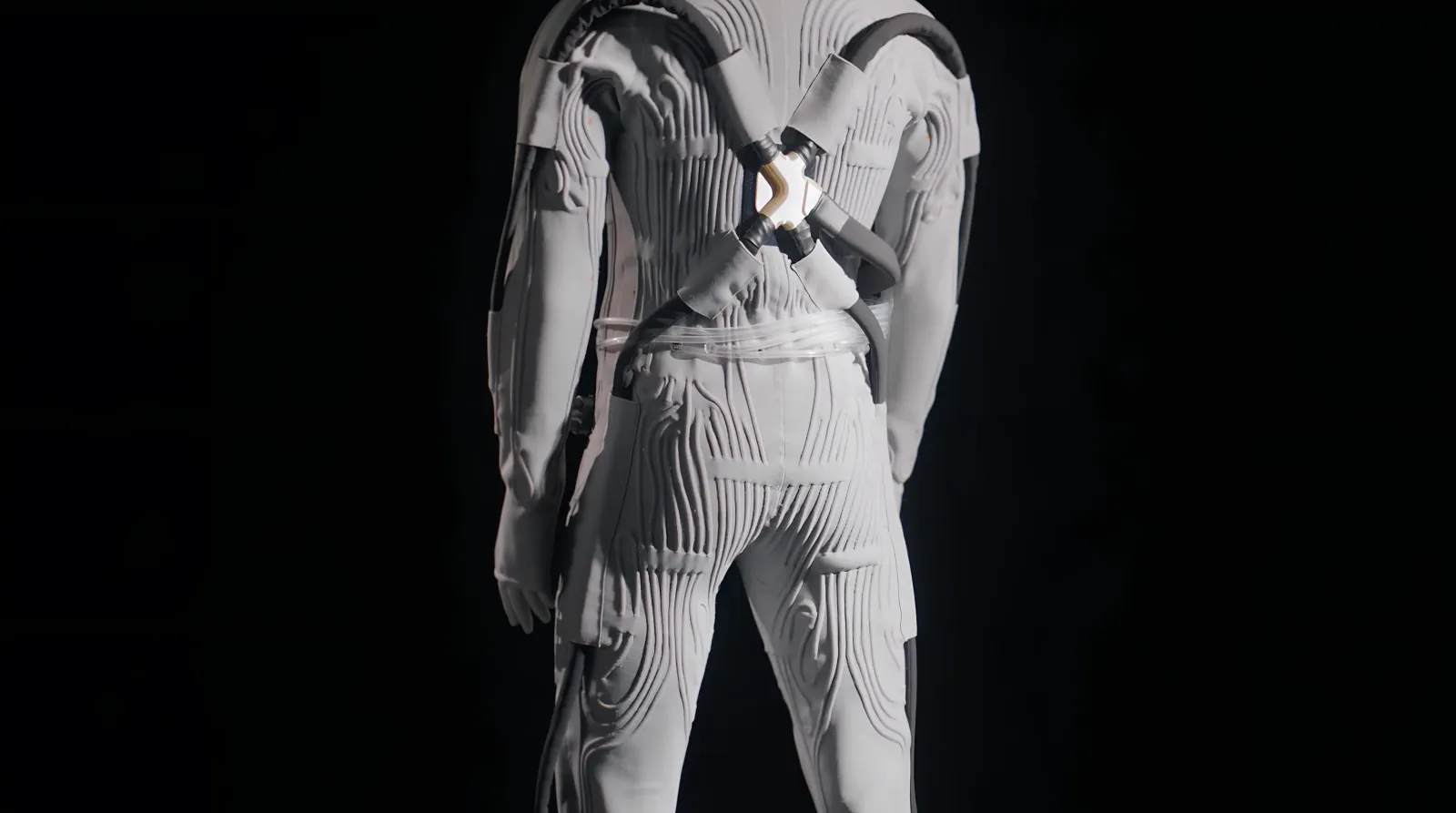
NASA will rely on Axiom Space and Prada’s Liquid Cooling and Ventilation Garment (LCVG) as the base layer under the AxEMU spacesuit for Artemis IV, due in 2028. For decision-makers, it highlights how space hardware procurement now looks like layered systems engineering plus brand-grade manufacturing discipline.
NASA is planning to send humans back to the Moon with a base layer that sounds fashion-adjacent, but functions like life support. For Artemis IV in 2028, astronauts will wear Axiom Space and Prada’s Liquid Cooling and Ventilation Garment, known as the LCVG, underneath the Axiom Extravehicular Mobility Unit (AxEMU) spacesuit.
Here is the core reason the LCVG matters: it is the suit’s “all-important base layer” designed to keep the crew cool and comfortable while inside the AxEMU and during spacewalks. Cold water is circulated through tubes embedded in the suit to pull heat away from astronauts’ bodies. And unlike older cooling suits, the LCVG includes a backup if the primary cooling system fails, addressing a failure mode that matters when you are thousands of miles from help.
This is not just a comfort upgrade. In human spaceflight, thermal management is one of those boring engineering problems that becomes make-or-break when conditions get extreme. Once you are in a pressure suit, you are managing heat transfer through insulation, airflow, circulation, and materials. If you get it wrong, you do not just feel uncomfortable. You can degrade performance, increase fatigue, and force mission timelines to bend. The LCVG’s “cold water in, heat out” approach shows the team leaning into a proven physical principle, but wrapping it in a more robust system design for Artemis’s real-world risks.
A key detail in the Verge report is that the LCVG also houses the ventilation system. That means this layer is doing more than cooling. It is supporting air handling for the crew while they are suited up, which matters for everything from how air is moved and maintained to how the suit interface behaves during an EVA. Put differently, the LCVG is the platform layer that other suit functions can rely on, which is the kind of architecture that reduces downstream integration surprises.
The Prada angle can make this sound like a novelty, but the underlying story is collaboration and industrial design applied to space systems. The Verge notes that the same Axiom Space and Prada partnership that produced the AxEMU spacesuit’s earlier collaboration is now expanding into the LCVG. When a commercial partner shows up in a base layer that affects survival systems, it tells you that the procurement and integration priorities are shifting toward components that combine manufacturing quality, reliability engineering, and repeatable assembly.
There is also a regulatory and programmatic reality baked into this. NASA’s Artemis plans are structured around human-rated hardware expectations, which means suit systems are not just “working once.” They must be designed for reliability, documented for safety, and integrated into a broader mission architecture. The LCVG’s explicit mention of a backup cooling system is exactly the kind of safety-minded design element that tends to matter during review and acceptance. Cooling redundancy is not a cosmetic feature. It is a statement that the designers thought through what happens when the primary method fails.
Second-order, this kind of layered suit development changes how companies in the space supply chain will compete. If base layers like the LCVG are treated as mission-critical infrastructure, vendors that can deliver consistent performance, traceable manufacturing, and system-level integration become more valuable than those who only innovate at the headline level. Boards and investors watching space industrialization are increasingly going to ask the same question: can you build the boring parts at scale without turning every mission into a bespoke science project?
For executives, that is the real stake. Artemis IV is not happening in a vacuum. It is a human lunar program with deadlines and risk tolerance constraints. A cooling and ventilation garment that keeps astronauts “cool and comfortable” inside the AxEMU and on spacewalks, with a backup system if the primary cooling fails, is the kind of specification that can shorten integration cycles and reduce uncertainty late in development.
In other words, this is a Moon mission story that reads like a product systems story: one layer, embedded tubes, cold water circulation, ventilation built in, and redundancy engineered for failure. Prada may be in the headline, but the takeaway for decision-makers is about reliability discipline in the components that quietly decide whether missions feel routine or become urgent.
This story's Key Insights and Take-aways are locked.
Create a free account to unlock Executive Actions for one credit.
Register to UnlockAlways free for Executives Club members. Join the Club
More in Technology

OpenAI says 10,000 agents cracked a 90-year math problem in 88 hours
The company's claim is audacious, but one mathematician is pushing back. Here's what it means for AI-driven discovery.

Meta still serves child sexual abuse ads on Instagram in India - BBC report
A new report following the BBC Eye investigation says the ads are still there - what it signals for every platform with a self-serve ad engine.

White House yanks 'Build the Wall' game after Tetris Company copyright warning
The administration's arcade game vanished in hours - and the takedown playbook every brand can learn from.