
Nature argues AI can reveal academia’s unwritten rules for neurodivergent students
Marisa Chrysochoou and Keivan Stassun say AI tools could help students navigate the hidden curriculum.
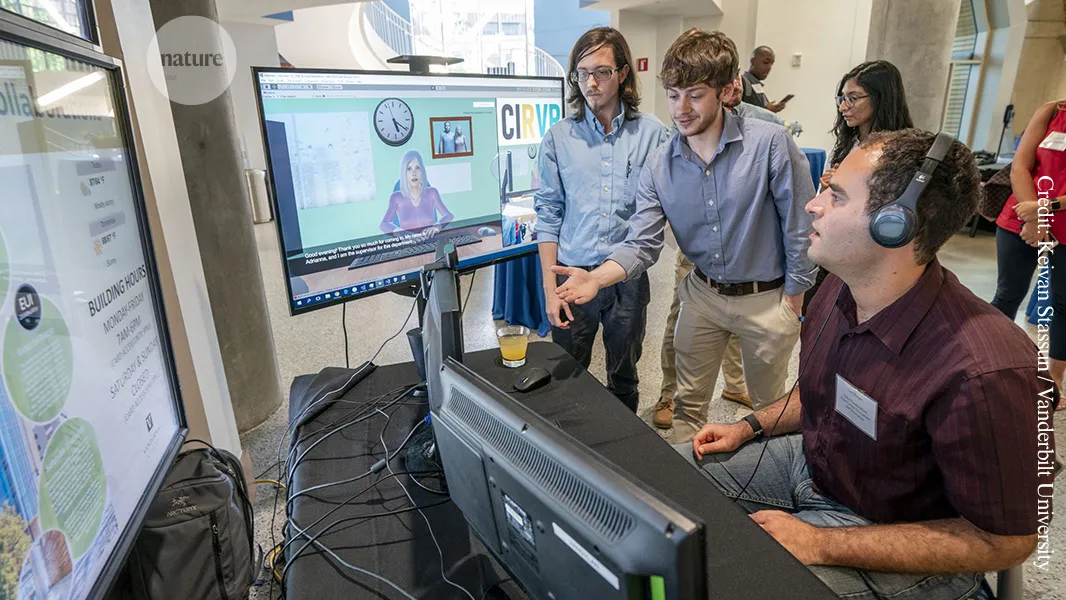
In Nature, Marisa Chrysochoou and Keivan Stassun argue that AI tools could help neurodivergent students navigate academia’s unwritten rules, the “hidden curriculum.” For decision-makers, the implication is clear: these tools may reshape student support systems, assessment practices, and policy priorities.
Nature published a piece on 29 June 2026 arguing that AI could crack open the “hidden curriculum” for neurodivergent students. In the article, Marisa Chrysochoou and Keivan Stassun make the case that academia often runs on rules nobody fully writes down. Those rules include how to interpret expectations, when and how to ask for help, what kinds of participation get rewarded, and how to navigate norms around time, communication, and feedback.
The core claim is simple but consequential: AI tools could help students navigate these unwritten rules. That is the payoff the authors are aiming for, not vague “support.” The argument is framed around practical navigation, meaning students could potentially use AI to translate implicit academic behavior into clearer guidance they can act on.
To understand why this matters to executives and boards, you have to see the “hidden curriculum” as a real operational problem, not a cultural slogan. When expectations are not explicitly taught, people who already face barriers tend to absorb the cost: confusion, delayed performance, missed opportunities, and uneven access to mentoring. In education and training environments, those outcomes are not just personal setbacks. They can drive dropouts, slow progression, reputational risk, and inconsistent student experience metrics that institutions are increasingly held accountable to.
AI entering this space also changes how institutions might think about responsibility. If AI can help students interpret academic norms, then student support becomes partially mediated by software. That shifts incentives inside universities, tutoring orgs, edtech providers, and scholarship programs. Leaders will need to ask: What should be disclosed to students? What should be taught directly versus prompted by tools? And where does the institution’s duty of care end and the vendor’s design choices begin? Even without new regulation, these questions tend to show up in procurement reviews, accessibility planning, and compliance checks.
There is also a governance angle. When AI is used to guide learning behavior, boards and compliance teams typically want auditability: what the system is doing, what inputs it uses, and how it is evaluated for fairness. For neurodivergent students, “fairness” is not only about test score parity. It is about whether guidance is intelligible, whether it respects different communication styles, and whether it avoids turning “support” into a one-size-fits-all script that quietly pushes students toward a single expected mode of functioning.
Regulatory framing is relevant here, even if the article itself is not a policy memo. In many jurisdictions, education and accessibility obligations already exist, and AI is increasingly evaluated through the lens of those requirements. In practice, leaders will likely align AI-supported learning tools with existing accessibility and disability-support frameworks, since these tools are being pitched as help for neurodivergent learners. That means documentation, clear user-facing explanations, and careful handling of privacy concerns, especially if tools interact with student work, writing, or personal information.
Second-order implications for decision-makers are also likely. If AI reduces the gap between what students are expected to know and what is explicitly taught, institutions may see changes in outcomes like engagement, retention, and the perceived effectiveness of advising. But the flip side is also real: AI tools can introduce new failure modes, such as students over-relying on generated guidance, or guidance being wrong in subtle ways. That raises the bar for human oversight. Even in a best-case scenario, the strategic question is whether AI becomes a bridge to clearer learning supports, or a black box that students trust too much.
The bigger takeaway is about where the “center of gravity” in student support may move. Chrysochoou and Stassun, writing in Nature, are essentially pointing at a new way to formalize something long considered informal. For peers in education leadership, disability services, learning design, and edtech governance, this is a signal to pay attention now. If AI can translate unwritten academic norms into actionable guidance, then it can change how institutions design onboarding, advising workflows, tutoring, and accommodations. That is not just a tech story. It is a student outcomes and institutional accountability story, beginning with neurodivergent learners and potentially rippling across how academia defines access to opportunity.
This story's Key Insights and Take-aways are locked.
Create a free account to unlock Executive Actions for one credit.
Register to UnlockAlways free for Executives Club members. Join the Club
More in Science
2026 Nikon Small World Winners Reveal the Hidden Machinery of Everyday Life
A mycologist's frozen Edinburgh garden became the backdrop for vivid views inside cells, a reminder of what advanced imaging now makes visible to researchers and the industries built on biology.

Study: 1 in 4 depression cases may be a body-clock problem, not a chemical one
A 10,000-person study finds standard antidepressants often fail these patients, but melatonin and morning sunlight may hit the real root cause.

Start-Up Says A.I. Designed a Virus to Attack One Patient's Superbug
If the claim holds up, personalized phage therapy could become a new frontline weapon against antibiotic resistance - but proof is far from final.