

Nature confirms four-carbon 'true sugar' exists in interstellar space
The molecule is real, the chemistry is tricky, and it changes how we think about life's building blocks in space.

Nature, via staff discussion of the discovery, reports a four-carbon 'true sugar' found in interstellar space. The practical consequence: decision-makers in science funding, lab strategy, and space mission planning can better price the likelihood and value of follow-on chemistry work.
Nature staff just put a spotlight on something that sounds like sci-fi but is described as a real detection: a four-carbon “true sugar” in interstellar space. The piece also bundles a cultural detour for curious minds, noting a formula inscribed on a wall that reveals a Maya mathematician’s name. But the gravity here is the interstellar chemistry part, because it forces scientists (and the institutions that fund them) to revisit how plausible it is for life’s basic raw materials to show up far from any planet.
The headline-sized point is the four-carbon “true sugar” itself. Nature frames it as a “true sugar,” and it specifies that the discovery is in interstellar space. That matters because sugar is one of those words people use casually for sweetness, but in chemistry it means a specific kind of carbon structure that can participate in broader reaction networks. In other words, you do not just get “random organic molecules.” You get a molecule that fits into a category with clearer implications for how complex chemistry might proceed, even if you are still a long way from saying anything about living systems in space.
For executives who do not spend their days thinking about molecular clouds, the business angle is about incentives and risk pricing. When a discovery lands that narrows what counts as “promising,” it can shift where labs allocate time and where grants and mission concepts start to look more fundable. If sugar-like molecules are not merely hypothetical but are detectable in interstellar environments, the expected value of follow-on work changes. That can show up as faster budget re-allocation toward astrochemistry instruments, lab simulations of space-like conditions, and the computational tools needed to interpret spectra. It can also affect how boards evaluate long-horizon programs, because uncertainty collapses when evidence moves from theory to observation.
There is also a regulatory or policy-adjacent layer, even though this is not a product launch. Funding ecosystems, research governance, and space policy all depend on credibility. Agencies and institutions often need a defensible narrative for why a given instrument, observation campaign, or lab platform is worth paying for. A Nature news briefing that explicitly ties the discovery to a four-carbon “true sugar” gives decision-makers a cleaner storyline. That can make it easier to justify instrument time on telescopes, procurement for lab spectroscopy capabilities, and internal milestone planning for teams tasked with translating observational signals into chemical identities. In this world, “signal interpretation” is everything, and any reduction in ambiguity tends to move the whole ecosystem.
Second-order implications are real here. Interstellar chemistry is often treated as a long chain: you start with simple molecules, you build complexity, and you hope some fraction survives the harshness. Finding a sugar categorized as “true” in that environment suggests the chain can be shorter, or at least that the intermediate steps are more reachable than many people assumed. That can influence the strategies of organizations that sit at the intersection of basic research and applied platforms. For instance, companies building astrochemical data pipelines, spectral databases, or automated analysis for telescope outputs may see increased demand from customers looking to process more candidates with higher confidence. Meanwhile, academic groups may double down on cross-checking with laboratory chemistry, because the credibility bar is higher when the molecule is in a class people associate with biology.
And then there is the other tidbit in the same Nature staff discussion: “a formula inscribed on a wall reveals a Maya mathematician’s name.” That specific detail is not the main scientific breakthrough, but it is not meaningless either. It is a reminder that discovery culture is layered. Scientific institutions often celebrate the moment of finding, but their pipeline depends on human knowledge built over generations, including mathematical frameworks that make pattern-finding possible. Executives thinking about science strategy, especially those supporting international or interdisciplinary programs, should notice how Nature pairs the hard chemistry with a credit to a named mathematician. It is a nudge that the tooling and the traditions behind interpretation matter as much as the observation itself.
So what should peers in similar roles take from this? If you fund or manage research portfolios, you care about what changes in probability. Nature’s briefing says a four-carbon “true sugar” has been found in interstellar space. That shifts the odds in favor of serious follow-on astrochemistry and spectroscopy, because it implies that sugar-like molecular structures can exist beyond Earth. It does not close the case on how life begins, and the piece does not claim that. But it does redraw the map of what chemistry can do out there, and that is the kind of map change that reorganizes budgets, team priorities, and long-term mission bets.
This story's Key Insights and Take-aways are locked.
Create a free account to unlock Executive Actions for one credit.
Register to UnlockAlways free for Executives Club members. Join the Club
More in Science
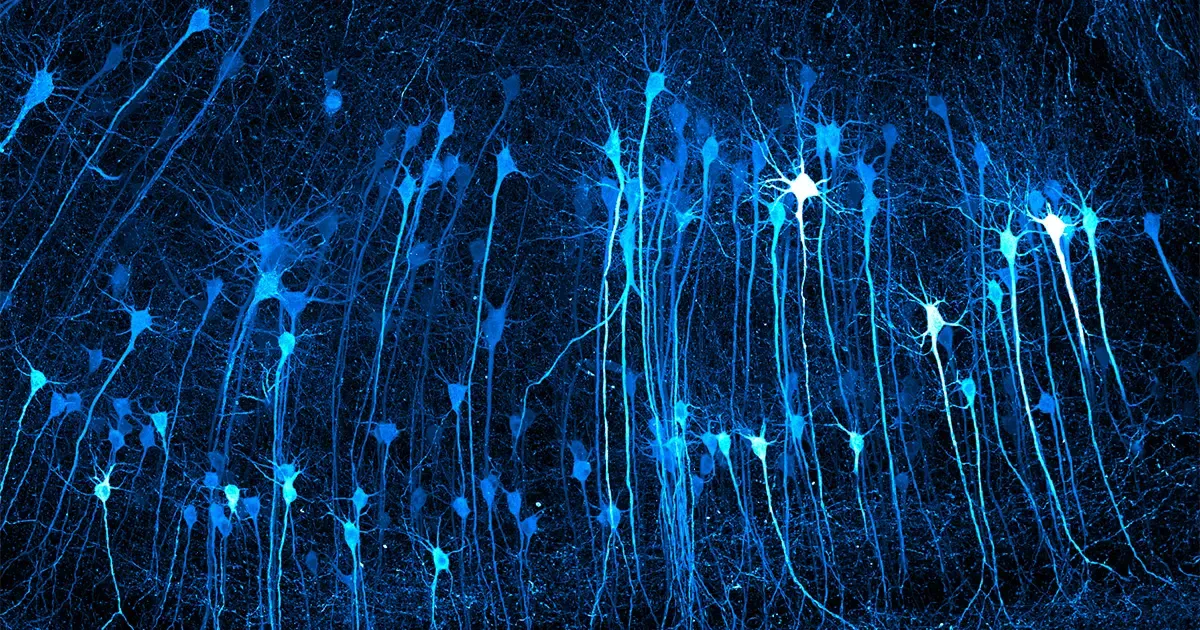
2026 Nikon Small World Winners Reveal the Hidden Machinery of Everyday Life
A mycologist's frozen Edinburgh garden became the backdrop for vivid views inside cells, a reminder of what advanced imaging now makes visible to researchers and the industries built on biology.

Study: 1 in 4 depression cases may be a body-clock problem, not a chemical one
A 10,000-person study finds standard antidepressants often fail these patients, but melatonin and morning sunlight may hit the real root cause.

Start-Up Says A.I. Designed a Virus to Attack One Patient's Superbug
If the claim holds up, personalized phage therapy could become a new frontline weapon against antibiotic resistance - but proof is far from final.