
Neutrino’s “nursery” is found: South Pole detection traces birth to early-star galaxies
A South Pole neutrino event ties back to a galaxy that produced stars when the Universe was young.
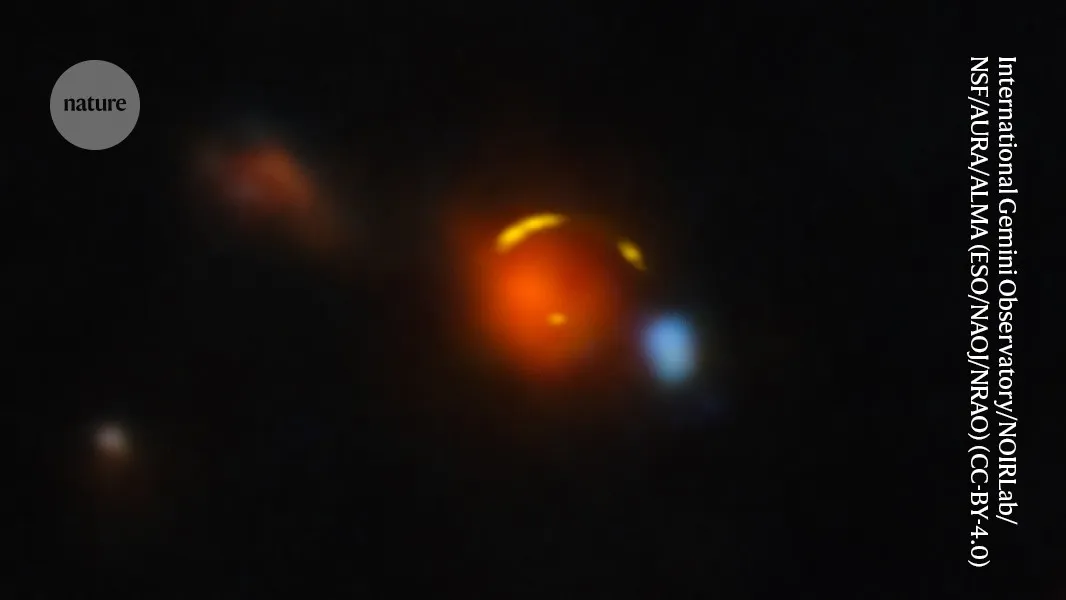
Nature reports a particle detected at the South Pole that was born in a galaxy forming stars when the Universe was young. The discovery matters because it links a deep-space origin to an Earth-based detector, changing how executives and boards think about the payoff of large scientific infrastructure.
A particle detected at the South Pole was born in a galaxy that churned out stars when the Universe was young, according to Nature. In other words: the “where” of a neutrino can be reconstructed far back in cosmic time, and it starts with an Earthbound instrument that sits at one of the most extreme locations on the planet.
This is the heart of the story for decision-makers. The Nature brief states the origin in a galaxy that produced stars in the early Universe, and the detection took place at the South Pole. That pairing matters because it converts what can sound like abstract astronomy into something you can map to infrastructure, timelines, and evidence. A detector is not just a gadget; it is a long-running bet. Here, the payoff is a credible link between a single particle event and an astrophysical “nursery” in the early cosmos.
To understand why this lands, it helps to remember what neutrino astronomy is trying to do. Neutrinos are famously hard to detect, which is exactly why they are so interesting: they can escape dense environments where light would get stuck. When a neutrino arrives at Earth, the usual sales pitch is that it carries information from regions we cannot observe directly. But turning that pitch into science requires two things at once: a detector capable of seeing the particle and a method to infer where it likely came from. Nature’s report, dated 02 July 2026 and published online with DOI 10.1038/d41586-026-02034-1, claims that this second step succeeded enough to point to a galaxy that formed stars when the Universe was young.
There is also a governance angle hiding in plain sight. Large physics experiments, especially those operating at extreme sites like the South Pole, are expensive and typically involve multiple institutions, multi-year funding cycles, and layered oversight. When results connect an event to a specific class of source, boards and funders can point to mission progress instead of only capabilities. This matters because scientific budgets, like tech budgets, do not survive on potential. They survive on demonstrable learning. A neutrino born in a star-forming early galaxy is the kind of result that can justify continued operations and attract partners, because it is both intuitive and legible.
Regulatory framing may not be the first thing executives think about in fundamental physics, but it still exists. Most projects that build and operate major scientific instruments require compliance around safety, environmental stewardship, and data governance. The South Pole context amplifies this: remote operations mean stricter controls and more scrutiny on how equipment is deployed and maintained. Even if Nature's brief does not detail policy, the existence of a credible detection and publication implies the work cleared the practical hurdles required to run continuously in a high-constraint environment. For decision-makers, that is a quiet signal: the program likely has matured from a “can we build it” stage to an “we can produce publishable evidence reliably” stage.
Now for the second-order implication that matters beyond astronomy. When an experiment demonstrates that it can trace a particle to its early-universe origin, it strengthens the broader case for neutrino-based observatories and networks. That can reshape capital allocation among research sponsors and among organizations deciding whether to invest in next-generation detectors. More broadly, it reinforces a pattern executives recognize from other fields: once an expensive platform starts turning unique signals into actionable conclusions, the ecosystem around it grows. Data pipelines, collaborations, and downstream analyses tend to intensify because more stakeholders see a clearer path from spending to outcomes.
Strategically, the peers in similar roles should treat this as an example of how “infrastructure time” can still cash out. The discovery is not a product launch, but it is a milestone that can influence future funding arguments, partnership negotiations, and program roadmaps. Nature’s reported result is a reminder that the densest bets sometimes win when evidence finally connects detection to origin, not just detection to noise.
Bottom line: Nature reports that a particle detected at the South Pole was born in a galaxy that produced stars when the Universe was young. For executives, the takeaway is not only scientific wonder. It is the operational lesson that long-horizon, heavily governed infrastructure can produce clear, publishable, and strategically persuasive outcomes when the measurement chain works end-to-end.
This story's Key Insights and Take-aways are locked.
Create a free account to unlock Executive Actions for one credit.
Register to UnlockAlways free for Executives Club members. Join the Club
More in Science
2026 Nikon Small World Winners Reveal the Hidden Machinery of Everyday Life
A mycologist's frozen Edinburgh garden became the backdrop for vivid views inside cells, a reminder of what advanced imaging now makes visible to researchers and the industries built on biology.

Study: 1 in 4 depression cases may be a body-clock problem, not a chemical one
A 10,000-person study finds standard antidepressants often fail these patients, but melatonin and morning sunlight may hit the real root cause.

Start-Up Says A.I. Designed a Virus to Attack One Patient's Superbug
If the claim holds up, personalized phage therapy could become a new frontline weapon against antibiotic resistance - but proof is far from final.