
New-Gen Universe sells just 300 Comic-Con trading card boxes, via Cryptozoic
The first consumer push for its Marvel-distributed comic series lands July 23-26 with extremely limited supply.
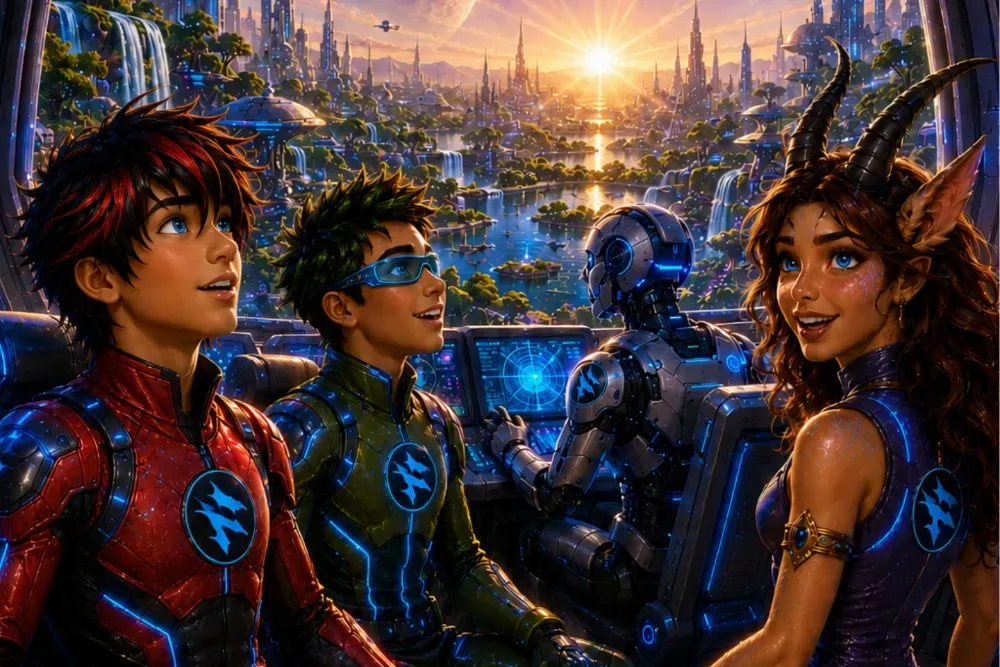
New-Gen Universe, Inc. will debut its first consumer products initiative at San Diego Comic-Con: an exclusive collector's trading card set made with Cryptozoic Entertainment to celebrate its Marvel-distributed comic series. With only 300 convention exclusive boxes available worldwide for July 23-26, the launch tests how hard the company can convert fandom into merch-driven demand.
New-Gen Universe, Inc. is using San Diego Comic-Con to take a big step from publishing into consumer products. For the July 23-26 event, the company is debuting its first collector offering: an exclusive trading card set made with Cryptozoic Entertainment, tied to New-Gen’s Marvel-distributed comic series. The headline number that matters is the scarcity. There are only 300 convention exclusive boxes worldwide, which positions this drop as among the rarest “New-Gen” collectibles released to date.
That “300 boxes” figure is doing a lot of work. Comic-Con is a high-tempo environment where fans shop, trade, and show off what they snag. But for a first consumer products initiative, limiting supply that aggressively is also a risk management move. If you only make 300 boxes, you do not need to bet the rent that demand will be massive across the entire market. You just need enough conversion from attention to purchase, plus the kind of storytelling and community momentum that makes people feel like they might have missed something if they wait.
Cryptozoic Entertainment is the production partner behind the trading cards, which matters because card-based collectibles live and die by production quality and distribution mechanics. In other words, this is not just a marketing stunt. It is a supply-chain and fulfillment exercise, whether those boxes are sold on-site, distributed through partner channels, or handled through convention workflows. The mechanics are tightly coupled to the buyer experience. When someone pays for a limited collector item, they expect the item to show up exactly as promised and to carry the credibility that collectors demand.
There is also a market context here that executives in adjacent categories will recognize immediately. Collectible trading cards sit at the intersection of fandom and financial behavior. Even when buyers are not explicitly thinking about investment, scarcity changes how products travel through communities. Limited runs tend to intensify resale and trading culture, which can amplify visibility, but it can also create reputational risk if consumers feel like the product was designed purely for flipping rather than for long-term brand building. For New-Gen Universe, the decision to tie the launch to a Marvel-distributed comic series gives the drop a built-in audience, because Marvel distribution can bring recognition and a baseline of demand that smaller publishers may not have.
From a broader media business standpoint, this is the classic publishing-to-commerce pivot. Comic series can generate readership and attention, but consumer products are where margins can be meaningfully different. The company is essentially trying to answer a business question: do fans want to carry the brand beyond the page? Trading cards are a convenient format for that test. They are small, easy to understand, and they create collection behavior, which can lead to repeat purchasing, trading, and social sharing. Because this initiative is described as the first consumer products initiative for New-Gen, the trading cards also function as a signal to the market about how the company plans to extend its IP.
Executives should also notice the timing. The drop is explicitly tied to the July 23-26 Comic-Con window. That creates urgency, but it also makes the operational runway shorter. Launching at an event means coordinating packaging, inventory sizing, and partner execution so that the product is available when the crowd arrives. When supply is limited, execution quality becomes even more visible. If inventory goes sideways, there is no cushion to smooth demand.
Regulatory and compliance considerations may not be front-and-center in this specific announcement, but the collectible category often runs into questions about labeling, consumer disclosures, and IP rights, especially when partners and distribution involve major brands. The source states the cards celebrate New-Gen’s Marvel-distributed comic series, which implies licensed IP usage. In most entertainment merchandising ecosystems, that licensing is typically a central gating item. The more you scale consumer products, the more you need clean rights management and consistent documentation, because merchandising becomes a recurring commercial activity rather than a one-off marketing moment.
For boards and investors watching media companies, the second-order implication is simple: this is a test of commercialization discipline. If New-Gen can convert attention into a sell-through that matches the rarity claim, it opens the door to more product lines and more ambitious quantities. If it underperforms, the company will have learned something valuable quickly, without overcommitting capital. Either way, the July 23-26 limited run provides a measurable real-world signal, not just an abstract pitch about “engagement.” And for peers trying to build from comics into commerce, the 300-box approach is a template worth studying, because it shows how to test demand in public while keeping the downside contained.
This story's Key Insights and Take-aways are locked.
Create a free account to unlock Executive Actions for one credit.
Register to UnlockAlways free for Executives Club members. Join the Club
More in Entertainment

12TB Steam 'teraleak' goes beyond Valve: GTA 3, Mafia 2 prototypes exposed
A 12-terabyte dump of Steam data reveals prototypes and builds of third-party classics like GTA 3 and Mafia 2, plus unreleased Valve content, rewriting game history.

LinkedIn's romance problem: 1 in 4 workers say dating on it is fair game
A new survey shows a quarter of U.S. employees treat the professional network as fair game for romance, even as LinkedIn bans it and removes hundreds of thousands of offending posts.

Enhypen's first No. 1 album breaks K-pop's Billboard 200 streak
The K-pop group's 98,000-unit debut tops the chart while Dolly Parton's catalog reentry shows how death reshapes streaming.